 Chuckanut Exterior
 Storm Damage Roof Repair in Happy Valley
Happy Valley sits close enough to the water and the hills around Chuckanut that its roofs take a different kind of beating than roofs a few miles inland. Salt-laden air moves through on the wind, storms roll in with driving, sideways rain instead of straight-down rain, and the shaded, tree-lined lots that make this area attractive also keep roofs damp and mossy for much of the year. When a windstorm or a heavy rain event does damage to a roof here, the repair has to account for all of that, not just patch the visible hole.
This page covers what storm damage repair actually involves for homes in this specific pocket of Whatcom County, what we look for, and how we handle the work from the first phone call to the final inspection.
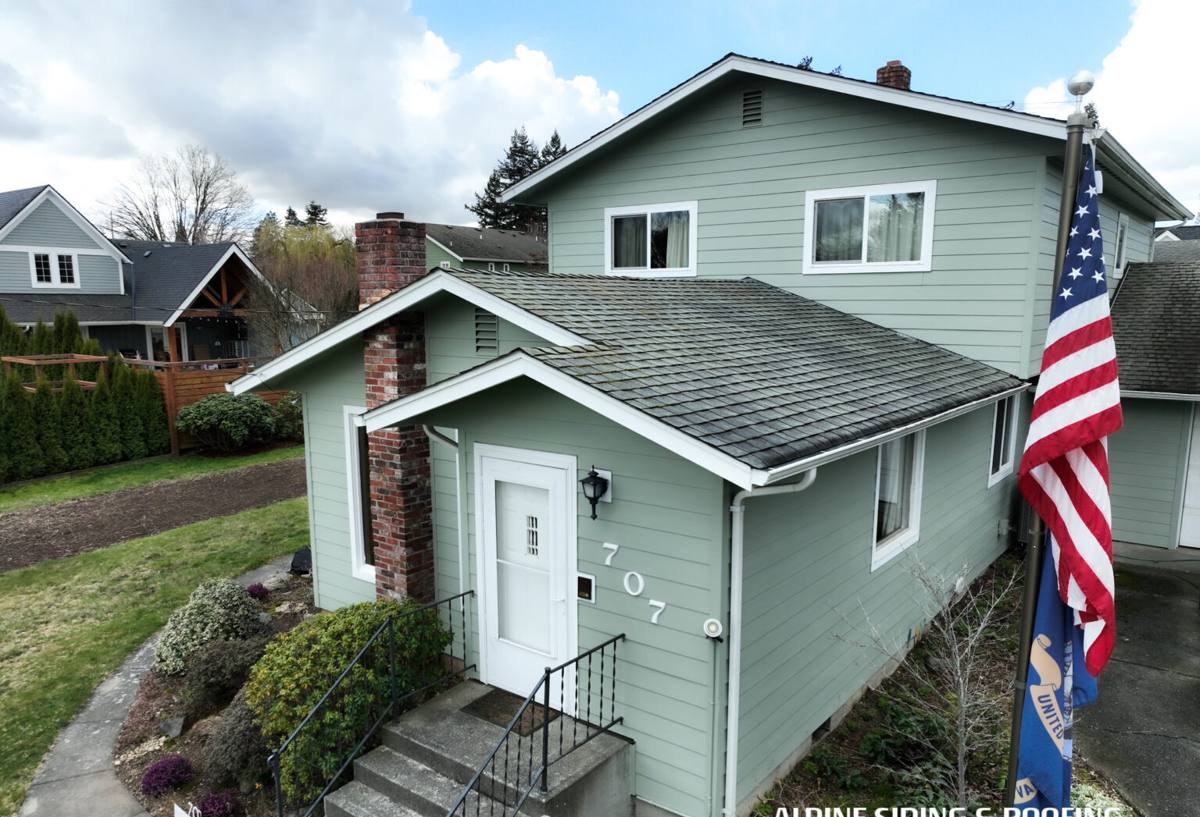
Why Happy Valley Roofs Take Extra Punishment
Salt Air and Corrosion
Proximity to saltwater means metal components on a roof — flashing, fasteners, gutter hardware, vent caps — corrode faster here than they would on a roof twenty miles inland. A storm that lifts a shingle edge often exposes fasteners or flashing that were already partway through that corrosion process. A repair that only replaces the shingle and ignores the metal underneath is a repair that fails again within a year or two.
Driving Rain
Storms coming off the water tend to push rain sideways rather than straight down. That matters because a roof can shed vertical rain just fine while still taking on water at the edges, around penetrations, and under shingle tabs when the wind is driving it horizontally. Wind-driven rain finds gaps that never get tested in ordinary weather, which is why storm damage often shows up as interior staining days after the wind has died down, not during the storm itself.
Long Moss Season
Shaded lots and persistent damp mean moss has a long growing window here, often nine months of the year or more. Moss holds moisture against the roof surface, works its way under shingle tabs, and lifts them slightly — which is exactly the kind of weak point that a windstorm exploits. A roof with moss buildup going into a storm is more likely to lose shingles or take on water than a clean one.
Common Types of Storm Damage We See Here
- Wind-lifted or torn shingles — usually starting at ridges, eaves, and any edge where wind can get underneath
- Wind-driven rain intrusion — water pushed under shingles or through gaps around chimneys, skylights, and vents
- Flashing failure — corroded or bent flashing around penetrations, often the actual source of a leak that looks like a shingle problem
- Fallen branch and debris impact — punctures, cracked shingles, and dented metal from limbs coming down in wind
- Gutter and downspout damage — torn loose by wind or clogged with storm debris, causing water to back up under the roof edge
- Moss-related lifting — shingle tabs already loosened by moss growth that fail completely once wind gets under them
What a Correct Storm Repair Actually Involves
A storm repair done right is more than swapping out the shingles that are obviously missing. Here's what we check and address on every storm call in this area:
Full Roof Inspection, Not Just the Damaged Section
Wind damage rarely stays confined to one spot. We walk the whole roof — or use a drone where the pitch or height makes that safer — to check for lifted tabs, cracked seals, and loosened flashing beyond the area that's obviously damaged. Missing this step is the single most common reason a "repaired" roof leaks again in the next storm.
Underlayment and Decking Check
If water made it under the shingles, we check whether it reached the underlayment or the wood decking underneath. Wet decking that gets covered back up without drying or replacement leads to rot and, eventually, soft spots in the roof. This is a step that gets skipped by crews trying to move fast, and it's the one that causes the most expensive problems down the road.
Flashing and Fastener Replacement
Given the salt-air corrosion issue, we replace flashing and fasteners rather than reusing corroded material, even if it means the repair takes a bit longer. Reusing compromised metal in a salt-air environment is a false economy — it fails again, usually at the worst time.
Matching Materials
We match shingle type, color, and profile as closely as possible to the existing roof. On older roofs where the exact product is no longer made, we explain the closest available match honestly rather than promising an invisible repair that isn't realistic.
Moss and Debris Clearing
Any moss or organic debris near the repair area gets cleared as part of the job, not left for the homeowner to deal with separately. Leaving moss in place next to fresh repair work undermines it almost immediately.
Our Process for Storm Damage Calls
- Initial contact and triage — we ask what you're seeing (interior staining, missing shingles, debris on the roof) so we can prioritize active leaks
- Temporary protection — if there's an active leak or exposed decking, we get a tarp or temporary seal on before the next rain, especially if a storm system is still moving through
- Full inspection — the whole roof, not just the reported damage area, documented with photos
- Written scope and estimate — what needs to be done, what it involves, and an honest cost range before any work starts
- Repair work — shingles, flashing, underlayment, and decking addressed as needed, with corroded metal replaced rather than reused
- Cleanup and final walkthrough — debris cleared, gutters checked, and we walk the roof area with you if you'd like to see what was done
Storm Damage and Insurance
Many storm repairs are covered in whole or part by homeowner's insurance, depending on your policy and the cause of damage. We're happy to provide the documentation and photos an adjuster typically asks for, and we'll give you a straightforward written estimate you can submit with a claim. We don't inflate estimates to match insurance payouts and we don't pressure you to file a claim you're unsure about — that decision, including how it affects your premium, is yours to make.
Cost Factors for Storm Damage Repair
| Factor | Why It Matters |
|---|---|
| Extent of shingle damage | A few lifted tabs versus a section stripped bare changes labor and material needs significantly |
| Decking condition | Wet or rotted decking under the damaged area adds material and labor beyond the surface repair |
| Flashing and fastener corrosion | Salt-air corrosion often means more metal needs replacing than what's visibly damaged |
| Roof pitch and access | Steeper roofs and limited access points require more time and safety equipment |
| Material matching | Older or discontinued shingle profiles may cost more to source or require a closest-match compromise |
| Moss and debris removal | Heavy moss buildup adds cleanup time before repair work can start |
Because every one of these varies by roof, we don't quote storm repairs over the phone. A real number comes after an actual look at your roof.
Why Local Experience in Happy Valley Matters
A crew that regularly works this pocket of Whatcom County already knows which roof styles are common here, how the salt air has typically aged the flashing and fasteners on homes of a given age, and where moss tends to build up fastest given the tree cover on most lots. That familiarity means a faster, more accurate inspection and fewer surprises mid-repair. It also means faster response after a storm — when wind events hit a whole area at once, a contractor who already has a route and a rhythm in Happy Valley can get to you sooner than one working from farther out.
After the Storm: What to Check Before You Call
A quick, safe check from the ground can help us prioritize your call and know what to bring:
- Look for shingles or shingle pieces in the yard or gutters
- Check gutters and downspouts for obvious damage or detachment
- Look up at roof edges and ridges for visibly lifted or missing shingles
- Check ceilings and attic spaces (if safely accessible) for new staining or dampness
- Note any fallen branches on or near the roofline
- Never climb onto the roof yourself after a storm — wet, wind-loosened shingles are not safe footing
Preventing the Next Round of Storm Damage
Once a storm repair is done, a few habits keep the next storm from causing the same problem again. Keeping gutters clear so wind-driven rain has somewhere to go, addressing moss before it builds up rather than after, and having flashing checked periodically given how fast salt air ages it are the three things that make the biggest difference on roofs in this area. None of these are expensive on their own, but skipping them for a few years tends to turn a minor storm into a repair call.
Get a Free Estimate
If a recent storm left your Happy Valley roof with missing shingles, a new leak, or damage you're not sure how to assess, we're glad to take a look. Fill out the form below for a free, no-pressure estimate — we'll give you an honest read on what happened, what it takes to fix it right, and what it's likely to cost.