 Chuckanut Exterior
 Siding Built for Samish's Marine Climate, Not Just Any Home
Homes in the Samish area near Chuckanut sit close enough to open water and marine weather that siding takes a different kind of beating than it does twenty miles inland. Salt-laden air, driving rain off the water, and a moss season that can stretch across most of the wet months all work on exterior walls year-round. A siding replacement here isn't just a cosmetic upgrade — it's a chance to fix the specific weaknesses that coastal Whatcom County exposure creates, and to install a product system that's actually engineered for it.
This page focuses on one job in one place: replacing siding on a home in the Samish area, done the way local conditions require. We install James Hardie fiber cement exclusively, and below we'll explain why that matters here specifically, what a correct installation looks like, and how our process runs from first inspection to final walkthrough.
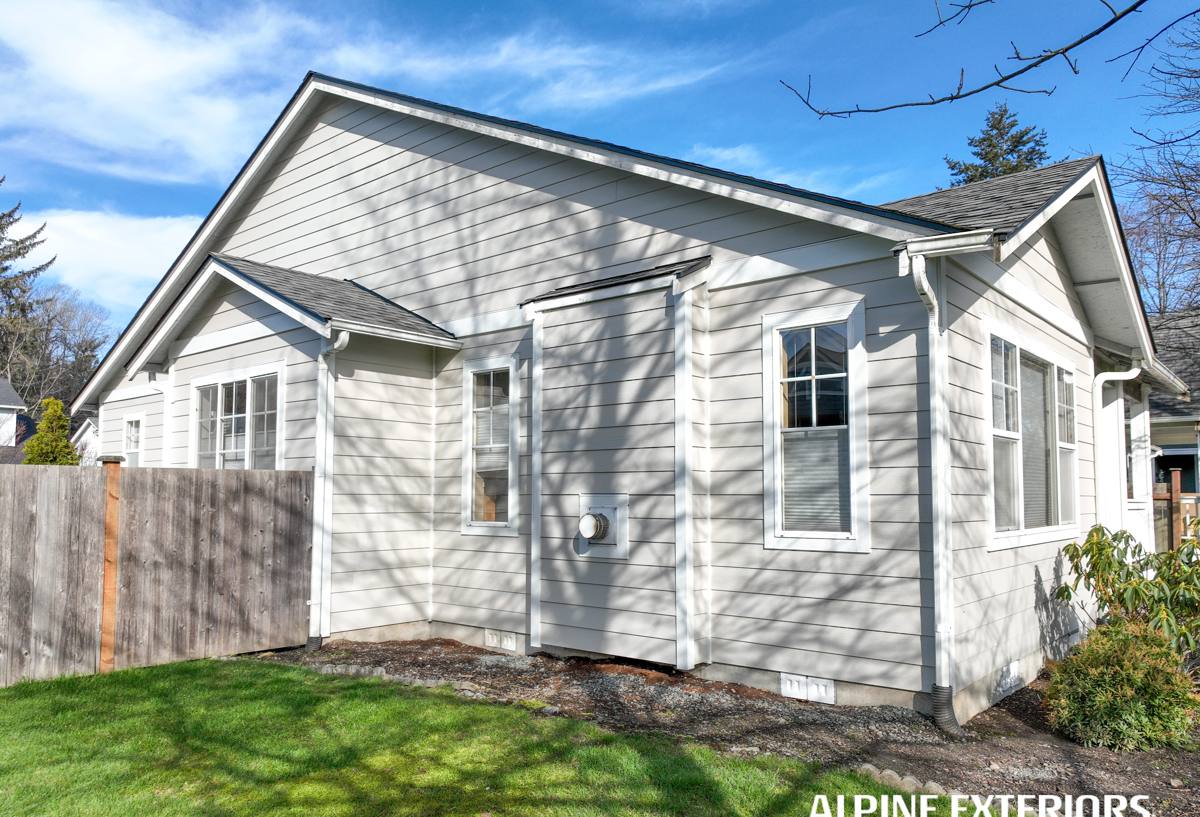
What Coastal Exposure Does to Siding Over Time
Salt Air and Fastener Corrosion
Airborne salt doesn't just sit on the surface — it works into seams, nail heads, and any spot where two materials meet. Over years, that accelerates corrosion in fasteners and metal trim, and it breaks down finishes that weren't formulated to handle it. Siding that looks fine at installation can show streaking, pitting, or bleed-through around fastener heads well before its expected service life is up if the wrong materials or finish were used.
Wind-Driven Rain and Wall Assemblies
Rain in this part of Whatcom County rarely falls straight down. Wind pushes it sideways and up under laps, trim, and butt joints, which means the flashing details and water-resistive barrier behind the siding matter as much as the siding itself. A replacement that only swaps the visible panels without addressing what's underneath is solving half the problem.
Moss, Algae, and Trapped Moisture
Long stretches of damp, shaded weather are exactly what moss and algae need to take hold. On siding with a painted or unfinished surface, that growth isn't just cosmetic — it holds moisture against the substrate longer than it would otherwise sit, which shortens the life of the material underneath. Any siding choice for a Samish home should be judged on how well it resists that growth, not just how it looks on day one.
Why We Install Only James Hardie Fiber Cement Here
We standardized on James Hardie fiber cement for every home we side, and coastal Whatcom County conditions are a big part of why. It's a non-combustible product with a factory-applied ColorPlus finish that's baked on rather than field-painted, which holds up better against moss staining and fading than a job-site paint job. Hardie's HZ5 product line is engineered specifically for climates like this — cold, wet, and humid for long stretches of the year — and it carries a strong transferable warranty when installed to the manufacturer's specification.
We don't install vinyl, LP SmartSide, Cemplank, Allura, primed spruce, or raw cedar. Each of those products has legitimate strengths, but none of them hold up against sustained coastal moisture, moss exposure, and salt air as consistently as fiber cement does when installed correctly — and inconsistent long-term performance is not something we're willing to put our name behind.
| Factor | James Hardie Fiber Cement | Vinyl | Cedar / Primed Wood |
|---|---|---|---|
| Moisture & rot resistance | Does not rot; engineered for wet climates | Resists rot itself, but traps moisture behind panels | Vulnerable to rot without diligent upkeep |
| Moss & algae resistance | Factory finish resists staining and growth | Can host growth in seams and laps | Porous surface is prone to moss and mildew |
| Salt air durability | Fiber cement core unaffected by salt exposure | Can become brittle over time in coastal wind | Finish breaks down faster near salt air |
| Maintenance | Periodic caulk/inspection; no repainting for years | Low upkeep but limited repair options if damaged | Regular repainting, sealing, and repair needed |
| Fire resistance | Non-combustible | Combustible | Combustible |
What a Correct Siding Replacement Involves in This Climate
Full Tear-Off and Sheathing Inspection
A proper replacement starts by removing the old siding entirely, not overlaying new material on top of it. That's the only way to actually inspect the sheathing underneath for hidden rot, soft spots, or moisture damage that's been building for years — issues that are common on homes with sustained coastal exposure and easy to miss from the outside.
Weather-Resistive Barrier and Flashing
Before a single piece of siding goes back up, the water-resistive barrier and flashing at windows, doors, and penetrations need to be correct — lapped properly, sealed where required, and detailed to shed wind-driven rain rather than trap it. This step is invisible once the job is done, but it's the difference between siding that performs for decades and siding that fails from behind within a few years.
Fastening and Gaps for HardieZone HZ5
Hardie's HZ5 products have specific fastening patterns, gap requirements, and clearances from grade, roofing, and decks that are designed for wet, humid climates. Skipping these details voids manufacturer warranty coverage and is one of the most common ways fiber cement installations underperform — not because of the product, but because of the install.
ColorPlus Finish vs. Field Painting
Where possible, we use Hardie's factory-applied ColorPlus finish rather than field-painting after installation. The factory process bonds finish more consistently than on-site painting can, which matters directly for how well the surface resists moss staining and salt-air fading over time.
Our Siding Replacement Process for Samish Homeowners
- Inspection and moisture check: we look at the current siding, trim, and any accessible sheathing to understand what's actually happening behind the surface.
- Written estimate: a clear scope covering tear-off, any sheathing repair anticipated, materials, and finish options — no vague allowances.
- Material order and prep: Hardie panels, trim, and flashing components ordered to the home's exact measurements and climate zone requirements.
- Tear-off and sheathing repair: old siding removed, damaged sheathing replaced, and the weather-resistive barrier corrected before anything new goes up.
- Installation to spec: siding installed to James Hardie's fastening, gapping, and clearance requirements so the manufacturer warranty stays intact.
- Final walkthrough and cleanup: a walk-through of the finished exterior with the homeowner and full job-site cleanup before we consider it done.
Signs Your Samish Home May Need Siding Replacement Now
- Siding that feels soft or gives when pressed, especially near the bottom courses or corners
- Moss or algae staining that returns quickly even after cleaning
- Paint that's bubbling, peeling, or flaking in patches rather than evenly
- Boards that are visibly warped, cupped, or buckling away from the wall
- Gaps or separation at trim and corner boards where wind-driven rain can get behind the siding
- Rust streaks or corrosion around fastener heads and metal trim
- Rooms that feel drafty or noticeably colder near exterior walls, suggesting moisture or insulation failure behind the siding
What Drives the Cost of a Siding Replacement Here
Every siding replacement is different, and we'd rather walk a home and give an honest number than quote a figure that doesn't hold up. That said, a few factors consistently move the price up or down on Samish-area projects:
| Cost Factor | Why It Matters |
|---|---|
| Home size and number of stories | More square footage and taller walls mean more material, more labor, and more staging/access work |
| Condition of existing sheathing | Hidden rot or moisture damage found during tear-off requires repair before new siding goes up |
| Trim and architectural detail | Homes with more corners, dormers, and trim require more cutting, fitting, and flashing work |
| Finish choice | Factory ColorPlus finishes and certain profiles carry different material costs than standard options |
| Site access | Tight lots, slopes, or limited staging area near the water can add time for material handling and protection |
Why Hiring a Crew That Already Works in Samish Matters
A crew that regularly works the Samish and broader Chuckanut area already understands what coastal Whatcom County weather does to a wall assembly — they're not learning it on your project. That familiarity shows up in small but important ways: sequencing tear-off and installation around rain windows instead of leaving sheathing exposed longer than necessary, knowing not to install over damp substrate during the wetter moss-season months, and building in the flashing and clearance details that matter most for homes taking on salt air and wind-driven rain.
It also means fewer surprises. A contractor who's done this work up and down the coastline has already seen the failure patterns specific to this climate and builds the fix into the process from the start, rather than treating this job as a generic siding swap.
Ready for a Straight Answer on Your Siding
If your home in the Samish area is showing signs of wear from salt air, rain, or moss, we're glad to take a look and give you an honest read on what it needs — no pressure, no inflated scope. Request a free estimate using the form below and we'll walk you through what we see and what a correct replacement would involve for your home.