 Chuckanut Exterior
 New-Construction Windows for Samish, Built for the Water They Face
Samish sits close enough to the bay that homes built here deal with a different set of conditions than houses further inland in Whatcom County. Salt-laden air, wind-driven rain that comes in sideways off the water, and a wet season that runs long enough to grow moss on north-facing trim all put extra stress on new-construction windows before the home is even a year old. Installing windows correctly during framing — not after siding is up, not as an afterthought to the build schedule — is what determines whether those windows perform for the next 20-plus years or start showing problems in the first few winters.
New-construction windows are a different job than replacement windows. They go in with a nail fin, get integrated into the weather-resistive barrier (WRB) before siding is installed, and rely on a flashing sequence that has to be built in the right order. There's no going back to fix a bad flashing detail once the siding and trim are closed up. This page covers what that job should look like for a home going up in Samish, and why the details matter more here than they would on a sheltered lot a few miles inland.
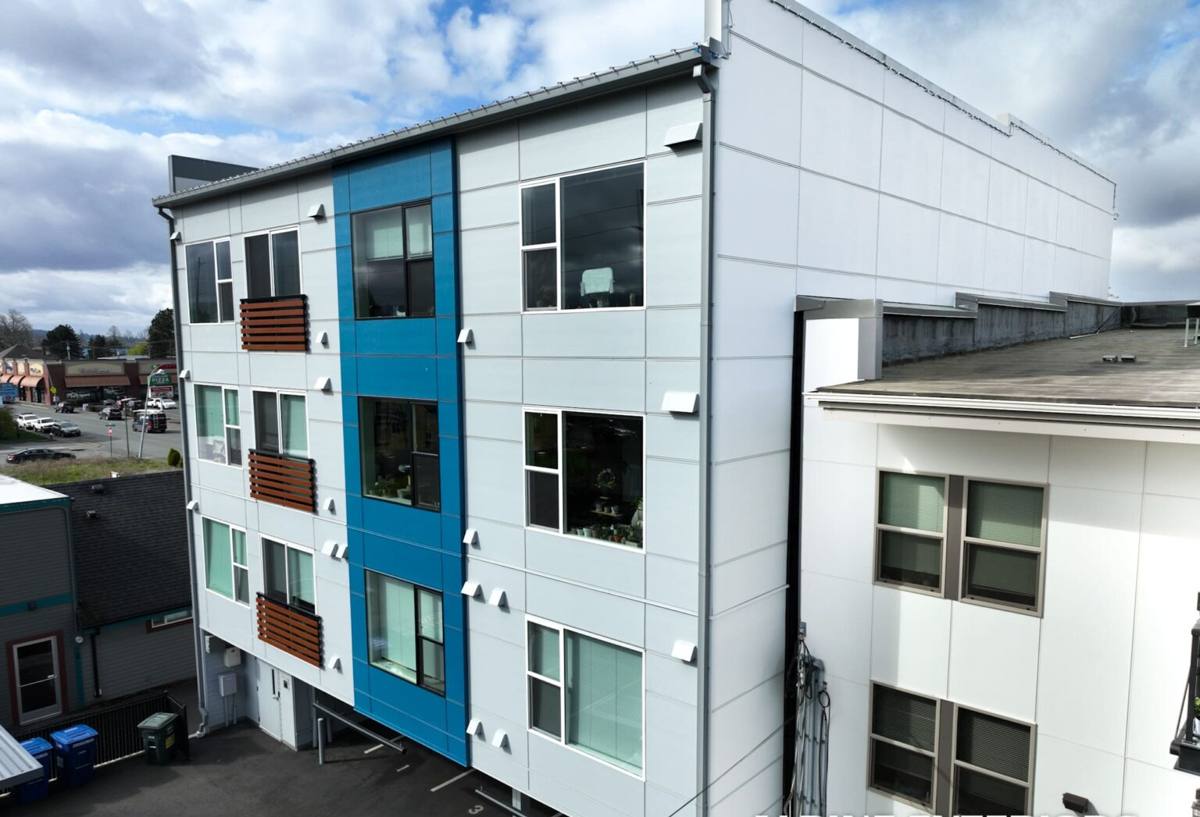
Why This Stretch of Whatcom County Is Hard on New Windows
A few things stack up against new windows near the water in Chuckanut and Samish:
- Salt air corrodes hardware over time. Fasteners, cladding, and hinge hardware that aren't rated for coastal exposure can start pitting or staining years before they would inland.
- Wind-driven rain tests seals that inland homes never see. Rain doesn't just fall here, it gets pushed sideways against the building envelope. A flashing detail that would hold up fine in a calmer location can leak in this kind of weather if it's even slightly off.
- Long wet seasons feed moss and mildew. Anywhere moisture sits — a sill without slope, a drip cap that doesn't kick water far enough away from the wall — becomes a growth surface, and moss holds moisture against wood trim and siding.
None of this means a new home in Samish needs anything exotic. It means the standard details — sill pans, proper flashing laps, corrosion-resistant fasteners — aren't optional extras. They're the baseline for a window that's going to hold up on a bay-facing lot.
What "Correct" Actually Means During Framing
A new-construction window installation is really a sequencing job. Every layer has to go on in the right order, overlapping the one below it like shingles on a roof, so water always has a path down and out rather than a path in.
The Flashing Sequence, Step by Step
- Weather-resistive barrier (house wrap) is installed and the rough opening is cut with the flaps left in place.
- A sill pan flashing is formed or installed at the bottom of the rough opening, with end dams to catch any water that gets past the window and direct it back outside instead of into the wall cavity.
- The window is set into the opening, checked for level, plumb, and square, and shimmed at the correct points so the frame isn't twisted or under stress.
- The nail fin is fastened per the manufacturer's schedule, using fasteners rated for the cladding and climate.
- Flashing tape is applied at the jambs first, then the head, each piece overlapping the one before it — never the reverse order, or water gets directed straight into the wall.
- A head flashing or drip cap is added above the window to kick water away from the top of the frame before it can run down the face.
- The house wrap flaps are folded back down over the flashing tape and taped off, restoring a continuous drainage plane.
Skip a step, do it out of order, or substitute caulk for proper flashing tape, and the window can look fine for a year or two before a leak shows up inside a wall where it's expensive to find and fix.
Choosing Frame Material for a Marine Climate
Builders and homeowners often ask us to weigh in on frame material for a new build near the water. There's no single right answer — it depends on budget, maintenance appetite, and how exposed the specific elevation is — but here's how the common options compare for a Samish lot:
| Material | Salt-air / corrosion resistance | Maintenance | Notes for this area |
|---|---|---|---|
| Vinyl | Good — won't corrode or pit | Low; occasional cleaning | Solid value option; check hardware is rated for coastal use |
| Fiberglass | Very good — dimensionally stable, resists pitting | Low | Handles temperature swings and moisture well; higher upfront cost |
| Wood-clad (aluminum or vinyl exterior) | Depends on cladding quality and detailing at joints | Moderate to high on exposed elevations | Attractive interior finish, but exterior cladding needs to be well-sealed at corners where salt moisture collects |
| Bare aluminum | Poor without a quality anodized or powder-coat finish | Higher — watch for pitting near the water | We steer clients away from unfinished aluminum on bay-facing walls due to long-term corrosion risk |
Whatever frame material is chosen, the fasteners and any exposed hardware should be stainless steel or otherwise rated for coastal exposure. Mixing incompatible metals — for example, plain steel fasteners against aluminum cladding — sets up galvanic corrosion that shows up as staining and pitting well before the window itself would otherwise need attention.
Coordinating With Your Builder or GC
New-construction window installation only works smoothly when it's coordinated with the rest of the build, not squeezed in as a separate trade working off its own schedule. A few things we confirm before install day:
- Rough opening dimensions match the approved window schedule, checked against actual framing — not just the plans.
- The WRB is installed and ready before we show up, so we're not waiting on another trade mid-sequence.
- Timing lines up so windows go in before siding and exterior trim close up the flashing details behind them.
- Any inspection points required by the local jurisdiction are scheduled at the right stage, since re-exposing flashing after it's covered isn't something anyone wants to do.
On a coastal lot in particular, we also flag which elevations face the prevailing wind and rain off the bay, since those walls get the most scrutiny on flashing detail and fastener choice.
Mistakes We Watch For in New-Construction Window Installs
Most window problems in new builds trace back to a handful of avoidable issues:
- Caulk used in place of proper flashing tape. Caulk fails and shrinks over time; it's a supplement to good flashing, not a substitute for it.
- Missing or poorly formed sill pans. Without one, any water that gets past the window sash has nowhere to go but into the wall framing.
- Flashing lapped in the wrong order. Head flashing tucked under jamb flashing instead of over it will funnel water into the wall rather than away from it.
- Incompatible fasteners. The wrong metal against aluminum cladding or hardware invites corrosion, especially this close to salt air.
- Weep paths blocked by sealant. Some drainage points at the sill are meant to stay open. Sealing them "for good measure" traps water instead of letting it drain.
Our Process for New-Construction Window Installs
For a Samish build, our process runs in a consistent sequence so nothing gets missed:
- Plan review and coordination with the builder or GC before framing is complete, confirming window schedule, rough opening sizes, and scheduling.
- Rough opening verification on site — checking actual framing dimensions, level, and square before the window ever arrives.
- Sill pan and flashing installation following the shingle-lap sequence, with attention to end dams and drainage.
- Window setting — plumb, level, square, properly shimmed, fastened per the manufacturer's schedule with corrosion-resistant fasteners.
- Final flashing and WRB integration so the drainage plane is continuous from top to bottom of the opening.
- Documentation and walkthrough so the builder has what's needed for inspection sign-off, and so there's a clear record of what was installed and how.
New-Construction Window Installation Checklist
Whether you're a homeowner keeping an eye on your own build or a builder vetting a subcontractor, this is what should be true before siding goes on:
- Rough openings match the window schedule and are square within tolerance
- WRB is continuous and properly lapped around each opening
- A sill pan flashing with end dams is in place at every opening, not just the exposed elevations
- Windows are shimmed and fastened without racking the frame
- Flashing tape is applied jambs-first, then head, in proper shingle-lap order
- Head flashing or a drip cap directs water away from the top of the frame
- Fasteners and exposed hardware are rated for coastal/salt-air exposure
- Weep holes and drainage paths at the sill are left clear, not sealed over
- WRB flaps are folded back down and taped to restore a continuous drainage plane
Why a Crew That Already Works Samish Matters
A window installed exactly to spec in a sheltered inland neighborhood can still fall short on a bay-facing lot in Samish if the crew hasn't accounted for the wind and rain exposure specific to this stretch of Whatcom County. A crew that already works this area knows which elevations typically take the worst of the driving rain, has a working relationship with local building departments on inspection timing, and doesn't have to relearn coastal detailing on your project. That familiarity shows up in fewer callbacks and fewer surprises once the home has been through its first few wet winters.
If you're planning new construction in Samish or elsewhere near Chuckanut, we're happy to walk through your window schedule and flashing plan before framing gets underway. Reach out for a free, no-pressure estimate using the form below — there's no obligation, and it's a lot easier to get these details right before the siding goes on than after.