 Chuckanut Exterior
 Roof Repair Built for the Lake Samish Environment
Lake Samish sits in one of the shadiest, wettest corners of Whatcom County, ringed by tall conifers and hillside that keep many rooflines damp long after a storm has passed elsewhere. Add in the driving rain that rolls through the Chuckanut corridor off the Sound, and you get a roofing environment that ages faster than it does in drier, more open parts of Washington. Roof repair here isn't just about patching a leak — it's about understanding why that leak formed in the first place, usually a combination of shade, moisture, and time.
We work on homes throughout this area regularly, which means we're not guessing at what Lake Samish roofs typically deal with. We're diagnosing the same patterns over and over: moss intrusion, saturated valleys, and flashing that's failed years before it should have because it never gets a real chance to dry out between rain events.
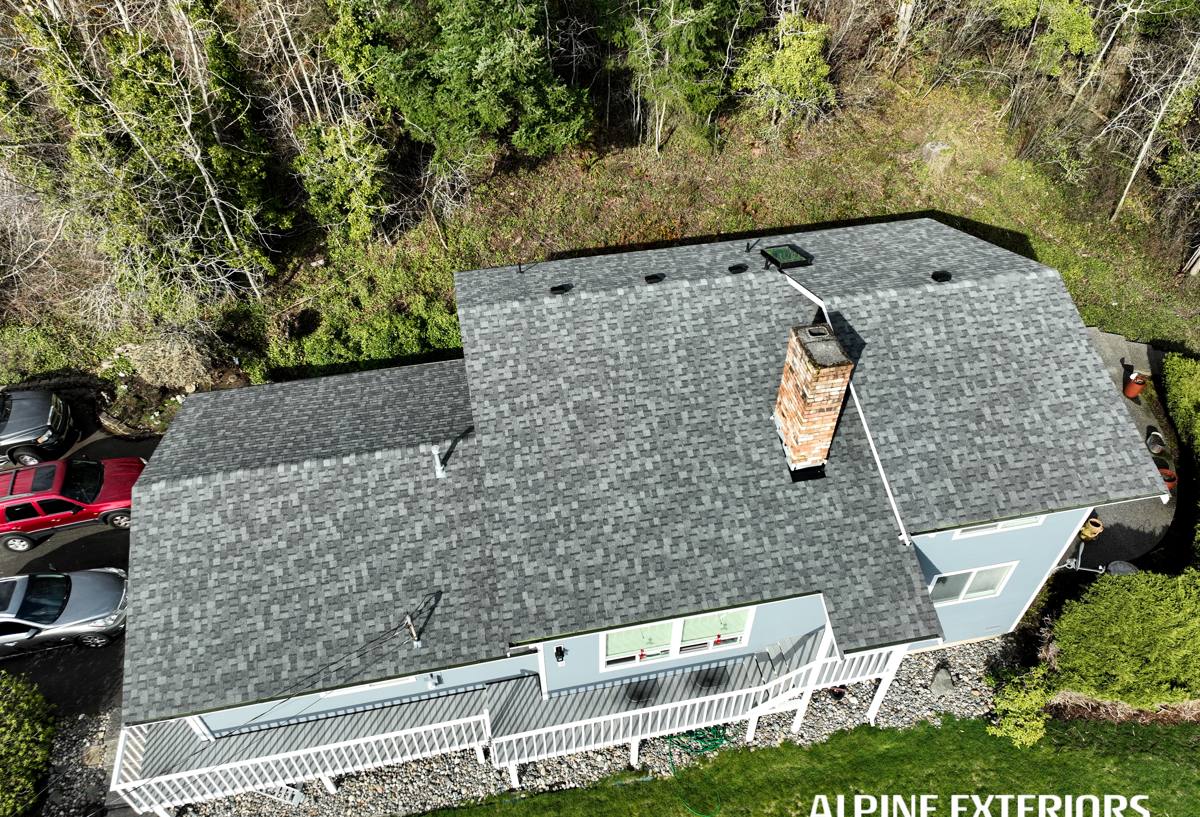
What Shade, Moisture, and Moss Do to a Roof Over Time
Moss Is a Structural Problem, Not Just a Cosmetic One
On a shaded lot near the lake, moss isn't a once-in-a-while nuisance — it's closer to a permanent tenant. Moss holds water against the roof surface long after the rest of a roof would have dried, and its root structure works into shingle granules and seams. Over a few seasons, that constant moisture exposure breaks down the protective granule layer on asphalt shingles and can lift shingle edges enough for wind-driven rain to get underneath.
Trapped Moisture in Valleys and Under Debris
Roof valleys — the V-shaped channels where two roof slopes meet — carry more water than any other part of the roof, and they're also where falling needles and leaf debris tend to collect on a wooded lot. When debris dams up in a valley, water backs up under the shingles instead of running off, which is one of the most common causes of interior leaks we find on homes in this area. It's rarely a dramatic failure; it's a slow, quiet one that shows up as a stain on a ceiling months after the water started getting in.
Freeze-Thaw and Prolonged Saturation
Whatcom County doesn't get the deep freezes some inland climates do, but the combination of near-constant dampness and occasional cold snaps still stresses roofing materials. Wood that stays wet for extended periods swells and contracts, fasteners loosen, and underlayment that was never designed for permanent saturation starts to break down faster than its rated lifespan would suggest.
Signs a Lake Samish Roof Needs Attention
Because leaks in this environment tend to develop slowly, homeowners often notice symptoms well before they realize there's an actual roof problem. Here's what we'd want you to watch for:
- Dark streaking or green/black growth concentrated on shaded slopes or north-facing sections
- Granules collecting in gutters or at the base of downspouts (a sign shingles are wearing thin)
- Soft or spongy spots when walking the roof, especially near valleys or chimney flashing
- Ceiling stains that appear or grow after a heavy rain, then seem to "dry up" between storms
- Visible daylight or gaps around flashing at chimneys, skylights, or where a roof meets a wall
- Shingles that look cupped, curled, or noticeably lighter in color than the rest of the roof
- Moss or debris buildup that hasn't been cleared in a season or more
Any one of these on its own may not mean a full repair is urgent, but a few together are worth having looked at before the next wet season.
What a Correct Roof Repair Actually Involves
A repair that only addresses the visible symptom — say, a stain on the ceiling — without finding the actual entry point tends to come back. A correct repair works backward from the leak to its source, which usually means more investigation than people expect for what looks like a small job.
Diagnosis Before Any Work Begins
We start by tracing the leak's path, not just its landing spot. Water can travel several feet along rafters or sheathing before it drips somewhere visible, so the ceiling stain and the actual failure point are often not in the same location. We check the roof surface, flashing points, and attic (when accessible) to confirm where moisture is actually getting in.
Checking the Decking, Not Just the Surface
If moisture has been getting into a section of roof for a while, the plywood or board decking underneath can be softened or delaminated. Replacing shingles over compromised decking doesn't hold — it just delays the same repair. Part of doing this correctly means confirming the deck underneath is sound before any new material goes down.
Flashing Gets Real Attention
A large share of the leaks we find in this area trace back to flashing — around chimneys, skylights, roof-to-wall transitions, and valleys — rather than the shingles themselves. Flashing repair means properly lapping and sealing these transition points, not just adding a bead of sealant over a gap and calling it fixed.
Matching Materials the Right Way
When we tie a repair into existing roofing, we match the shingle profile, exposure, and, where possible, color as closely as the existing product allows. A patch that doesn't tie in cleanly with the surrounding courses can create its own water path, so the tie-in technique matters as much as the material itself.
Repair or Replace? Honest Cost and Condition Factors
Not every leak means a new roof, and not every roof with a leak is a good candidate for another round of patching. These are the factors we actually weigh:
| Factor | Favors Repair | Favors Replacement |
|---|---|---|
| Roof age | Well within expected lifespan for the material | Near or past manufacturer-rated service life |
| Extent of damage | Isolated to one section, flashing point, or valley | Widespread moss, curling, or granule loss across multiple slopes |
| Decking condition | Sound, dry, no soft spots found | Soft, delaminated, or repeatedly re-soaked decking |
| Repair history | First repair, or isolated prior fix | Same area has needed repeated patching |
| Cost over time | Repair cost is a modest fraction of replacement | Cumulative repairs are approaching replacement cost |
We'll give you a straight answer on where your roof falls on that table rather than defaulting to whichever option is more profitable for us. A roof with a good remaining lifespan and one isolated problem area almost always makes more sense to repair.
Materials and Methods We Use for Repairs
For most homes around Lake Samish, we're working with asphalt shingle or, on some newer or upgraded homes, standing seam metal roofing. Our approach to each is a little different:
- Asphalt shingle repairs: we replace damaged shingles in full courses rather than spot-patching individual tabs, which keeps water shedding in the direction it's designed to and avoids visible mismatches.
- Flashing work: we use metal flashing (not just sealant-over-old-flashing) at chimneys, skylights, and wall transitions, since sealant alone degrades faster in a climate this wet and isn't a long-term fix on its own.
- Underlayment: where decking is exposed during a repair, we install underlayment rated for the moisture load this region sees, rather than the minimum most manufacturers spec for drier climates.
- Metal roofing repairs: we address seam and fastener issues directly rather than layering sealant over a failing seam, since standing seam systems rely on mechanical lap and fastening, not caulk, to stay watertight.
We frame these choices around what holds up under Whatcom County's rain and shade conditions specifically, not just what's fastest to install.
Our Process, Start to Finish
1. On-Site Inspection
We walk the roof (or use appropriate access equipment on steep or high roofs) and check the attic where accessible, documenting exactly what we find and photographing problem areas so you can see what we're seeing.
2. A Clear, Written Estimate
You get a written scope of work and price before anything is scheduled — what's being repaired, what materials are involved, and why. No verbal "trust me" pricing.
3. Scheduling Around Weather
Roof repair work needs a reasonably dry window to do correctly, especially anything involving decking or underlayment. We schedule around forecasted weather rather than pushing work into conditions that would compromise it.
4. The Repair Itself
We remove and replace only what's actually compromised, check the surrounding area for hidden damage while we're in there, and make sure new material ties into the existing roof cleanly.
5. Cleanup and Walkthrough
We clear debris and old materials from the site and walk you through exactly what was done before we consider the job finished.
Why Local Experience Around Lake Samish Matters
A roofing crew that mostly works in drier, sunnier parts of Washington can miss things a crew familiar with this specific microclimate would catch immediately — how fast moss returns on a shaded north slope here, which valley configurations tend to trap debris on lake-adjacent lots, or how much drying time a repair realistically has between rain systems in a given month. Working this area regularly means we're not learning the local failure patterns on your roof; we already know them.
It also means we understand access and logistics specific to properties around the lake — steep driveways, tree cover that limits certain equipment, and the kind of site conditions that are common on wooded, sloped lots but less common on a typical suburban block.
Keeping a Repair from Becoming a Repeat Job
A well-executed repair should buy you real years, not months, if it's paired with basic upkeep afterward. A few habits go a long way in this environment:
- Clear moss and debris from valleys and shaded slopes at least once, ideally twice, a year
- Keep gutters and downspouts clear so water isn't backing up at the roof edge
- Trim overhanging branches that keep sections of roof shaded and slow to dry
- Have flashing points checked periodically, since they fail quietly and gradually
- Address small issues (a lifted shingle, minor moss patch) before they become entry points for water
None of this requires much time or money compared to the cost of a repair that's allowed to sit and worsen over a wet Chuckanut winter.
Get a Straight Answer on Your Roof
If you're seeing moss buildup, a stain that keeps returning, or you just want a second opinion on a roof that's showing its age, we're happy to take a look. The estimate is free, there's no pressure attached to it, and you'll get a plain explanation of what we found and what it would take to fix it. Use the form below to get in touch and we'll schedule a time to come out.