 Chuckanut Exterior
 Why Lake Samish Roofs Wear Differently
Lake Samish sits in one of the shadiest, wettest micro-climates in Whatcom County. The tree canopy that makes the lake so pleasant to live around also means many roofs here rarely get a full day of direct sun, even in summer. Add the driving rain that rolls off the water and the salt-laden air that moves through the broader Chuckanut and Samish Bay corridor, and you get a roofing environment that behaves very differently than a roof on an open, sun-exposed lot ten miles inland.
A new roof installation done right for a Lake Samish property isn't just about swapping old shingles for new ones. It's about accounting for shade, moisture retention, wind-driven rain, and a moss season that, around here, can run nearly year-round. Skip any one of those factors and you're looking at premature wear, hidden rot, or a warranty claim that gets denied because the install wasn't matched to the site.
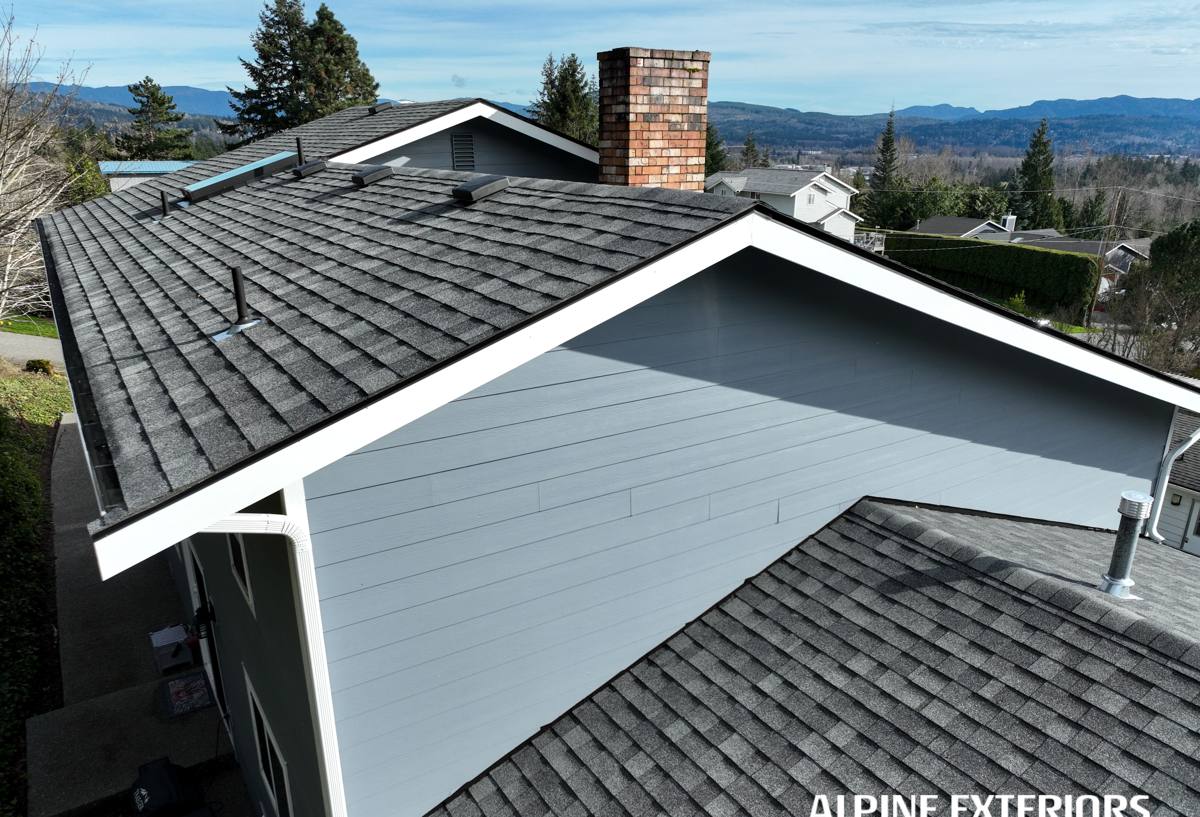
What Heavy Tree Cover and a Long Moss Season Do to a Roof
Moss isn't just a cosmetic nuisance. Around Lake Samish, where tree cover keeps roof surfaces damp and shaded for long stretches, moss and algae can establish themselves within a couple of years of a standard installation if the roof wasn't built to resist them. Left unchecked, moss lifts shingle edges, holds water against the roof deck, and accelerates granule loss.
Moss vs. Surface Algae
These are two different problems. Algae streaking is mostly cosmetic and shows up as dark discoloration. Moss is structural — its root-like rhizoids work into shingle mat and seams, and a thick moss mat holds standing moisture against the roof for days after a storm. A correct installation reduces the conditions moss needs to take hold in the first place, rather than relying on the homeowner to scrape and treat the roof every year.
Ventilation Under Deep Shade
Shaded roofs dry out slower after every rain, so proper intake and exhaust ventilation matters more here than on an open lot. Without it, moisture gets trapped in the attic space and roof deck, which shortens shingle life from underneath — a failure mode that has nothing to do with the shingles themselves and everything to do with how the roof was vented.
Salt Air and Driving Rain: The Coastal Whatcom Factor
Whatcom County's proximity to Bellingham Bay and Samish Bay means salt-laden marine air moves through the region regularly, and it doesn't stop at the waterline. Metal roofing components, fasteners, and flashing anywhere in the area — including at inland properties like those around the lake — see accelerated corrosion compared to drier, inland parts of the state if the wrong-grade materials are used.
Metal Components That Hold Up
Flashing, drip edge, and fasteners all need to be rated for coastal exposure. We don't use bare or under-coated metal in any part of a new roof system here — it's a short-term savings that turns into a long-term liability once corrosion starts working through nail heads and flashing seams.
Water Management in Driving Rain
Wind-driven rain off the lake and the surrounding valleys doesn't fall straight down — it gets pushed sideways into roof-wall intersections, valleys, and eave edges. That means underlayment coverage, valley treatment, and eave protection all need to be more generous than a bare-minimum install in a drier climate would require.
What a Correct New Roof Installation Actually Includes
A new roof is only as good as what's underneath the visible surface. Here's what we consider non-negotiable on every Lake Samish installation:
Tear-Off and Deck Inspection
We remove the old roofing down to the deck rather than layering over it. This lets us actually see the sheathing, check for soft spots or rot from long-term moisture exposure, and replace any damaged sections before new material goes down. Roofing over a compromised deck just hides a problem that gets more expensive to fix later.
Underlayment Built for Wet Shade
Given the rainfall and shade around the lake, we use a full synthetic or self-adhered underlayment system rather than the minimum felt coverage some installs get away with in drier areas. Ice-and-water-style membrane goes in valleys, around penetrations, and along eaves where wind-driven rain and moss-related water retention pose the biggest risk.
Flashing and Penetration Detailing
Chimneys, vents, skylights, and roof-wall intersections are where the vast majority of leaks actually start — not in the open field of shingles. Every penetration gets properly flashed and sealed, not just caulked over.
Ventilation Correction
If the existing roof was under-vented — common on older homes around the lake — we address intake and exhaust balance as part of the install, not as an afterthought.
Fastening to Manufacturer Spec
Nail placement, pattern, and count directly affect wind resistance and warranty validity. We follow manufacturer installation specs exactly, which is also what keeps a material warranty enforceable if you ever need it.
Choosing a Roofing Material for a Shaded, Moist Lake Lot
There's no single "best" roofing material for every home — it depends on your roof's exposure, your budget, and how much shade your specific lot gets. Here's how the common options compare for a Lake Samish setting specifically:
| Material | Moss/moisture resistance | Typical lifespan here | Relative cost |
|---|---|---|---|
| Architectural asphalt shingle | Good with algae-resistant granules and proper ventilation | 25-30 years | Moderate |
| Metal (standing seam or panel) | Excellent shedding; needs coastal-rated fasteners | 40-50+ years | Higher upfront |
| Cedar shake | Poor in deep shade without diligent upkeep — high moisture retention | Highly variable; shortened under heavy tree cover | Higher |
| Synthetic composite shake/slate | Good; doesn't absorb moisture like wood | 35-50 years | Higher |
We're generally cautious about recommending traditional cedar shake on heavily shaded, tree-surrounded lots. It's not that cedar is a bad product — it's that wood shake's moisture-absorbing nature is a poor match for a roof that stays damp and shaded most of the year, and the maintenance burden to keep it moss-free is significant. That's a site-and-climate call, not a knock on the material itself.
Our Installation Process
- On-site assessment — we walk the roof, check attic ventilation, and evaluate tree cover and drainage patterns specific to your lot.
- Written scope and material selection — you get a clear breakdown of what's being removed, what's being installed, and why, before any work starts.
- Tear-off and deck inspection — old material comes off, and any deck repairs are identified and priced before covering it back up.
- Underlayment, flashing, and ventilation installation — the parts of the job that determine whether the roof actually performs in our climate.
- Final material installation — shingles, panels, or shakes installed to manufacturer spec.
- Site cleanup and walkthrough — magnetic sweep for debris, and a walkthrough so you understand what was done and what to watch for going forward.
Why Hiring a Crew That Already Works Lake Samish Matters
Roofing crews unfamiliar with lake-adjacent, tree-covered properties tend to default to standard installation practices built for open, sunny lots elsewhere in the region — lighter underlayment coverage, minimal ventilation upgrades, standard-grade fasteners. That approach might hold up fine on a dry, exposed roof across the county, but it shortens the life of a roof here.
Access is also a real factor. Many Lake Samish properties have narrow or shared driveways, steep grades down to the water, and limited staging space because of surrounding trees. A crew that's worked the area knows how to plan material delivery, dumpster placement, and equipment staging without damaging landscaping or blocking neighbors — details that matter on a lake road but rarely come up in a typical suburban job.
After Installation: What Keeps a Lake Samish Roof Performing
A well-installed roof still needs some seasonal attention in this environment. A few habits go a long way:
- Clear overhanging branches back from the roofline where practical, to reduce shade and debris buildup
- Keep gutters and valleys free of needles and leaf litter, especially heading into fall rains
- Have moss growth treated early — before it establishes a thick mat, not after
- Check attic ventilation isn't blocked by insulation or storage
- Schedule a roof check after major windstorms, which are common off the lake and surrounding valleys
Signs Your Roof Needs Replacement, Not Another Repair
Not every roofing problem calls for a full replacement, and a straightforward roofer will tell you that. But a few signs point toward replacement being the more honest recommendation: granule loss heavy enough to show bare asphalt, soft or spongy spots in the deck when walked, repeated leaks in different locations rather than one recurring spot, shingles curling or cupping across large areas, and moss growth that keeps returning within a season of treatment. If you're only dealing with one isolated issue — a damaged flashing detail or a handful of storm-damaged shingles — a targeted repair is usually the more honest answer, and we'll tell you that instead of pushing a full replacement you don't need.
If your roof is showing its age, or you just want an honest read on whether it's a repair or replacement situation, we're happy to take a look. Fill out the form below for a free, no-pressure estimate — we'll walk your roof, explain what we see, and give you a straight answer either way.