 Chuckanut Exterior
 Window Replacement Built for the Mount Vernon Climate
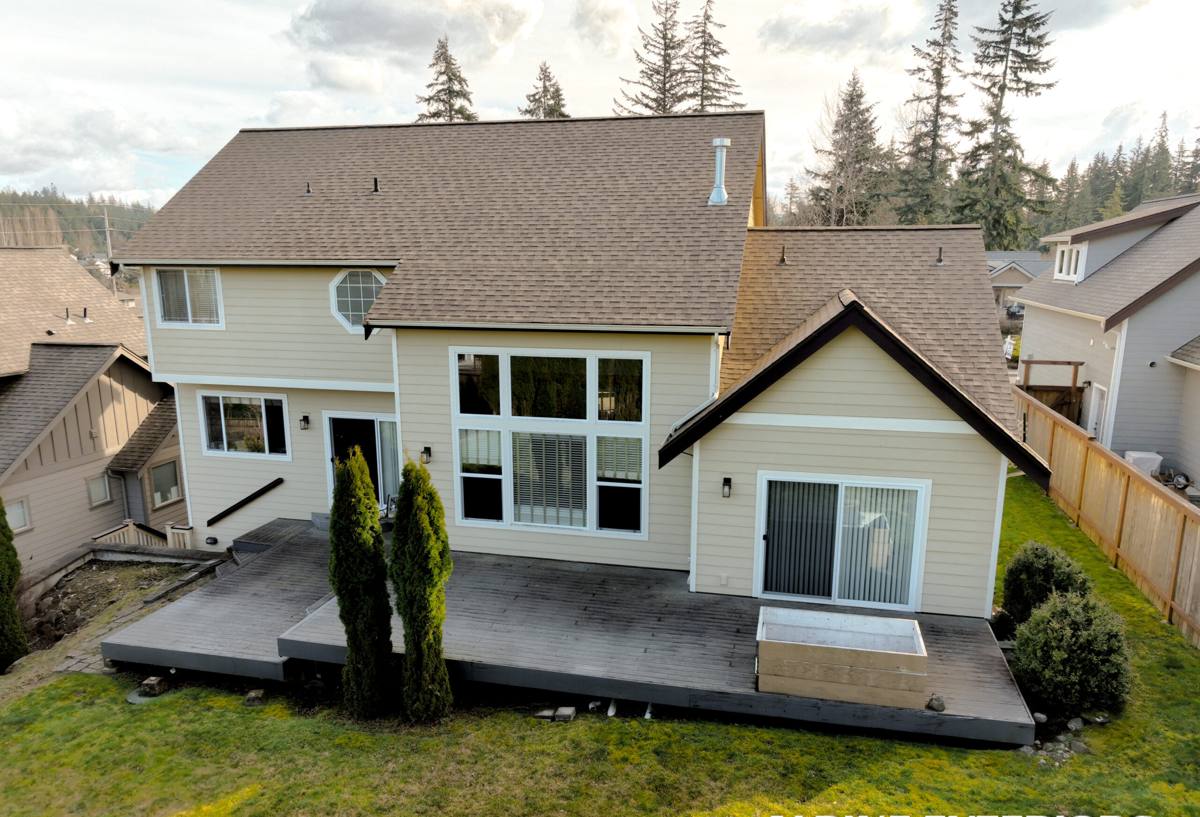
Homes in the Mount Vernon area near Chuckanut sit in one of the more demanding window environments in Whatcom County. You've got salt-laden air drifting in off the water, long stretches of driving rain, and a moss season that seems to stretch longer every year. None of that is a problem a window was designed to fight forever. Seals age, frames absorb moisture, and hardware corrodes faster here than it would fifty miles inland. When a homeowner calls us about window replacement, the first thing we talk about isn't style or brand — it's how the new windows are going to hold up against what this specific location throws at them, year after year.
This page is about one job, done right, in one area: replacing windows on homes in and around Mount Vernon. Not a general overview of every window option on the market, but what actually matters for a house that has to shed rain sideways, resist salt corrosion on hardware, and stay sealed through months of damp, low-sun weather.
What Salt Air, Driving Rain, and Moss Season Actually Do to Windows
Salt Air
Salt in the air doesn't just sit on the glass — it settles into metal hardware, cladding seams, and fasteners. Over years, that accelerates corrosion on hinges, locks, and lesser-grade aluminum components. A window that would last two decades in a dry inland climate can show hardware failure and pitting well before that here, especially on the sides of a house that face open exposure.
Driving Rain
Wind-driven rain doesn't fall straight down — it gets pushed sideways into wall assemblies and window openings. A window can be perfectly fine and still let water in if the flashing, sill pan, and sealant details around it weren't installed correctly. This is genuinely more about installation quality than the window unit itself, which is why so many "bad window" complaints are actually bad install complaints.
Moss and Prolonged Dampness
A long moss season means extended periods where wood trim, sills, and any exposed cladding stay damp instead of drying out between weather events. Moss and algae hold moisture against surfaces, which speeds up rot in wood components and can trap water against frames that aren't detailed to shed it. Vinyl and fiberglass frames don't feed moss the way wood does, but the surrounding trim and sill areas still need to be built to drain and dry.
Signs a Mount Vernon Home Actually Needs Window Replacement
Not every drafty window needs full replacement — sometimes it's a seal, a balance, or weatherstripping. But there are signs that point to the window itself, not just a component, being past its useful life:
- Fogging or a permanent haze between panes — the seal on the insulated glass unit has failed and moisture is trapped inside
- Visible corrosion, pitting, or stiff/frozen hardware on locks and hinges
- Soft, spongy, or discolored wood at the sill or bottom corners of the frame
- Air movement you can feel near the frame on a windy day, even with the window latched
- Difficulty opening, closing, or locking that isn't fixed by cleaning the tracks
- Visible gaps, cracked caulking, or daylight around the exterior trim
- Noticeably colder rooms near certain windows compared to the rest of the house
If you're seeing two or more of these, especially on the weather-exposed side of the house, it's worth a real inspection rather than another round of caulk.
What a Correct Window Replacement Job Actually Involves
The window product matters, but in a climate like this, installation is where most failures actually originate. A correct job includes:
- Full removal of the old unit and inspection of the framing and sill for hidden rot or water damage before anything new goes in
- Proper flashing integration with the existing water-resistive barrier, not just caulk over the gap
- A sloped or pan-flashed sill detail so any water that gets past the glass drains back out, not into the wall
- Correct shimming and squaring so the sash operates smoothly and the seals compress evenly
- Continuous, compatible sealant at all the right joints — not every joint, and not the wrong sealant type
- Interior and exterior trim reinstalled or replaced so the whole opening is weathertight, not just the window unit itself
Skipping any one of these steps is how a homeowner ends up with a brand-new, expensive window that still leaks in a driving rain. That's a workmanship failure, not a product failure, and it's avoidable.
Choosing Materials and Glass for This Environment
There's no single "best" window material — there are trade-offs, and the right call depends on the exposure of a given wall, the home's age, and the homeowner's maintenance appetite. Here's how the common options generally compare for a coastal Whatcom County climate:
| Frame Material | Moisture & Salt Air Behavior | Maintenance | Typical Fit |
|---|---|---|---|
| Vinyl | Doesn't corrode or rot; performs well against salt air and damp exposure | Low — occasional cleaning | Most homes; strong value for the climate |
| Fiberglass | Very stable in moisture and temperature swings; resists warping | Low | Homes wanting a stiffer, more dimensionally stable frame, often at a higher price point |
| Wood (clad or unclad) | Attractive but vulnerable to rot and moss growth if exposed and not maintained | High — regular inspection and refinishing needed on exposed sides | Homes prioritizing a specific traditional look, with a maintenance commitment |
| Aluminum | Prone to corrosion and condensation in salt air unless thermally broken and properly finished | Moderate | Limited use; we're selective about where we recommend it here |
On glass, we default to double-pane, low-E, argon-filled units for this area. The low-E coating helps with heat retention through the cold, damp months, and a good gas fill keeps the seal performing over time. For rooms with more direct weather exposure or road noise, triple-pane is worth discussing, though it's a real cost jump and not every wall needs it.
Where We're Selective
We don't push wood-frame windows on fully exposed, weather-facing walls in this climate, and we're careful with uninsulated aluminum framing near the water. That's not a claim that either product is bad — it's our professional standard based on the maintenance burden and moisture behavior those materials carry in a salt-air, high-rainfall setting. We'll still install them where a homeowner wants that specific look and understands the upkeep involved; we just won't let it go unsaid.
Our Process for Mount Vernon Window Replacement
- On-site assessment. We look at each window's exposure, current condition, and the framing behind it — not just the glass.
- Honest recommendation. We tell you which windows need full replacement, which need repair, and which are fine, along with material and glass options suited to that wall's exposure.
- Written estimate. Clear scope, materials, and pricing before anything is ordered.
- Removal and inspection. Old units come out, and we check the sill and framing for hidden moisture or rot before installing anything new.
- Correct installation. Flashing, sill pans, shimming, and sealant done to the standard described above — not shortcuts hidden behind new trim.
- Final walkthrough. We check operation, seals, and finish work with you before we consider the job done.
What Affects the Cost
Every job is different, but a few factors consistently move the price on window replacement in this area:
| Factor | Why It Matters |
|---|---|
| Frame material and glass package | Vinyl vs. fiberglass vs. wood, and double- vs. triple-pane, carry different material costs |
| Condition of the existing framing | Rot or water damage found during removal adds repair scope beyond a straight swap |
| Wall exposure | Weather-facing sides often warrant more robust flashing and sealant detailing |
| Number and size of openings | More or larger windows mean more labor and material |
| Trim and finish work | Matching existing trim or upgrading it adds to the scope |
We don't quote broad numbers without seeing the house — anyone who does is guessing. What we can say is that a proper install, done once, correctly, is nearly always cheaper over the life of the window than a cheap install that has to be revisited after the first hard storm season.
Why a Crew That Already Works Mount Vernon Matters
Window replacement in this part of Whatcom County isn't the same job as window replacement in a dry, inland climate, and it shows up in the details — how flashing gets integrated, which materials hold up against salt air, and how much slope a sill needs to actually shed driving rain instead of pooling it. A crew that works this area regularly has already seen what fails here and why, which means fewer surprises during the job and a better chance the install still performs correctly five and ten years out. That local pattern-recognition is worth more than it sounds like on paper.
If your windows are fogging, drafty, sticking, or just old enough that you're wondering, we're happy to take a look and give you a straight answer — replace, repair, or leave it alone. Reach out for a free, no-pressure estimate using the form below.