 Chuckanut Exterior
 Why Mount Vernon Roofs Take a Different Kind of Beating
A roof in Mount Vernon doesn't fail the way a roof does in a dry inland climate. Out here, the damage is slow and cumulative: salt-laden air off the Sound corrodes exposed metal fasteners and flashing over years, driving rain gets pushed sideways into laps and seams that were never designed for wind-driven moisture, and a long, wet moss season keeps shaded slopes damp for months at a stretch. None of these things ruin a roof overnight. They work quietly, underneath the shingles, until a homeowner notices a stain on a ceiling and realizes the problem has been building for a long time.
That's the backdrop for any new roof installation in Skagit County and the surrounding Pacific Northwest corridor. A roof that would hold up fine in Arizona or even eastern Washington can underperform badly here if it's built to a generic spec instead of a marine-climate one. The materials, the underlayment, the flashing detail, and the ventilation all need to be chosen and installed with this climate in mind, not just the manufacturer's minimum installation instructions.
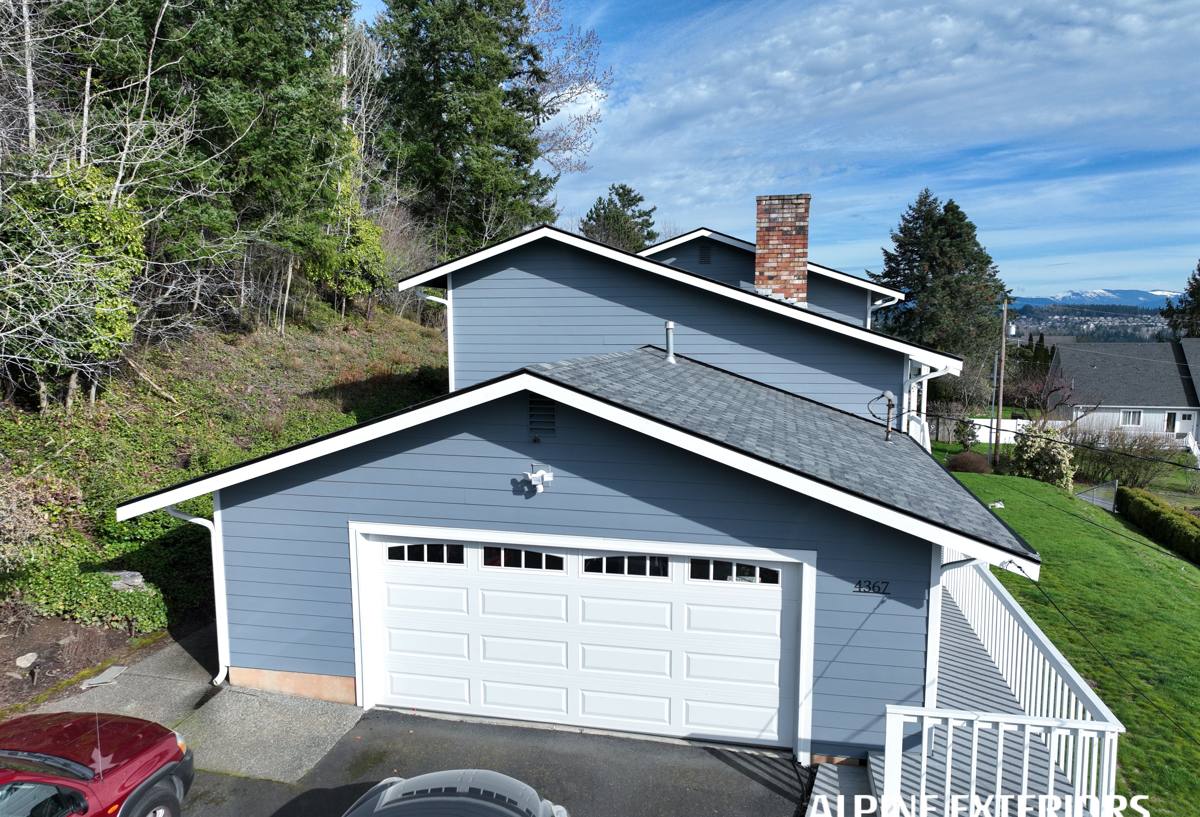
Signs a Mount Vernon Home Needs a New Roof, Not Another Repair
Repairs make sense when the damage is localized and the roof underneath is still sound. A full replacement makes sense when the roof itself — the decking, the underlayment, the flashing system — has reached the point where patching one spot just shifts the problem somewhere else. Some signs point clearly toward replacement:
- Granule loss heavy enough that you're finding shingle grit in the gutters every season, not just after a storm
- Shingles that are curling, cupping, or cracking across multiple slopes rather than one isolated area
- Soft or spongy decking felt underfoot during an inspection — a sign moisture has already reached the wood
- Persistent moss growth that returns within a season or two of cleaning, even on treated shingles
- Daylight visible through the attic sheathing, or consistent musty smell in the attic space
- A roof at or past the age where the manufacturer's warranty has expired, combined with any of the above
If a roof is showing one or two of these signs in isolation, a repair or a targeted maintenance visit is often the honest answer. When several show up together, or the roof is already past 20–25 years for standard asphalt shingle, replacement is usually the more cost-effective path — patching a roof at that point tends to buy a year or two at a time rather than solving the underlying problem.
What a Correct New Roof Installation Actually Involves
It's Not Just Shingles
The shingle, metal panel, or shake on top is the part everyone sees, but it's the least important layer when it comes to keeping water out. A roof system is really several layers working together, and in a climate with this much sustained rain, every one of those layers matters:
- Full tear-off to the decking — layering new shingles over old is a shortcut that traps moisture and voids most manufacturer warranties
- Decking inspection and repair — any soft, delaminated, or water-damaged sheathing gets replaced before anything new goes down, not covered up
- Ice-and-water shield at vulnerable points — valleys, eaves, and areas prone to wind-driven rain get a self-adhering waterproof membrane, not just felt paper
- Synthetic underlayment across the field — a full moisture barrier under the roofing material, sized for our rainfall totals rather than a drier-climate minimum
- New flashing at every penetration — chimneys, skylights, vent pipes, and wall intersections all get new metal, not re-used flashing bent back into place
- Balanced intake and exhaust ventilation — proper airflow through the attic, covered in more detail below
- Correctly installed starter courses and ridge caps — the details most likely to be rushed on a fast job, and the first place wind and rain will find a weakness
Skipping or shortcutting any one of these doesn't show up as a problem on day one. It shows up two, five, or ten years later, usually as a leak that seems to come from nowhere because the visible shingles still look fine.
Choosing the Right Roofing Material for a Wet, Salt-Air Climate
There isn't one "best" roofing material for Mount Vernon — the right choice depends on the home, the budget, and how much long-term maintenance a homeowner wants to take on. What matters is picking a material honestly, with the moss, moisture, and salt exposure factored in from the start, rather than picking on looks alone and dealing with the consequences later.
| Material | Typical Lifespan Here | Moss / Algae Resistance | Relative Cost |
|---|---|---|---|
| Architectural asphalt shingle | 25–30 years | Good with algae-resistant granules; needs periodic cleaning on shaded slopes | $ |
| Standing seam metal | 40–50+ years | Very good; sheds moss and debris well due to smooth, steep-pitch-friendly surface | $$$ |
| Synthetic (composite) shake or slate | 35–50 years | Good; won't rot like wood shake, but still benefits from occasional cleaning | $$–$$$ |
| Cedar shake (natural wood) | 15–25 years in this climate | Poor without ongoing treatment; highest maintenance burden in sustained moisture | $$–$$$ |
We're upfront that natural cedar shake, while attractive, carries the highest long-term maintenance burden in a climate this wet — it needs regular treatment and cleaning to resist rot and moss, and even then its service life here tends to run shorter than in a drier region. That's not a knock on the product; it's simply a trade-off worth knowing before committing to it. For most Mount Vernon homes, a quality architectural asphalt shingle offers the best balance of upfront cost and performance, while metal is worth the higher investment for homeowners planning to stay long-term and wanting to minimize moss and maintenance altogether.
Our Installation Process, Step by Step
- On-site inspection and estimate — we walk the roof (or use a drone where pitch or access makes that safer), check the decking, ventilation, and flashing condition, and give a straightforward written estimate
- Material selection — we walk through the options above based on your budget, the home's style, and how much long-term maintenance you want to take on
- Permitting — we handle the permit process so the job is inspected and documented correctly
- Full tear-off — old roofing removed down to the decking, with the property protected and debris hauled off the same day where possible
- Decking repair — any damaged sheathing is replaced before installation continues; we show homeowners what we found and why it's being replaced
- Underlayment, flashing, and ventilation installation — the layers that actually keep water out, installed to spec rather than rushed
- Final roofing material installation — shingles, panels, or shake installed with attention to starter courses, valleys, and ridge detail
- Final walkthrough — we inspect the finished roof with the homeowner and go over warranty paperwork and basic maintenance expectations
Ventilation and Moisture: The Detail Most Roofs Get Wrong
A surprising number of premature roof failures in this climate have nothing to do with the shingles themselves — they're a ventilation problem. When an attic doesn't have balanced intake (at the eaves) and exhaust (at or near the ridge), warm moist air from inside the home gets trapped against the underside of the roof deck. Combined with our region's cool, damp air outside, that trapped moisture condenses, and over time it can rot the decking from below even while the shingles on top look perfectly fine.
Proper ventilation also matters for moss control. A roof deck that stays cooler and drier is less hospitable to moss and algae growth than one running warm and damp from poor attic airflow. When we replace a roof, we check the existing ventilation and correct it as part of the job rather than treating it as a separate, optional add-on — it's part of what makes a new roof actually last its full expected lifespan here instead of underperforming it.
Living With Moss and Long-Term Roof Maintenance
No roofing material in a marine climate like this is entirely moss-proof forever, no matter what it's made of. What changes with the right installation is how much moss becomes a problem and how easy it is to manage. A well-ventilated roof with algae-resistant materials and clean, correctly flashed valleys will shed moisture faster and give moss less of a foothold than one where water sits and drains slowly.
After installation, a few simple habits go a long way:
- Keep gutters clear so water isn't backing up under the shingle edge, especially heading into the wetter months
- Trim back overhanging branches on shaded slopes, since shade and moisture together are what moss needs most
- Have moss growth removed gently before it establishes a mat — soft-washing rather than aggressive pressure washing, which can strip granules
- Schedule a roof check every couple of years, even without an obvious problem, so small issues get caught while they're still small
Permits, Warranty, and What "Done Right" Actually Looks Like
A new roof installation should come with two forms of protection: a manufacturer's material warranty and a workmanship warranty from whoever installed it. The material warranty covers defects in the shingle, panel, or shake itself. The workmanship warranty covers the installation — flashing, ventilation, and general craftsmanship — which is where most real-world leaks actually originate. A homeowner should know, in plain terms, what each warranty covers and for how long before work ever starts, not find out after a problem shows up.
Permitting matters for the same reason. An inspected, permitted roof job means there's a documented record that the work meets code — which protects the homeowner at resale and gives an independent check that the installation was done correctly, not just quickly.
Why Hiring a Crew That Already Works in Mount Vernon Matters
Roofing crews that mostly work in drier parts of the state, or that treat every job with the same generic spec regardless of climate, sometimes miss the details that matter most here — the amount of ice-and-water shield used at eaves and valleys, how ventilation is balanced for sustained moisture, or which materials genuinely hold up against a long moss season versus which ones just look good on the installation photo. A crew that regularly works roofs in Mount Vernon and the surrounding Skagit and Whatcom County area has already seen how these decisions play out five and ten years later, and builds accordingly from the start.
That local pattern recognition is hard to substitute for. It's the difference between a roof that's technically installed to code and one that's actually built for the rain, wind, and moss this part of the Pacific Northwest sees every year.
If you're weighing a repair against a full replacement, or just want a straight answer about what your roof actually needs, we're happy to take a look. Use the form below to request a free, no-pressure estimate — we'll walk the roof, tell you honestly what we find, and lay out your options without a hard sell.