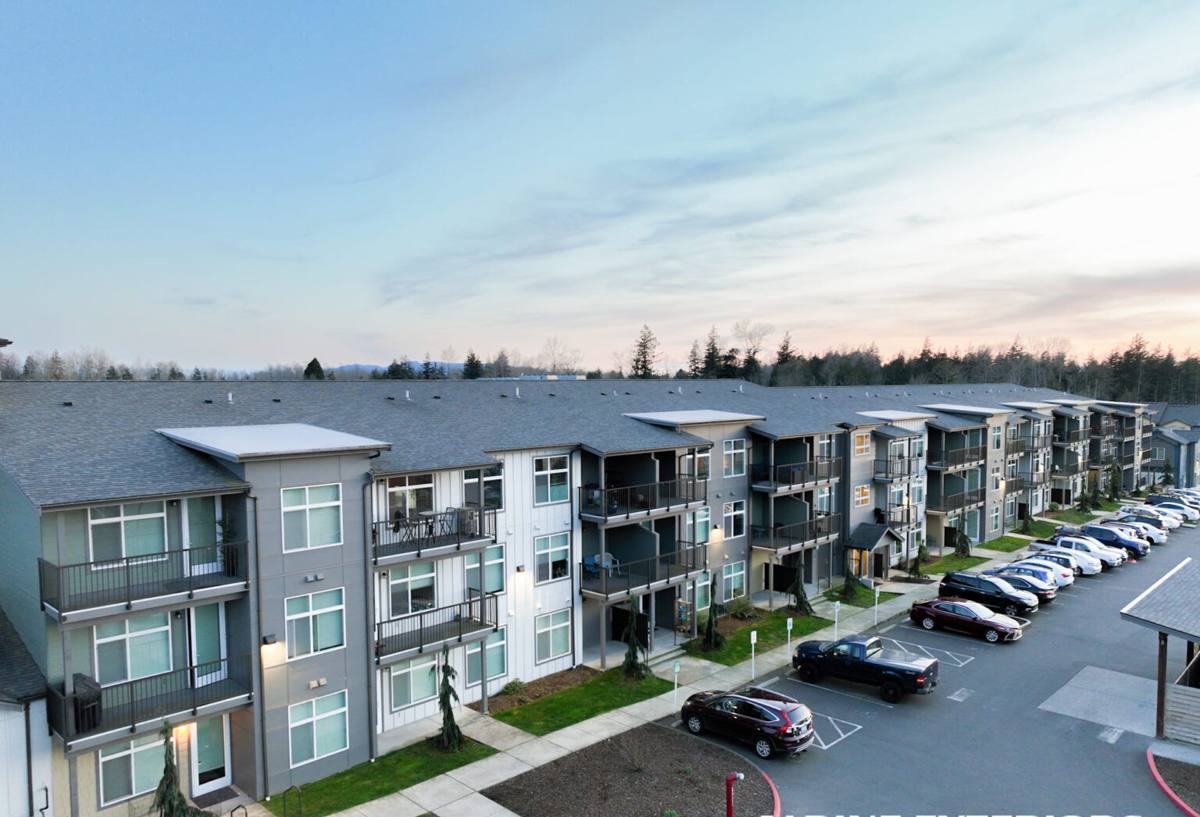
 Chuckanut Exterior
 Windows Built for Happy Valley's Weather, Not Just Any Weather
Happy Valley sits close enough to the water and the tree line that its homes take on a specific kind of weather stress: salty, moisture-laden air moving in off the coast, long stretches of driving rain that comes in sideways during winter storms, and shaded, damp conditions that keep moss and mildew active for most of the year. Windows in this pocket of Chuckanut don't fail the way they might in a drier inland area. They fail at the seams, the sills, and the flashing details that most installers treat as an afterthought.
A window that's rated well on paper can still leak, fog, or rot out its frame within a few years if it's installed without accounting for wind-driven rain and constant humidity. That's the gap we focus on closing for Happy Valley homeowners — not just selling a window, but installing it in a way that actually holds up to Whatcom County's coastal weather pattern year after year.
What Happy Valley Homes Actually Need from a Window Install
Moisture Management Comes First
In a climate with this much sustained rain and humidity, the single biggest factor in a window's long-term performance isn't the glass — it's how water is managed around it. That means correct flashing integration with the wall's weather-resistive barrier, a sloped sill pan that sheds water outward instead of letting it pool, and sealant details that account for the building settling and moving over time.
Salt Air Changes What Hardware Survives
Homes with any coastal exposure see faster corrosion on cheap fasteners, hinges, and cranks than homes further inland. We pay attention to hardware grade and frame material choices specifically because of this — a window that would be fine in a dry inland neighborhood can start showing corrosion streaks and stiff hardware within a few seasons here.
Moss and Organic Growth Need Airflow and Drainage
Shaded lots and persistent dampness create ideal conditions for moss and mildew to take hold around window frames, especially at the bottom corners where debris and water tend to collect. Good installation includes making sure sills and drainage paths aren't creating a dam for organic buildup to grow against.
Signs Your Current Windows Are Losing the Battle
Before deciding whether you need a full replacement or just better sealing, it helps to know what to look for. These are the warning signs we see most often on homes in this area:
- Fogging or condensation between panes (a sign the seal has failed on double- or triple-pane units)
- Soft or discolored wood at the sill or bottom corners of the frame
- Visible moss, black staining, or green streaking building up around the frame edges
- Drafts or whistling during wind-driven storms
- Difficulty opening, closing, or locking — often a sign the frame has shifted or swollen
- Paint or finish peeling specifically around the window opening, not the surrounding siding
- Musty smell near the window that doesn't go away with cleaning
Any one of these on its own isn't necessarily an emergency, but a window showing two or more of these signs is usually past the point where caulk and touch-ups will fix it.
Choosing a Frame Material for This Climate
There's no single "best" window material — the right choice depends on your home's exposure, your budget, and how much upkeep you want to take on. Here's how the common options actually compare for a coastal, wet-winter climate like Chuckanut's:
| Frame Material | Moisture & Salt Air Behavior | Maintenance | Typical Lifespan |
|---|---|---|---|
| Vinyl | Doesn't rot or corrode; performs well in humidity | Low — occasional cleaning | 20-30 years |
| Fiberglass | Excellent stability in temperature and moisture swings | Low | 30-40+ years |
| Aluminum | Prone to condensation and corrosion near salt air unless thermally broken | Moderate | 20-30 years |
| Wood (unclad) | Attractive but vulnerable to rot and moss growth without diligent upkeep | High — regular painting/sealing | Varies widely with maintenance |
| Wood-clad (vinyl or aluminum exterior) | Good if cladding and flashing details are done correctly | Low exterior, some interior wood care | 25-35 years |
For most Happy Valley homes, we steer people toward vinyl or fiberglass for anything on the weather side of the house, simply because they hold up to sustained moisture without the ongoing maintenance burden that unclad wood requires in this environment. That's a maintenance and moisture-behavior call, not a knock on wood windows as a product — they can work well when the homeowner is committed to the upkeep.
Glass Package Matters Too
Beyond the frame, double-pane windows with a low-E coating and argon gas fill are the standard baseline for this region's temperature swings and rain load. Triple-pane adds another layer of insulation and sound dampening, which is worth considering on homes closer to the water or a busier road, but it comes at a higher cost and added weight that your existing frame opening needs to support.
How We Handle a Window Installation, Step by Step
- On-site assessment — we look at existing frame condition, signs of water intrusion, and how each opening is exposed to wind and rain.
- Removal — old windows come out carefully so we can inspect the rough opening and framing underneath for hidden rot or damage before anything new goes in.
- Framing repair — any soft or water-damaged wood gets addressed now, not covered over. This is the step that gets skipped most often by rushed installs, and it's usually where future leaks start.
- Weather barrier and flashing integration — flashing tape and sill pans are installed to direct water out and away from the wall assembly, tied properly into the existing house wrap.
- Window installation and leveling — the unit is set, shimmed, and checked for level and square before it's fastened.
- Sealing and insulation — gaps are filled with appropriate low-expansion foam or insulation, and exterior sealant is applied at the correct joints — not just smeared everywhere as a catch-all.
- Exterior trim and finish work — trim is reinstalled or replaced and finished to shed water correctly.
- Final walkthrough — we operate every window, check the seals, and clean up the work area before we consider the job done.
Full-Frame Replacement vs. Insert Windows
Not every window replacement needs to go down to the studs. There are two common approaches, and which one makes sense depends on the condition of your existing frame:
| Approach | Best For | Trade-offs |
|---|---|---|
| Insert (pocket) replacement | Existing frame is solid, dry, and square | Faster, less disruptive, but doesn't address hidden framing or flashing issues |
| Full-frame replacement | Signs of rot, water intrusion, or frame damage present | More labor and cost, but the only way to fully correct water management problems |
Given how much moisture this area sees, we don't recommend an insert replacement over a frame that's already showing rot or staining — it locks a problem behind a new window instead of fixing it. We'll tell you honestly which situation you're in after a look at the opening, not before.
What Affects the Cost of a Window Installation
Every home is different, but the main variables that move a window project's price up or down are consistent. Rather than quote a number that won't hold up across different homes, here's what actually drives cost:
| Factor | Impact on Cost |
|---|---|
| Insert vs. full-frame replacement | Full-frame costs more due to added labor and materials |
| Frame material (vinyl, fiberglass, wood-clad) | Fiberglass and wood-clad typically cost more than vinyl |
| Glass package (double vs. triple-pane) | Triple-pane adds cost but improves insulation and sound control |
| Number and size of openings | Larger or custom-sized windows cost more than standard sizes |
| Existing damage or rot discovered during removal | Framing repair adds labor beyond the base installation cost |
| Access and height (second story, tight lots) | More difficult access adds labor time |
We'll walk through these factors specific to your home during the estimate so you know what you're paying for and why, rather than getting a flat number with no explanation behind it.
Why It Matters That We Already Work in Happy Valley
A crew that regularly works this specific area already knows how the local exposure tends to hit homes — which sides of a house typically take the worst of the driving rain, where moss buildup tends to be worst, and what kind of flashing and drainage details actually hold up here versus what looks fine on installation day and fails two winters later. That familiarity means fewer surprises once we open up an existing window opening, and it means the material and installation decisions we recommend are based on what actually performs in Whatcom County's coastal conditions — not a generic install method used everywhere regardless of climate.
It also means we're not guessing at code requirements, permitting expectations, or typical construction details for homes in this part of Chuckanut. We show up knowing the terrain, literally and otherwise.
Protecting Your Investment After Installation
A correctly installed window is only half the equation — a little seasonal attention keeps it performing for decades in this climate:
- Clear debris and moss buildup from sills and tracks a couple of times a year
- Check exterior caulking annually for cracking or separation, especially after a hard winter
- Keep gutters and downspouts clear so water isn't sheeting directly across window openings
- Operate every window at least a few times a year to keep hardware from seizing
- Address any soft trim or staining early, before it spreads to the frame itself
None of this is complicated, but skipping it is how a well-installed window ends up with the same problems as a poorly installed one — just a few years later.
If you're seeing drafts, fogging, moss buildup, or soft spots around your windows, or you're just planning ahead for a replacement, we're happy to come take a look. Estimates are free, there's no pressure to commit on the spot, and you'll get a straight answer about what your home actually needs — use the form below to get started.