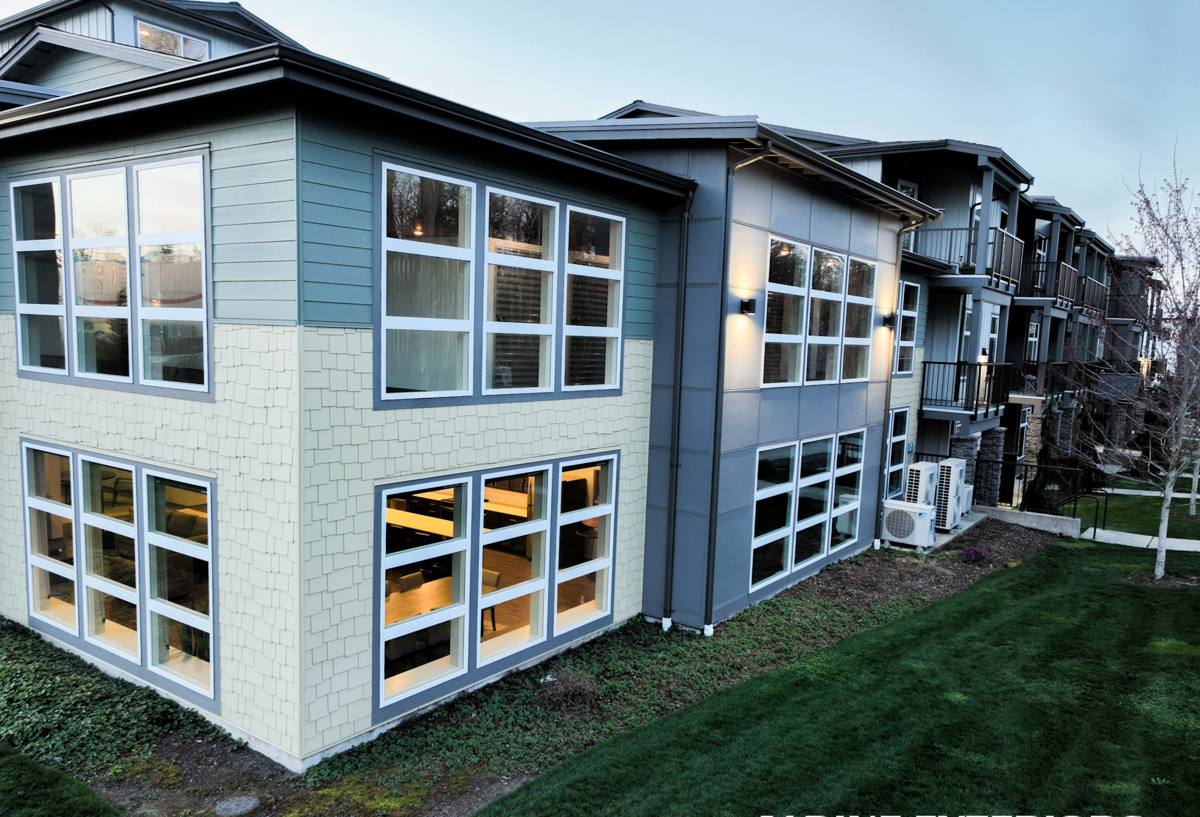
 Chuckanut Exterior
 Windows in York Take a Different Kind of Beating
York homes sit close enough to the water and the tree line that windows here age differently than they would further inland. Salt-laden air off the Sound works into aluminum frames and hardware over time, driving rain finds its way through even small gaps in old flashing, and the long moss season that Whatcom County is known for keeps north-facing walls and window sills damp for months at a stretch. None of this means a window is doomed — but it does mean the replacement job needs to account for conditions a lot of manufacturers' install guides were never written for.
We've replaced windows across the Chuckanut area long enough to know which failure patterns show up in York specifically versus what we see elsewhere in the county. That local pattern-recognition matters more than people expect — it's the difference between a window that looks fine going in and one that actually holds up through a decade of wet winters.
How to Tell a York Window Actually Needs Replacing
Not every old or drafty window needs full replacement — sometimes a resealing or hardware fix solves the problem. But certain signs point clearly to the window unit or its installation having failed, not just aged:
- Fogging or a visible haze between panes of a double-glazed unit — the seal has failed and the gas fill is gone
- Soft or discolored wood at the sill or the base of the frame, especially on walls that stay shaded and damp
- Visible corrosion or pitting on aluminum frames or hardware, common where salt air is a factor
- Black or green streaking below the window that keeps returning within weeks of cleaning — often a sign moss and algae have a foothold on the exterior trim
- Windows that are difficult to open, close, or lock, which often points to a frame that's swelled, warped, or shifted
- A noticeable draft or cold spot near the frame even when the window is fully closed and latched
- Visible daylight or gaps around the frame from the exterior, which usually means the original flashing or sealant has failed
If you're seeing more than one or two of these, it's worth having someone look at the whole opening, not just the glass — because in a lot of cases the window itself is fine and the real problem is what's happening around it in the wall.
What a Correct Window Replacement Job Involves
Swapping glass and calling it done is how a lot of window problems start over again a few years later. A job done right in this climate has a few non-negotiable steps:
Removing the Old Unit Without Damaging the Opening
The old window and its trim come out carefully so we can actually see the condition of the rough opening — the studs, sheathing, and any existing flashing. This is usually the first real look anyone gets at whether moisture has been getting into the wall assembly, which is common in older York homes that have weathered a lot of wet seasons.
Repairing What's Underneath
If there's soft sheathing, rot, or old flashing that's failed, that gets addressed before a new window ever goes in. Installing a new window into a compromised opening just hides the problem behind new trim — it doesn't fix it, and it usually voids any real warranty protection anyway.
Flashing and Water Management
This is the step that matters most for driving-rain climates like ours. Proper flashing means water that gets past the exterior cladding is directed back out, not into the wall cavity. We use a sill pan and properly lapped flashing tape so water sheds downward and outward, following the same shingle-style layering that keeps roofs dry — every layer overlaps the one below it.
Sealing and Insulating the Gap
The space between the new frame and the rough opening gets insulated and air-sealed properly — not stuffed with excess spray foam, which can bow a frame out of square, and not left with gaps that let air and moisture through. This step affects both energy performance and how the window operates for years afterward.
Exterior Trim and Finish
Trim gets reinstalled or replaced with attention to how it sheds water, since poorly sloped or caulked trim is one of the more common reasons moss and staining come back quickly on shaded walls.
Full-Frame Replacement vs. Insert Replacement
One of the first decisions on any project is whether the job calls for a full-frame replacement or an insert (also called a "pocket" replacement, where a new window goes inside the existing frame).
| Factor | Insert Replacement | Full-Frame Replacement |
|---|---|---|
| When it's appropriate | Existing frame is square, dry, and structurally sound | Frame shows rot, water damage, or is out of square |
| Access to wall cavity | No — existing flashing and sheathing stay hidden | Yes — allows inspection and repair of flashing/sheathing |
| Typical cost | Lower | Higher |
| Best fit for York conditions | Homes with no history of water intrusion at the openings | Homes with visible sill damage, staining, or older/unknown flashing |
| Long-term risk if used incorrectly | Can trap existing moisture problems behind new trim | None specific — most thorough option when in doubt |
Given how much driving rain this area sees, we lean toward recommending full-frame replacement whenever there's any uncertainty about what's behind the existing trim. An insert is a legitimate, cost-effective option — but only when we can confirm the opening underneath is actually sound.
Choosing Window Materials for a Salt Air, High-Moisture Climate
Frame material matters more here than it would in a drier, inland climate. Here's how the common options generally compare for a coastal Whatcom County property:
| Material | Salt Air / Moisture Behavior | Maintenance | Notes |
|---|---|---|---|
| Vinyl | Does not corrode; handles moisture well | Low — occasional cleaning | Most common choice for value and low upkeep |
| Fiberglass | Very stable in moisture and temperature swings | Low | Strong option where frames see a lot of expansion/contraction |
| Wood or wood-clad | Vulnerable to rot without diligent upkeep | High — requires regular refinishing/sealing | We recommend this only where the homeowner is committed to ongoing maintenance |
| Aluminum | Prone to corrosion and pitting in salt air over time | Moderate to high | Our standard is to avoid bare aluminum frames on exposed, salt-air-facing walls |
To be clear, this isn't a claim that any of these materials are poorly made — it's about matching the material's known behavior to this specific climate. A wood window can be a beautiful, long-lasting choice on a covered porch and a maintenance headache on an exposed, salt-facing wall. We'll walk through the honest trade-offs for your specific openings rather than pushing one material across the board.
Glass Packages Worth Knowing About
Beyond the frame, the glass package affects both comfort and how the window holds up:
- Double-pane, low-E glass is the baseline we recommend for most replacements — it manages heat loss and condensation well for our climate
- Argon or krypton gas fill between panes improves insulation value, though the benefit depends on a properly sealed unit — this is exactly what fails when you see fogging in an old window
- Tempered glass is required by code in certain locations near doors, low sills, and wet areas — we'll flag where this applies on your project
- Laminated glass can add sound dampening and impact resistance, worth considering on street-facing or ground-floor windows
Our Process for a York Project
- On-site assessment. We look at every window opening being considered, not just the ones you've flagged, since related problems often show up together on homes exposed to the same wind and rain direction.
- Honest scope and estimate. You get a clear breakdown of what's insert-replaceable versus what needs full-frame work, along with material options and why we're recommending them.
- Scheduling around the weather. Openings are only exposed to the elements for as short a window as possible — we plan around forecasted rain rather than hoping it holds off.
- Removal and inspection. Old units come out, and we show you what we find underneath before anything gets closed back up.
- Installation with proper flashing and sealing. This is where the long-term performance is actually decided — not in the product brochure.
- Final walkthrough. Every window operates, locks, and seals the way it should before we call the job finished.
What Affects the Cost of a Window Replacement Project
| Factor | Why It Matters |
|---|---|
| Insert vs. full-frame replacement | Full-frame requires more labor and materials but addresses hidden damage |
| Frame material | Vinyl, fiberglass, and wood-clad options carry different upfront costs |
| Condition of the existing opening | Rot or water damage found during removal adds repair scope |
| Number and size of openings | Larger or custom-sized windows cost more than standard sizes |
| Glass package | Gas fills, laminated glass, and tempered glass add to unit cost |
| Trim and exterior finish work | Matching existing siding or trim detail can add labor |
Most window replacement projects for a typical home run from a few thousand dollars for a small number of standard units up to well into five figures for a whole-house, full-frame project with upgraded materials. The only honest way to give you a real number is to look at your specific windows and openings — we're happy to walk through that with you.
Living With Salt Air and Moss Season After the Install
New windows reduce a lot of the moisture and drafts you'd deal with from failed old units, but a few habits keep them performing well for the long haul in this climate:
- Rinse salt residue off exterior frames periodically, especially on wind-exposed sides of the house
- Keep gutters and downspouts clear so runoff isn't sheeting directly across window heads
- Trim back vegetation and clear debris that keeps north-facing sills shaded and damp longer than they need to be
- Check exterior caulking annually, since even good sealant has a service life and driving rain will find any gap that opens up
- Operate locks and hardware a few times through the winter — hardware that sits unused is more prone to sticking or corroding
Why Hiring a Crew That Already Works in York Matters
A window replacement is only as good as its weakest detail — the flashing lap that's an inch too short, the caulk bead skipped because the crew was in a hurry, the material choice that looked fine in a showroom but wasn't suited to a salt-exposed wall. Crews that work regularly in the Chuckanut area have already seen what fails here and adjust for it as a matter of habit, not as an afterthought. That's the difference between a window install that looks right on install day and one that's still performing correctly five wet winters later.
If you're weighing window replacement for a home in York, we're glad to come take a look and give you a straightforward assessment — no pressure, no upsell, just an honest read on what your windows actually need. Reach out for a free estimate using the form below.