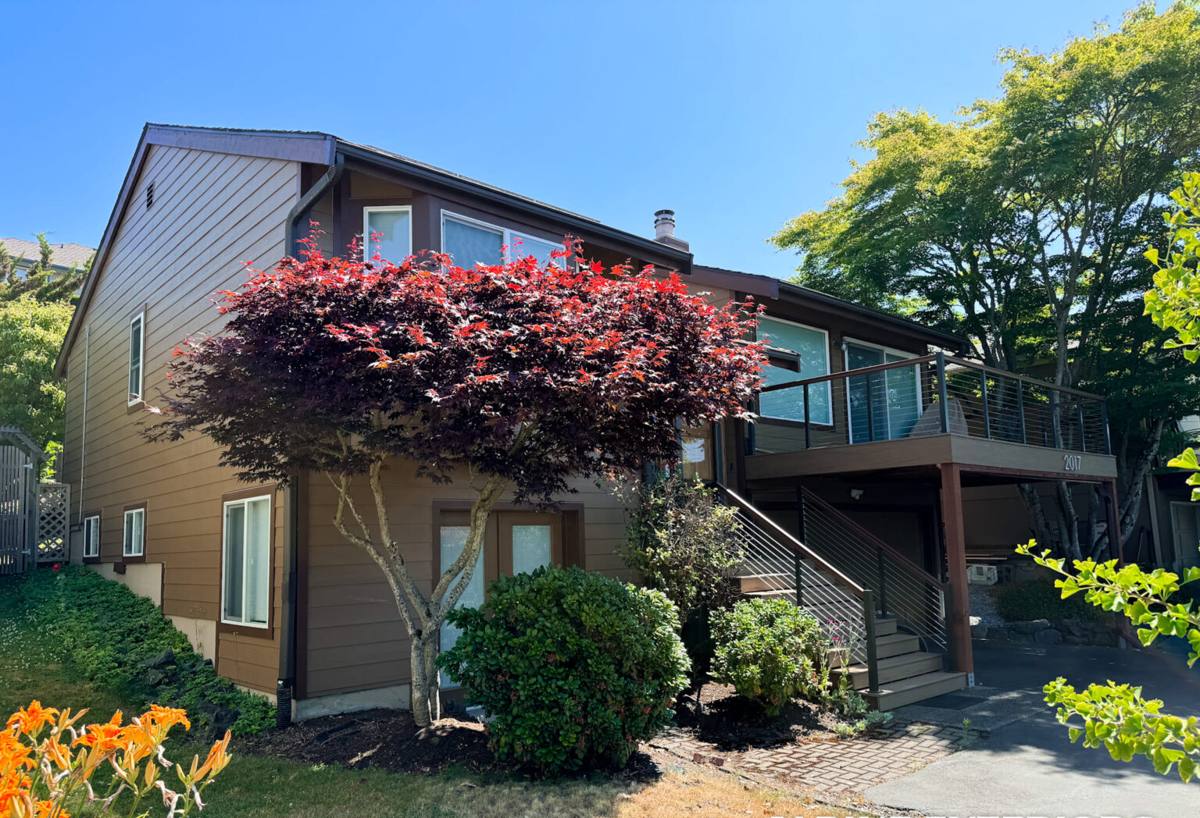
 Chuckanut Exterior
 Roofing in Edison Isn't the Same Job as Roofing Inland
Edison sits close enough to the water and the tree line that its roofs age differently than roofs even twenty minutes inland. The combination of salt-laden air off the bay, long stretches of driving rain, and shaded, moisture-holding tree cover puts a specific kind of stress on a roof system. A new roof installation here has to account for all three, not just meet a generic building code minimum. That's the difference between a roof that looks fine for a few years and one that actually holds up through a full Whatcom County winter.
We install roofs throughout the Chuckanut area, and Edison comes with its own patterns we've learned to plan for before the first shingle ever goes down.
What This Climate Actually Does to a Roof
Salt Air
Coastal air carries fine salt particles that accelerate corrosion on anything metal — nail heads, flashing, drip edge, and roof vents. Cheap or under-spec fasteners and flashing can start showing rust streaks and pinhole leaks years before the shingles themselves wear out. This is one of the most overlooked failure points in roofs installed by crews who don't regularly work this close to the water.
Driving Rain
Wind-driven rain doesn't just fall straight down — it gets pushed sideways and upward under shingle edges, around chimneys, and into valleys. A roof built for a drier or less windy climate can pass a basic rain test and still leak here during a real winter storm. Underlayment quality and flashing detail work matter more in Edison than in most parts of the state.
Long Moss Season
Shaded lots, morning fog, and mild temperatures mean moss and algae have a long growing window on north-facing slopes and anywhere tree cover blocks direct sun. Moss holds moisture against the roof surface, lifts shingle edges over time, and can shorten the life of an otherwise solid roof by years if the roof wasn't designed with airflow and drainage in mind.
Signs an Edison Home Needs a New Roof, Not Another Repair
- Granules collecting in gutters or at downspouts, especially after a hard rain
- Shingles that are cupping, curling at the edges, or visibly thinning
- Dark streaking or moss growth that comes back within months of cleaning
- Soft spots in the decking felt underfoot, or daylight visible in the attic
- Rust staining around vents, flashing, or nail heads
- A roof that's already had two or more patch repairs in the last few years
- Roof age at or past the manufacturer's rated lifespan for this climate (often shorter here than the label suggests)
Any one of these on its own might be a repair. Two or three together usually means the underlying system — decking, underlayment, ventilation — is past the point where patching makes financial sense.
What a Correct Installation Involves Here
A roof that's actually built for Edison's conditions goes beyond nailing down new shingles over the old layer. Here's what we treat as non-negotiable on every job:
Full Tear-Off and Deck Inspection
We remove existing roofing down to the deck rather than layering over it. This is the only way to actually see the sheathing, check for soft or water-damaged spots, and confirm the structure underneath is sound before anything new goes on.
Ice and Water Barrier at Vulnerable Points
Eaves, valleys, and roof-to-wall transitions get a self-adhered waterproof membrane underneath the main underlayment. These are the spots where wind-driven rain and standing moisture cause the most damage, and they're the first places a corner-cutting installation shows up.
Corrosion-Resistant Fasteners and Flashing
Given the salt air, we use fasteners and flashing rated to hold up in coastal exposure rather than standard-grade hardware that's fine for inland installs but starts rusting within a few seasons here.
Balanced Ventilation
Intake at the eaves and exhaust at the ridge, sized to actually move air through the attic space. Good ventilation reduces the moisture buildup that feeds moss and rot, and it protects the shingles from underneath as well as from above.
Valley and Penetration Detailing
Every pipe boot, chimney, and valley is a place water can find its way in under driving rain. These get built up in layers, not just caulked over, so there's no single point of failure.
Roofing Material Options for This Area
There's no single "best" roofing material — the right choice depends on the home, the budget, and how much tree cover and shade the roof gets. Here's how the common options compare for a climate like Edison's:
| Material | Handles Moss/Moisture | Handles Salt Air | Typical Lifespan Here |
|---|---|---|---|
| Architectural Asphalt Shingle (algae-resistant) | Good, with proper ventilation | Good with quality flashing/fasteners | 20–30 years |
| Standard Asphalt Shingle (builder-grade) | Fair — more prone to moss retention | Fair, depends on hardware quality | 15–20 years |
| Metal (standing seam or panel) | Excellent — sheds moisture, moss struggles to hold | Good with marine-grade coatings/fasteners | 40–50+ years |
| Cedar Shake | Poor without diligent maintenance — holds moisture | Fair — needs regular treatment | 20–30 years with upkeep |
We don't push one material on every roof. A shaded, north-facing home under fir trees is a different conversation than an open, sun-exposed lot even a few streets over. What we won't do is install a low-grade shingle with standard hardware on a home that's clearly going to fight moss and salt exposure for the next two decades — that's setting the homeowner up for an early second roof.
Our Installation Process
- On-site inspection and estimate. We walk the roof, check the attic, and look at drainage, shade patterns, and existing moss or moisture issues specific to the property.
- Material selection. We go over the trade-offs in plain terms — cost, lifespan, maintenance — so the decision fits the home and the budget, not just a sales pitch.
- Tear-off and deck repair. Old roofing comes off, decking gets inspected, and any soft or damaged sheathing is replaced before moving forward.
- Underlayment and waterproofing. Ice and water barrier at eaves, valleys, and penetrations, full synthetic underlayment across the field.
- Ventilation check and correction. We confirm intake and exhaust are balanced, adding or correcting vents where the existing setup is undersized.
- Installation and detail work. Shingles or panels go down to manufacturer spec, with flashing, valleys, and penetrations built up in layers.
- Final walkthrough. We review the finished roof with the homeowner, including basic maintenance expectations for this climate.
Ventilation and Moisture Control Matter More Here Than the Shingle Brand
Homeowners often focus on which shingle to pick and skip past ventilation, but in a climate with this much rain and shade, attic airflow is doing as much work as the roofing material itself. Poor ventilation traps moisture, which condensates on the underside of the decking, feeds rot, and creates the exact damp conditions moss thrives on from the outside. We size and balance ventilation on every installation rather than treating it as an optional upgrade, because in Edison's conditions it isn't optional — it's part of what makes the roof actually last as long as it's supposed to.
What Drives Cost on a New Roof Here
| Factor | Why It Matters Locally |
|---|---|
| Roof pitch and complexity | Steeper, cut-up roofs take longer and need more flashing detail against driving rain |
| Tear-off layers | Homes with two or more old layers cost more to strip and dispose of |
| Decking repair | Moisture damage found during tear-off adds material and labor to fix before install |
| Material choice | Metal and premium algae-resistant shingles cost more upfront but less in upkeep here |
| Ventilation upgrades | Older homes often need added intake/exhaust vents to meet proper airflow balance |
| Access and tree cover | Overhanging trees and tight access can add setup and cleanup time |
We give a written, itemized estimate so it's clear what's driving the number, rather than a flat quote that hides what's actually being paid for.
Why It Matters to Hire a Crew That Already Works in Edison
A roofing crew that mostly works drier, less shaded, inland neighborhoods can still do a technically fine installation and still hand a homeowner a roof that struggles here. Knowing which slopes in this area tend to hold moss, how far driving rain actually pushes water under an eave in a real coastal storm, and which fastener and flashing grades hold up against salt exposure isn't something that shows up in a generic install checklist — it comes from doing the work in these exact conditions repeatedly. That local pattern recognition is what separates a roof that needs attention again in eight years from one that goes the full distance.
There's also a practical side: warranty service, storm-damage follow-up, and seasonal questions are a lot easier to handle with a crew that's already local and familiar with the property, rather than one that has to travel in from farther away every time something comes up.
Before You Get Quotes: A Homeowner Checklist
- Ask whether the quote includes full tear-off or is a layer-over
- Confirm ice and water barrier is included at eaves, valleys, and penetrations
- Ask what fastener and flashing grade is being used, and whether it's rated for coastal/salt exposure
- Confirm attic ventilation will be assessed and corrected if undersized
- Get the manufacturer warranty terms in writing, not just verbally described
- Ask how decking repairs, if needed, will be priced — flat rate or per-sheet
- Confirm cleanup and disposal of old roofing is included
A roof is one of the largest single investments in a home, and in a climate like this one, the details that don't show up in a photo — underlayment quality, fastener grade, ventilation balance — are usually what determine whether it lasts twenty years or forty.
If you're weighing a repair versus a full replacement, or just want an honest look at where your current roof stands, we're happy to come out and take a look. The estimate is free, there's no pressure, and you'll get a straight answer about what your roof actually needs — just fill out the form below to get started.