 Chuckanut Exterior
 Why Decks in Bow Take More Punishment Than Decks Inland
Bow sits close to the water on the Chuckanut side of Whatcom County, which means homes here deal with a combination most inland decks never face: salt-tinged air off the bay, driving rain that comes in sideways during winter storms, and a moss season that can stretch from October well into spring. Any one of those on its own is manageable. Together, they age a deck faster than the manufacturer's warranty ever accounted for.
Salt air accelerates corrosion on fasteners, hardware, and any exposed metal connectors. Driving rain doesn't just wet the surface of a deck board — it drives moisture sideways into end grain, under flashing laps, and into any gap where two pieces of wood or composite meet. And moss doesn't just look bad. It holds moisture against the deck surface for months at a stretch, which is exactly the condition that breeds rot in framing lumber and delamination in composite decking.
We repair decks throughout the Chuckanut area, and Bow homes show a fairly consistent pattern of wear tied directly to this climate. Understanding that pattern is the difference between a repair that lasts and one that's patched over and failing again in two winters.
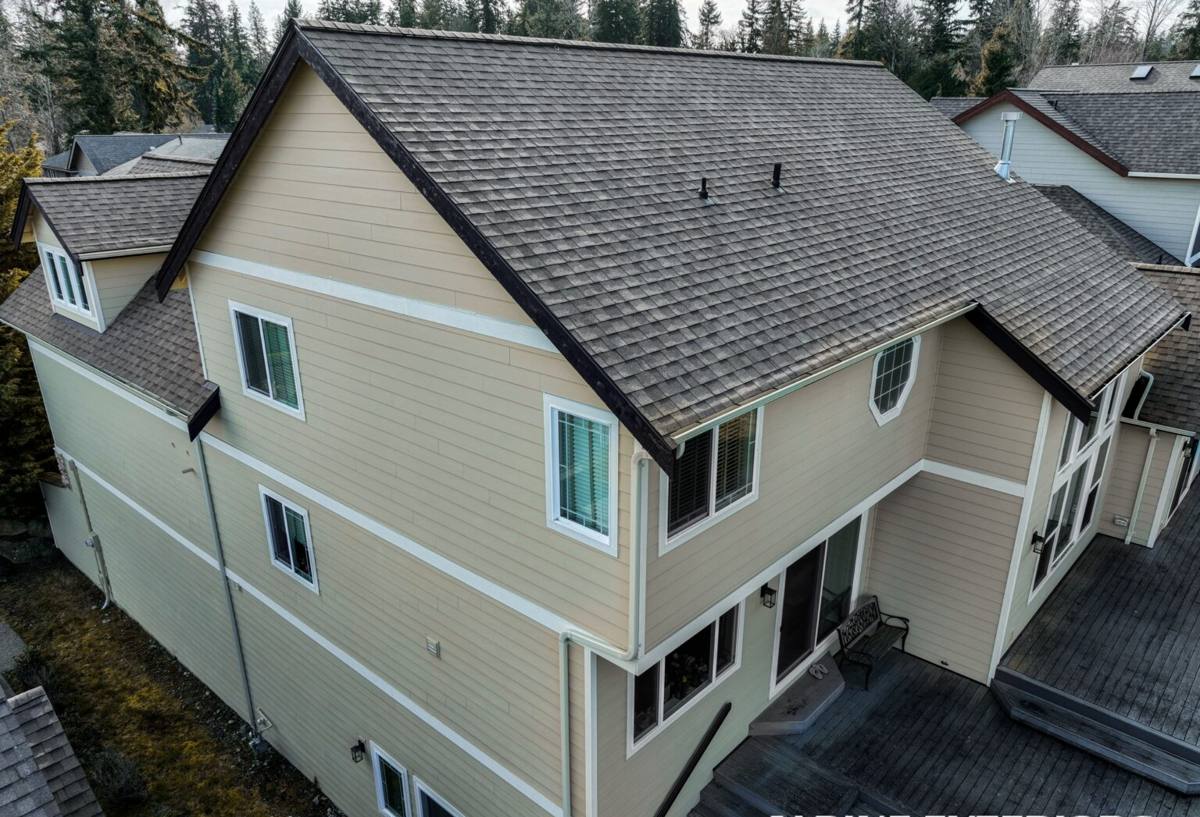
What "Correct" Deck Repair Actually Involves
A lot of deck repair work in this region is cosmetic — swap a bad board, sand a rough spot, call it done. That approach misses the point when the underlying cause is moisture intrusion. A repair done right starts below the surface, not at it.
Diagnosis Before Demolition
Before we replace a single board, we check the framing underneath: joists, beams, the ledger board connection to the house, and any post bases in contact with soil or concrete. Soft decking on the surface is often just the visible symptom of a moisture problem that started underneath, sometimes years earlier.
The Ledger Board Is Usually the Real Story
The ledger — the board that attaches the deck to the house — is the single most common source of hidden rot on decks in wet coastal climates. Flashing at this joint fails quietly. Water tracks behind it, into the rim joist, and sometimes into the wall framing of the house itself, all while the deck surface still looks fine. Any repair that doesn't include a real inspection of ledger flashing is incomplete.
Fasteners and Hardware Matter More Here
Near the water, standard galvanized fasteners corrode faster than they would twenty miles inland. Corroded fasteners lose holding strength long before they visibly fail, which is a structural issue, not a cosmetic one.
Common Deck Problems We See on Bow-Area Homes
- Soft or spongy decking near the house, usually tracing back to a ledger flashing failure
- Persistent moss and algae buildup on north-facing or shaded sections that never fully dry out
- Rusted or corroded fasteners and joist hangers, especially on decks facing open water or prevailing wind
- Cupped or split boards on older wood decks where end grain has absorbed water repeatedly
- Railing posts loosening at the base from rot in the surrounding framing
- Composite decking showing discoloration or slight swelling at cut ends that weren't properly sealed during original installation
- Stair stringers rotting from the bottom up where they sit closest to grade and stay wet longest
Repair or Replace: How We Make That Call
Not every deck problem means a full rebuild, and not every "just replace a board" job is actually that simple. The honest answer depends on how far the damage has spread and what's holding the structure together.
| Factor | Points Toward Repair | Points Toward Replacement |
|---|---|---|
| Framing condition | Joists and beams are sound, damage is isolated to surface boards | Rot has reached multiple joists or the ledger connection |
| Age of structure | Deck is under 15 years old with isolated wear | Deck is original to an older home and near end of expected service life |
| Extent of moss/moisture damage | Limited to a few boards in a shaded corner | Widespread across the deck surface and into fasteners |
| Code compliance | Railings, stairs, and spacing already meet current standards | Older railing heights, spacing, or footings don't meet current code |
| Budget priority | Targeted fix extends usable life a reasonable number of years | Repeated repairs would cost close to what a rebuild costs |
We'll walk you through where your deck actually falls on that table before we recommend anything. If a repair genuinely solves the problem, that's what we'll propose — a full rebuild isn't the right answer just because it's more work.
Our Deck Repair Process
- On-site inspection. We check the deck surface, but also get underneath it — framing, ledger, posts, and any hardware we can access — before quoting anything.
- Moisture and rot mapping. We identify every area affected, not just the spot that prompted the call, since rot rarely stays contained to one board.
- Written scope and honest options. You get a clear explanation of what needs repair now, what's borderline, and what can reasonably wait.
- Removal of compromised material. Anything soft, delaminated, or structurally weakened gets removed — patching over damaged framing is not something we do.
- Flashing and moisture management correction. If the ledger or a flashing detail is the root cause, we fix that detail as part of the repair, not as an upsell.
- Rebuild with climate-appropriate materials and fasteners. Matched or upgraded materials, corrosion-resistant hardware, and proper gapping for drainage.
- Final walkthrough. We show you what was repaired and why, and flag anything worth watching going forward.
Materials and Fasteners We Use for This Climate
Coastal exposure in Whatcom County changes what "good enough" hardware looks like. We spec fasteners and connectors rated for higher corrosion resistance on any repair near open water or exposed to salt-laden wind, even when the original construction used standard-grade hardware. It costs a bit more up front and saves the homeowner from redoing the same repair in five years.
Wood vs. Composite Repairs
For wood decking repairs, we match species and grade where possible and always treat cut ends, since raw end grain is the fastest path for water into a board. For composite decking, board-for-board matching isn't always possible across product lines and manufacturing runs, so we're upfront about color and texture differences before starting rather than after.
Why We're Careful About Certain Product Choices
Some lower-tier composite and capped-polymer products have specific installation tolerances — gapping, fastening pattern, ventilation clearance underneath — that are easy to get wrong and hard to spot until moisture problems show up years later. We stick to installation methods and products where we can stand behind the long-term moisture performance in a wet, coastal climate, and we'll explain the trade-offs of any material you're considering rather than just installing whatever's requested.
A Maintenance Checklist for Bow Homeowners
Between repairs, a few habits go a long way toward keeping moss and moisture from doing damage again.
- Sweep leaves and debris off the deck surface regularly through fall, especially in shaded corners
- Rinse or gently brush moss growth before it establishes rather than letting it build over a full season
- Check that gaps between boards are clear so water can actually drain instead of pooling
- Look at the ledger board area where the deck meets the house once a year for staining or soft spots
- Keep gutters and downspouts near the deck clear so runoff isn't dumping extra water onto the structure
- Inspect railing posts and stair stringers for movement or softness at the base
Why a Crew That Already Works in Bow and Chuckanut Matters
Deck repair advice that works for a dry inland climate doesn't automatically hold up here. A crew unfamiliar with this stretch of Whatcom County might not think to check ledger flashing first, might use standard hardware where corrosion-resistant fasteners are worth the upgrade, or might not recognize how much a shaded, moss-prone section is actually contributing to the damage. Knowing the local pattern — salt air, driving rain, long wet winters — changes where we look first and what we prioritize fixing, not just how we install a board.
We're not guessing at how this climate treats a deck. We see the same failure points repeatedly on homes throughout the area, and that experience shapes every inspection and repair we do.
Get an Honest Look at Your Deck
If your deck has soft spots, persistent moss, or just feels like it's not holding up the way it used to, we're happy to take a look and tell you plainly what's going on — no pressure, no upsell. Reach out for a free estimate using the form below.