 Chuckanut Exterior
 Storm Damage Roofing Built for York's Coastal Exposure
Homes in the York area sit close enough to the water and the Chuckanut hillside that they take weather from two directions at once: salt-laden wind coming off the Salish Sea, and heavy, sideways rain funneled down through the trees and slopes above. That combination is hard on roofs in a way that inland Whatcom County homes simply don't experience. A roof that would hold up fine forty minutes east can develop leaks, lifted shingles, and hidden rot years earlier out here if it isn't maintained and repaired correctly.
This page covers exactly one service — storm damage roof repair — for exactly one area: York and the immediate Chuckanut corridor. We're not going to give you a generic roofing pitch. We're going to walk through what actually happens to roofs in this specific stretch of Whatcom County, what a correct repair looks like, and how our process works when you call us after a windstorm, an atmospheric river event, or just the slow creep of moss and moisture damage.
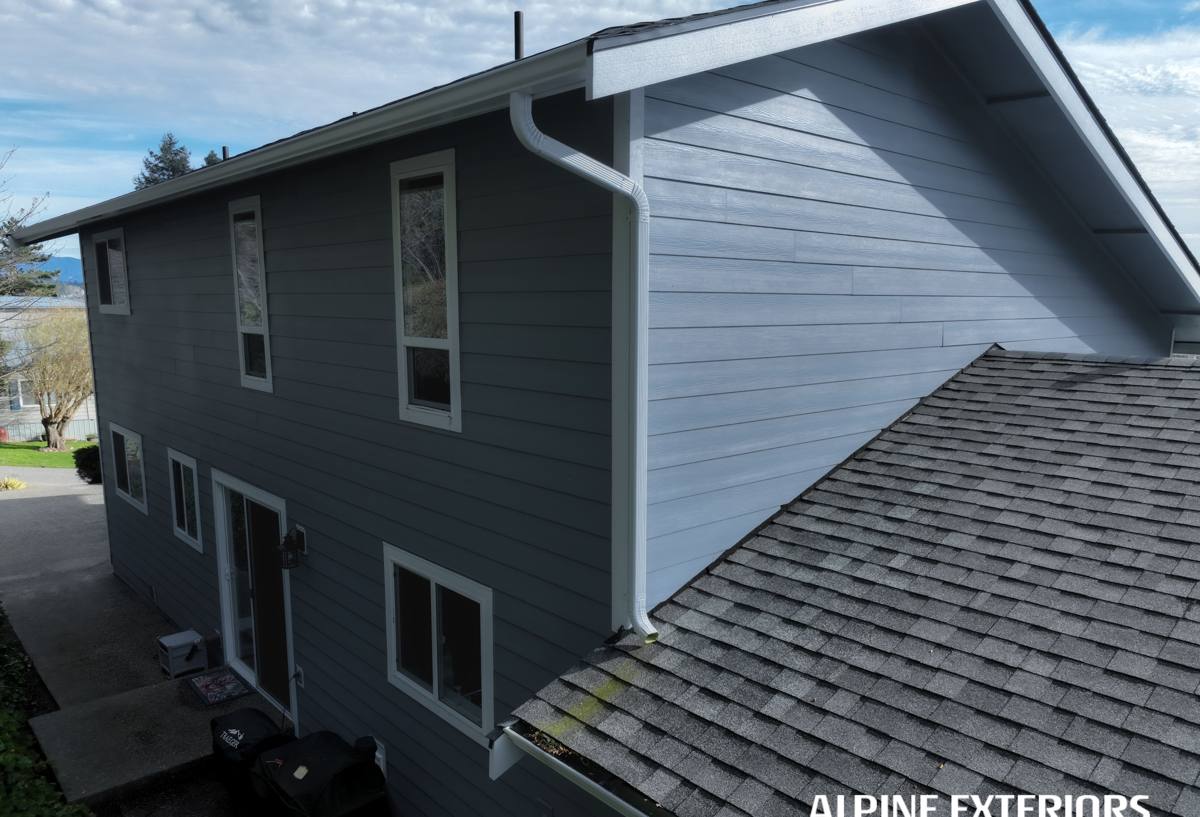
Why York Roofs Take a Different Kind of Beating
Salt Air and Metal Fatigue
Salt in the air isn't just a coastal-town cliché — it's corrosive. Exposed fasteners, flashing, gutters, and any galvanized metal on a roof system slowly break down faster near the water than they do further inland. A nail that's rusted through isn't holding shingles down anymore, and a corroded flashing seam is a leak waiting for the next storm to find it. When we repair storm damage on a York roof, we're checking metal condition as carefully as we check the shingles themselves, because in this area the metal often fails first.
Driving Rain and Wind-Driven Water
Chuckanut's terrain funnels wind in a way that pushes rain sideways into roof edges, valleys, and any gap in flashing or underlayment. Storms here don't just drop water straight down — they drive it up under shingle tabs and into places a roof was never designed to get wet. That's why storm damage in this area often shows up as interior leaks in spots that look completely fine from the ground. The damage is at the edges and transitions, not necessarily where the wind visibly tore something loose.
A Long, Wet Moss Season
Western Whatcom County's mild, damp climate gives moss a long growing window — often close to nine months of the year with enough moisture to sustain it. Moss holds water against the roof surface, works its way under shingle edges, and lifts material as it grows. A roof that's already carrying a moss load going into storm season is far more vulnerable to wind and water intrusion than a clean one, because the moss has already broken the shingles' seal in dozens of small places before the storm even arrives.
What Storm Damage Actually Looks Like Here
Homeowners often expect storm damage to be obvious — a missing shingle, a visible hole. In York's climate, it's frequently subtler than that. Here's what we most commonly find during storm damage inspections in this area:
- Lifted or creased shingle tabs along ridge lines and roof edges where wind uplift is strongest
- Flashing separated or corroded at chimneys, skylights, and roof-to-wall transitions
- Granule loss concentrated on the windward slope, thinning the shingle's UV and weather protection
- Gutter and downspout damage from wind-thrown debris, causing water to back up under the roof edge
- Soft or discolored roof decking found only once shingles are pulled back, from slow leaks that predate the storm
- Moss mats that trapped storm water against the roof surface long after the rain stopped
The last two are the ones that cost homeowners the most if they're missed. A repair that only addresses the visible shingle damage but ignores decking that's already been softened by weeks of trapped moisture isn't a real fix — it's a patch that fails again in the next storm.
What a Correct Storm Damage Repair Involves
1. Full-Roof Inspection, Not Just the Reported Spot
If you call us about a leak in one room, we're not going to look at just that one section. Wind and water damage in this climate rarely stays contained to a single area, and a proper repair starts with understanding the condition of the whole roof — including slopes and valleys you can't see from the ground.
2. Decking and Underlayment Check
Any area with lifted or missing shingles gets checked down to the decking. If water has been getting in for a while, the plywood or OSB underneath can be soft, delaminated, or stained — and that has to be addressed before new shingles go back on, not covered up.
3. Flashing and Metal Repair or Replacement
Given how salt air affects metal components here, we treat flashing repair as its own line item, not an afterthought. Corroded or separated flashing around chimneys, vents, skylights, and wall intersections is one of the most common sources of repeat leaks after a storm "repair" that only replaced shingles.
4. Matching Materials Correctly
Shingle repairs need to match the existing roof's material, weight, and color as closely as possible — both for appearance and because mismatched materials can create their own water-shedding problems at the seams. We source materials that are rated for coastal exposure where the existing roof allows it.
5. Moss and Debris Clearing
Part of a proper storm repair in this area includes clearing moss and debris from the repaired sections and surrounding roof surface, so the new work isn't sitting under the same trapped moisture that contributed to the original damage.
Our Process, Start to Finish
- Contact and initial assessment — you describe what you're seeing (a leak, missing shingles, storm event), and we schedule a roof inspection.
- On-site inspection — we get on the roof, document the damage, and check adjacent areas and decking condition, not just the obvious problem spot.
- Written estimate — you get a clear explanation of what's damaged, what needs to be repaired versus replaced, and a cost range before any work starts.
- Repair work — decking, flashing, and shingle work is completed to match your existing roof system, with attention to the coastal-specific issues covered above.
- Final walkthrough — we show you the completed work and explain what was done and why, so you understand the repair rather than just being told it's finished.
Repair vs. Replacement: How We Help You Decide
Not every storm-damaged roof needs to be replaced, and not every roof can be responsibly patched. The honest answer depends on the roof's age, how much of it is affected, and what we find once we get into the decking. Here's the general framework we use:
| Factor | Leans Toward Repair | Leans Toward Replacement |
|---|---|---|
| Roof age | Under 10-12 years, otherwise sound | Nearing or past expected lifespan |
| Damage extent | Isolated to one slope or section | Spread across multiple slopes |
| Decking condition | Solid, dry beneath damaged shingles | Soft, delaminated, or rotted in multiple spots |
| Moss history | Minimal, recently maintained | Long-term moss growth with widespread lifting |
| Prior repairs | First significant storm event | Repeated patch jobs already on record |
We'll walk you through where your roof falls on that spectrum and give you a straight recommendation — we're not going to sell a full replacement when a targeted repair will genuinely hold up, and we're not going to patch a roof that's going to leak again in six months just to make a smaller sale.
Why a Crew That Already Works York Matters
Storm damage repair isn't just a checklist — it's judgment calls about what this specific climate does to a roof over time. A crew that regularly works the York and Chuckanut area already knows which roof styles and slope orientations tend to take the worst wind exposure, which flashing details fail first in salt air, and how aggressive the moss growth gets on north-facing slopes shaded by trees. That local pattern recognition means a faster, more accurate diagnosis instead of a generic repair that treats your roof like it could be anywhere in Washington.
It also means shorter response times. When a storm rolls through Whatcom County, homes near the water and along the Chuckanut corridor often need attention around the same time. Being an established local crew means we're not driving in from out of the area to reach you — we're already working in your neighborhood.
Simple Maintenance Steps That Reduce Storm Damage Risk
Between storms, a few habits meaningfully lower the odds of serious damage the next time weather rolls through:
- Keep gutters and downspouts clear so wind-driven rain has somewhere to go instead of backing up under roof edges
- Trim back tree limbs that overhang the roof, which reduces both moss growth and impact damage risk
- Have moss treated and removed before it has a chance to lift shingle edges over a full growing season
- Schedule a roof check after any major windstorm, even if you don't see obvious damage from the ground
- Address small flashing or shingle issues early, before salt air and moisture turn a minor fix into a decking problem
What to Do Right After a Storm
If you've just been through a windstorm or heavy rain event and you're not sure whether your roof took damage, don't wait for a leak to show up inside the house before checking. Interior staining is often a sign that water has already been getting in for some time. A prompt inspection after a storm — even a quick one — catches lifted shingles and flashing problems while they're still a straightforward repair, before another round of wind and rain turns them into a decking replacement.
If your roof took a hit in the last storm, or you just want a professional set of eyes on it before the next one rolls in off the water, we're happy to come take a look. Reach out for a free, no-pressure estimate using the form below — we'll tell you honestly what we find.