 Chuckanut Exterior
 Why York's Siding Has to Work Harder Than Most
Homes in the York area, tucked into the Chuckanut corridor of Whatcom County, sit at the intersection of three things that are hard on exterior walls: salt-laden air off the water, long stretches of driving rain, and a moss season that can run most of the year in shaded, north-facing spots. Any one of these will shorten the life of a mediocre siding job. Together, they expose cheap materials and sloppy installation fast — usually within the first five to seven years, right when a homeowner is least expecting to think about siding again.
We install James Hardie fiber cement siding exclusively in York and throughout the rest of our Chuckanut service area, and this page is about what that actually means for a house in this specific pocket of Whatcom County — not a generic rundown of siding options.
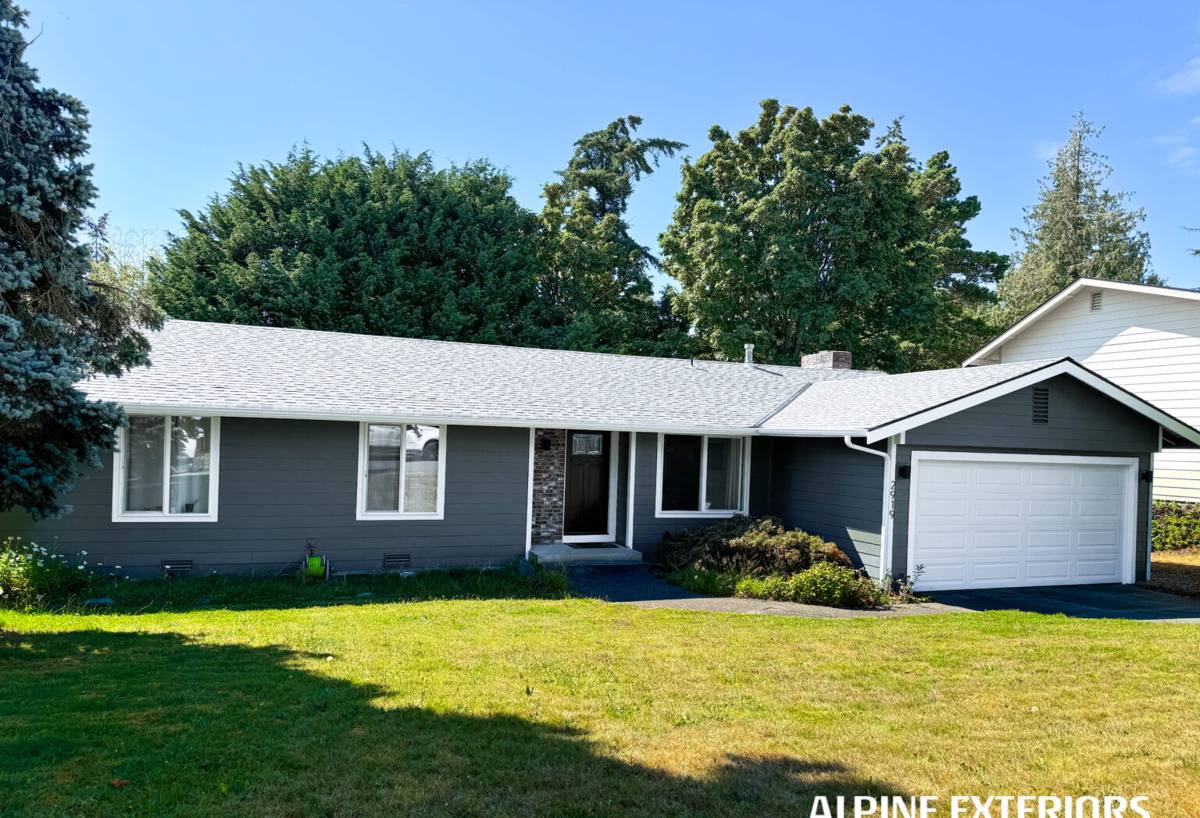
What Salt Air, Rain, and Moss Actually Do to a Wall System
Salt air
Even a few miles inland from open water, airborne salt accelerates corrosion on fasteners, flashing, and any metal trim. Over time it also breaks down cheaper paint films faster than inland conditions would, leading to chalking and premature fading on siding that isn't factory-finished to handle it.
Driving rain
Wind-driven rain doesn't just fall on a wall — it gets pushed sideways and upward into laps, joints, and butt seams. A siding system is only as good as its water management: the drainage plane behind it, the flashing above windows and doors, and the gaps left at the bottom of each course. Get any of that wrong and water finds its way behind the cladding, where it can sit against sheathing for months without anyone noticing.
Moss and prolonged moisture
Shaded elevations and roof lines that stay damp for weeks at a stretch grow moss and algae readily here. On wood-based or poorly sealed products, that constant moisture load feeds rot at the surface and, eventually, at the substrate. On siding with exposed cut edges or under-caulked joints, it's often the first visible sign that water is getting in somewhere it shouldn't.
Why We Standardized on James Hardie for Homes Like These
James Hardie fiber cement is non-combustible, dimensionally stable, and manufactured in HZ5 and HZ10 formulations engineered for specific moisture and freeze-thaw exposure zones — the Pacific Northwest falls squarely into the range these products were designed around. Its ColorPlus factory finish is baked on under controlled conditions, which holds color and resists the fading and chalking that salt air accelerates on field-painted products. When it's installed correctly — proper clearances, correct fastening, sealed cut edges, and flashing detailed the way Hardie's own installation manual specifies — it holds up to sustained wet weather far better than the wood-based and vinyl alternatives still common on older homes in this area.
We don't install LP SmartSide, vinyl, Cemplank, Allura, or unfinished wood siding. That's a deliberate standard, not a sales pitch: we'd rather put one product on every home, know it cold, and stand behind it, than stock five products and split our attention.
What a Correct Installation Actually Involves
The material only performs as well as the installation underneath it. On every York project, our process includes:
- Inspecting and repairing sheathing before anything new goes up — new siding over rotten sheathing just hides the problem
- Installing a code-compliant weather-resistive barrier with properly lapped and taped seams
- Correct flashing at every window, door, and roof-to-wall transition, with kick-out flashing where rooflines meet walls
- Fastening per Hardie's specification — the wrong nail, the wrong depth, or missing studs are the most common causes of early siding failure we see on re-inspections
- Maintaining Hardie's specified clearances from grade, roofing, and decks so the bottom edge of the siding never sits in standing water
- Sealing and priming any field-cut edges with Hardie-approved products, since a raw cut edge is the one place factory protection doesn't reach
Skipping any one of these doesn't usually cause an immediate problem — it causes a five-years-from-now problem, which is exactly the kind that's expensive to trace and fix.
Picking the Right Hardie Product for a York Elevation
Not every wall on a house needs the same product. We typically evaluate exposure by elevation — sun, prevailing wind and rain direction, and proximity to landscaping that holds moisture — and spec accordingly:
| Product | Best suited for | Why it fits this area |
|---|---|---|
| HardiePlank lap siding | Most wall elevations | Traditional profile, ColorPlus finish resists salt-air fading, wide color range |
| HardiePanel vertical siding | Accent walls, gables, modern facades | Fewer horizontal laps means fewer water-entry points on high-exposure walls |
| HardieTrim boards | Corners, window and door surrounds | Consistent, non-combustible trim that won't rot or cup the way wood trim does under constant damp |
| HZ5 vs HZ10 formulation | Determined by specific site exposure | Matches the product's engineered moisture tolerance to the actual conditions on that wall |
Common Problems We Find on Older or Improperly Installed Siding in This Area
When we're called out to look at failing siding in and around York, the pattern is usually the same regardless of the original material:
- Siding installed tight to grade or a deck surface, holding moisture against the bottom courses year-round
- Missing or undersized flashing above windows, with staining visible just below the frame
- Caulk used to bridge gaps that should have been flashed — caulk is a maintenance item, not a substitute for proper detailing
- Moss buildup on north-facing walls that was never addressed, holding moisture against the surface long enough to start substrate damage
- Fasteners driven into siding without hitting solid framing, leading to loose boards and gaps that open a path for wind-driven rain
None of these are unique to one brand of siding — they're installation issues. But they matter more here than in drier climates, because Whatcom County doesn't give a bad detail much time to dry out between rain events.
Our Process for a York Siding Project
1. On-site assessment
We walk the exterior, check current siding and trim condition, look at grading and drainage around the foundation, and note elevation-specific exposure before recommending a scope.
2. Written scope and product spec
You get a clear plan: which Hardie products on which elevations, what trim and flashing work is included, and what happens to existing siding, house wrap, and any damaged sheathing found underneath.
3. Tear-off and substrate repair
Old siding comes off, sheathing gets inspected, and any rot or damage is repaired before house wrap and flashing go back on — this is the step that gets skipped on rush jobs and causes callbacks later.
4. Installation to spec
Siding, trim, and flashing are installed per Hardie's published installation guidelines, not shortcuts adapted from other products.
5. Final walkthrough
We review the finished job with you, including maintenance basics specific to this climate, before calling it complete.
Why Local Experience in the Chuckanut Area Matters
A crew that already works in York and the surrounding Chuckanut area isn't guessing at exposure conditions — they've seen how a specific hillside orientation channels rain, which elevations grow moss first, and how salt air behaves a few miles from open water versus further inland. That local pattern recognition shows up in small decisions: where to add extra flashing attention, which elevation gets the more moisture-tolerant HZ formulation, where drainage needs a second look before siding goes back on. It's the difference between a crew executing a generic install and one solving for the actual conditions on your specific lot.
Maintaining Hardie Siding in This Climate
Correctly installed Hardie siding is low-maintenance, not no-maintenance. In a salt-air, high-rain, high-moss environment, a short annual routine goes a long way:
- Rinse siding annually, and more often on shaded or north-facing walls prone to moss and algae
- Keep gutters clear so overflow doesn't run down the face of the siding repeatedly
- Trim back landscaping that keeps a wall shaded and damp longer than it needs to be
- Check caulking at trim joints and penetrations yearly, and re-caulk before gaps open up
- Watch for any staining below windows or at wall-roof transitions — it's usually the earliest sign of a flashing issue, not a siding issue
If you're weighing siding options for a home in York or elsewhere in the Chuckanut area, we're happy to take a look and talk through what your specific elevations actually need — no pressure, no obligation. Use the form below to request a free estimate.