 Chuckanut Exterior
 Why York Siding Wears Differently Than Inland Homes
Homes in the York area sit close enough to Chuckanut Bay and the greater Whatcom County shoreline that siding takes on a different set of stresses than a house twenty miles inland. Salt-laden air works into seams and fastener heads. Driving rain off the water pushes moisture sideways into laps and corners instead of just falling straight down. And the long, wet stretch of fall through spring gives moss and algae months to establish themselves on anything that stays damp and shaded. None of this is unusual for the region — it's just the reality of building this close to the water, and it means siding decisions here should be made with those specific conditions in mind, not a generic national average.
When we replace siding on a York home, we're not just swapping old material for new. We're accounting for wind-driven rain exposure, salt exposure on the water-facing walls, and the moss growth that shows up wherever a wall stays shaded and damp for weeks at a time. A siding system that isn't built for that combination will show its age faster here than it would in a drier part of the state.
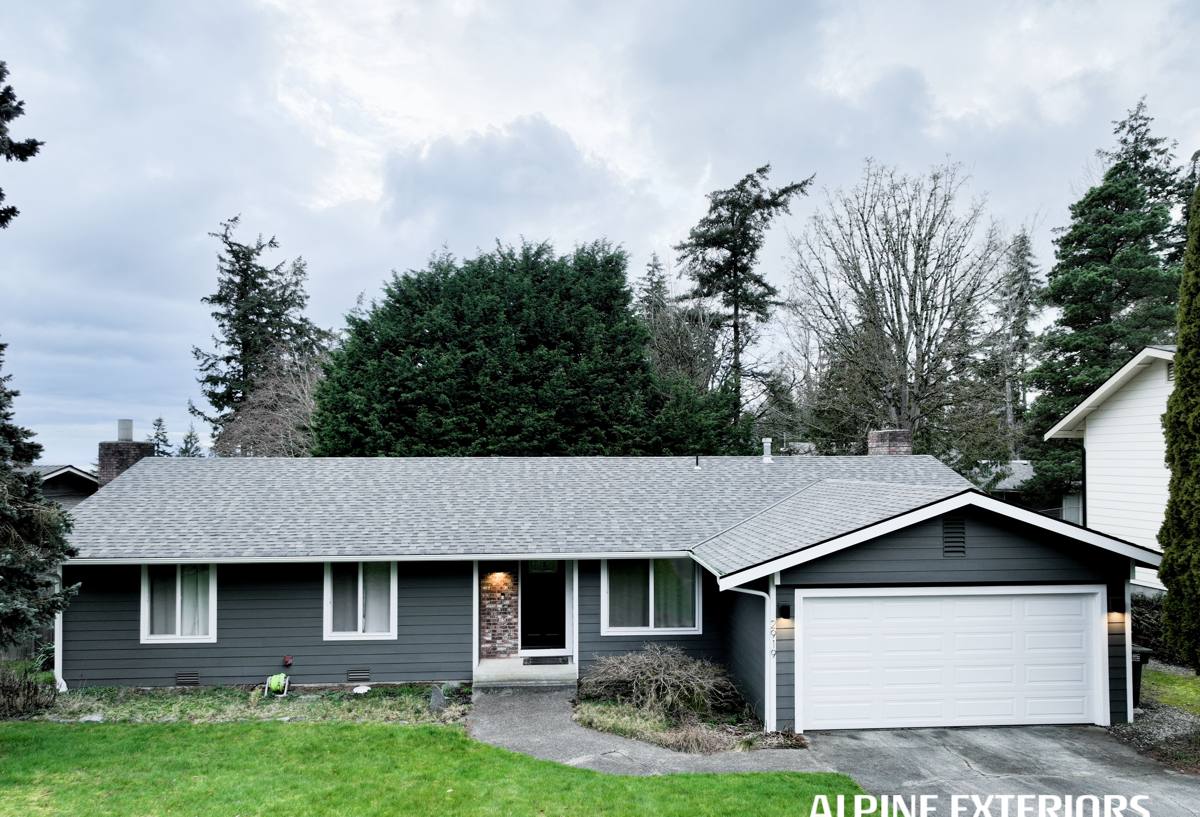
Signs Your Siding Has Reached the End of Its Useful Life
Most homeowners don't wake up one day and decide to replace siding — it's usually a slow accumulation of small warning signs that eventually add up. In York and the surrounding Chuckanut area, we typically see:
- Soft or spongy spots when you press on lap siding, especially near the bottom courses and around window trim
- Persistent moss or dark streaking that comes back within weeks of being cleaned
- Paint that's bubbling, peeling, or failing faster than the repaint cycle should require
- Visible cupping, warping, or delamination on wood-based or engineered wood panels
- Gaps opening up at butt joints, corner boards, or trim where caulk has failed
- A musty smell in an exterior-adjacent room, which can point to moisture already past the siding layer
Any one of these on its own might just call for a repair. Several of them together, especially on the sides of the house that face prevailing wind and rain, usually mean the siding system as a whole has reached the point where patching stops being cost-effective.
Why Some Materials Fail Faster Here
Wood-based siding products — including primed spruce, cedar, and engineered wood siding — depend heavily on an intact paint film to keep moisture out. Once that film is compromised anywhere, the substrate underneath can start absorbing water, and in a climate with this much sustained dampness, that absorption doesn't get a long dry season to reverse itself. Vinyl siding doesn't rot the same way, but it can warp, fade, and its seams and channels give moss and grime plenty of places to sit undisturbed. These aren't defects unique to any one brand — they're the physical trade-offs of those material categories in a wet coastal climate, and they're a big part of why we don't install them.
What a Correct Siding Replacement Actually Involves
Replacing siding is not just removing old boards and nailing up new ones. A job that's actually built to hold up in this climate involves several layers most homeowners never see once it's finished:
1. Tear-Off and Sheathing Inspection
Once the old siding comes off, we inspect the sheathing underneath for rot, delamination, or hidden water damage — problems that are often invisible from the outside but explain why the old siding failed in the first place. Any compromised sheathing gets replaced before anything new goes up.
2. Weather-Resistive Barrier (WRB)
A properly lapped and sealed water-resistive barrier is what actually keeps bulk water out of the wall assembly — the siding itself is the first line of defense, but the WRB is the backup that matters when wind-driven rain gets past it. Given how much wind-driven rain the York area sees, this layer isn't optional.
3. Flashing at Every Penetration
Windows, doors, hose bibs, vents, and any other wall penetration need proper flashing detail — not just caulk. Caulk fails over time; correctly lapped flashing doesn't rely on a sealant staying intact for twenty years to keep water out.
4. Manufacturer-Spec Fastening and Clearances
Nail placement, fastener type, panel gaps, and ground clearance all have to follow the manufacturer's published installation instructions. This is where a lot of siding jobs quietly go wrong — the material can be excellent and still fail early if it's hung incorrectly.
5. Trim, Caulking, and Paint Detail
The finish details — corner boards, trim reveals, caulk joints, touch-up paint at cut edges — are what determine whether the job looks sharp for the first year and still looks sharp a decade later.
Why We Install Only James Hardie Fiber Cement
We made a decision a while back to standardize on James Hardie fiber cement siding and stop installing vinyl, LP SmartSide, Cemplank, Allura, primed spruce, and cedar. That's not a marketing position — it's a maintenance and moisture-behavior call based on what actually holds up in a climate like this one.
Fiber cement is non-combustible, doesn't expand and contract the way vinyl does in temperature swings, and doesn't depend on an unbroken paint film the way raw wood products do. James Hardie's ColorPlus factory finish is baked on and warranted separately from the substrate, which matters in an area where field-painted surfaces face constant damp exposure. Hardie also engineers regional HZ5 product lines specifically for climates with more moisture exposure, which is directly relevant to a bay-adjacent area like York.
We're not saying every other product is a bad product in every application — vinyl, wood, and engineered wood all have real advantages in the right context, whether that's upfront cost, weight, or aesthetics. What we're saying is that for the moisture and salt exposure we see on homes near Chuckanut Bay, Hardie fiber cement is the one we're willing to warranty our workmanship against, and it's the only siding system we put on a home now.
Our Process, Start to Finish
- Walkthrough and assessment — we look at every elevation, note which walls take the most weather, and check for existing moisture damage
- Written estimate — scope, product selection, and a clear breakdown, no pressure to decide on the spot
- Material order — James Hardie panels, trim, and ColorPlus color matched to your selection
- Tear-off and sheathing repair — old material removed, substrate inspected and repaired as needed
- WRB and flashing install — the water-management layer goes in before a single piece of new siding is hung
- Siding installation to manufacturer spec — correct fastening, clearances, and joint treatment
- Trim, caulk, and final detail — the finish work that makes the job look complete
- Final walkthrough — we go over the finished job with you before calling it done
What Drives the Cost of a Siding Replacement
Every home is different, but the same handful of factors determine most of the cost variation we see on jobs in the York and Chuckanut area:
| Factor | Why It Matters |
|---|---|
| Home size and number of stories | More wall area and access difficulty (scaffolding, lifts) directly affect labor |
| Sheathing condition underneath | Hidden rot found during tear-off adds repair scope that can't be quoted sight-unseen |
| Siding profile and trim complexity | Lap width, panel vs. plank, and detailed trim work all change install time |
| Number of penetrations | Windows, doors, vents, and fixtures each need proper flashing, adding labor per opening |
| Color and finish selection | Factory ColorPlus finishes vs. field-applied paint affect both cost and long-term maintenance |
| Site access and exposure | Homes with more exposed, water-facing elevations may need extra water-management detail |
We give a written estimate after seeing the home in person — siding costs vary too much house to house for a number to be meaningful without that walkthrough.
Why a Crew That Already Works York Matters
Siding work in a bay-adjacent, moisture-heavy area isn't identical to siding work twenty miles inland, and a crew that regularly works this specific stretch of Whatcom County already has a feel for which walls on a given lot orientation take the worst of the wind-driven rain, where moss tends to establish first, and how much water-management detail a given exposure actually calls for. That's not something you can fully substitute with a generic installation manual — it comes from having done the work here repeatedly and seen how different approaches actually perform a few years out.
It also means less guesswork on your end. A crew that knows the area can tell you honestly whether your home's exposure justifies extra flashing detail on certain walls, or whether a standard installation is sufficient — instead of upselling every job to the same maximum spec regardless of need.
Checklist: What to Ask Before You Hire
- Do they install to the manufacturer's written installation instructions, not just "how we always do it"?
- Will they inspect and repair sheathing if it's found to be damaged during tear-off, and is that priced clearly?
- Do they include a water-resistive barrier and proper flashing at every penetration, or just new siding over what's already there?
- What's covered under workmanship warranty, separate from the manufacturer's product warranty?
- Can they explain, specifically, why they recommend one siding material over another for your home's exposure?
- Do they have experience with homes in this specific area, or mostly inland projects?
Caring for Your Siding After Replacement
Even the right material installed correctly benefits from a little upkeep in a climate like this one. A yearly rinse to knock down early moss and salt residue, prompt attention to any caulk joint that starts to open up, and keeping gutters clear so runoff doesn't sheet directly down the siding all go a long way toward getting the full lifespan out of the system. Fiber cement is far more forgiving of a missed year of maintenance than wood-based products, but it's still worth a periodic look, especially on the walls that face the water and the weather.
Get a Straightforward Estimate
If your York-area home is showing any of the wear signs above, or you're just weighing whether repair or full replacement makes more sense, we're happy to take a look and give you a straightforward, no-pressure written estimate. Use the form below to get started.