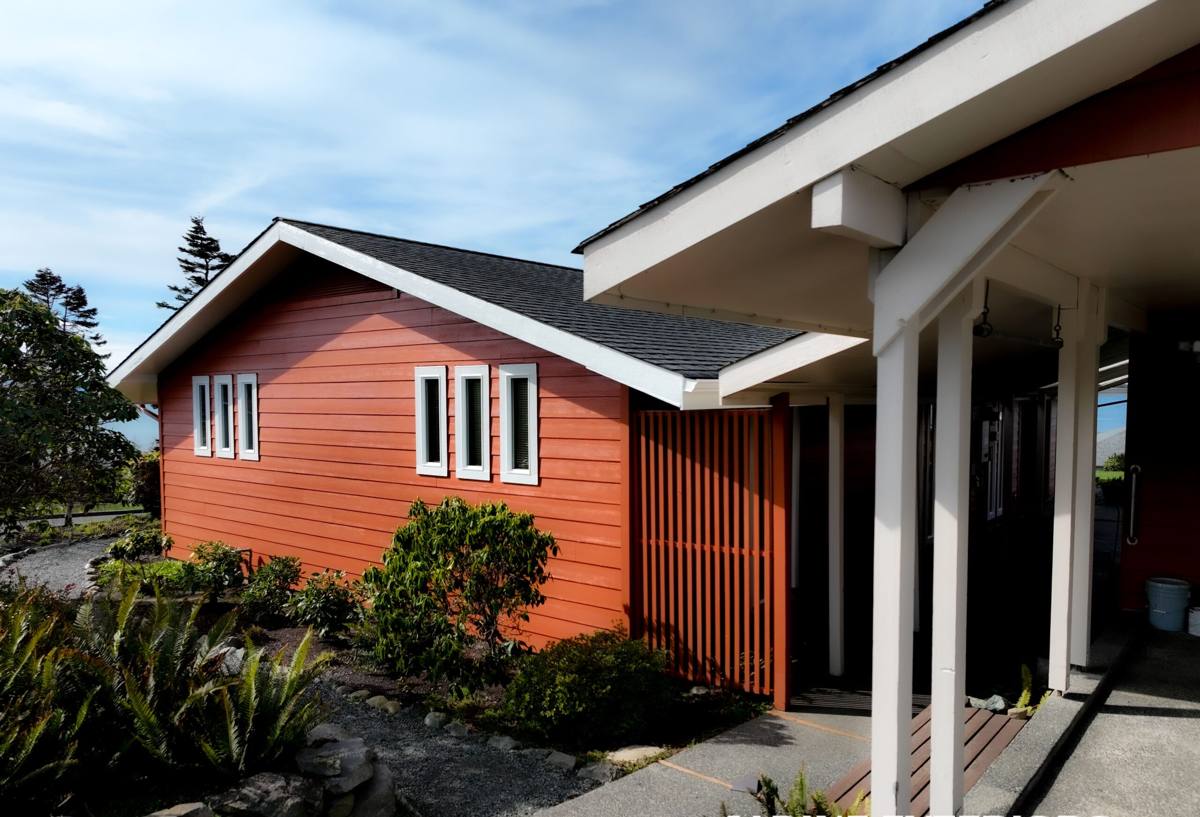
 Chuckanut Exterior
 Windows Built for York's Particular Kind of Weather
York sits close enough to the water that homes here take on a different kind of weathering than houses just a few miles inland. Salt-laden air moves through window tracks and frame joints, driving rain gets pushed sideways against west- and south-facing glass during winter storms, and the long stretch of grey, damp months that defines this part of Whatcom County gives moss and mildew months to work into any gap they can find. Windows in York don't just need to look good and keep the heat in — they need to shed water, resist corrosion, and hold a tight seal through weather that never really lets up.
When we talk about "energy-efficient windows" for a York home, we're really talking about two problems at once: keeping conditioned air inside the house, and keeping the outside world's moisture and salt from breaking the window down from the outside in. A window that solves only the first problem tends to fail early here. A window that solves both can last decades.
What "Energy-Efficient" Actually Means for This Climate
It's Not Just the Glass
Homeowners often assume efficiency comes down to double-pane versus triple-pane glass, and glass matters — but in a marine climate like Chuckanut's, the frame, the seal system, and the installation flashing matter just as much. A high-performance glass unit installed with poor flashing will still let bulk water into the wall cavity during a hard, wind-driven rain. That's a rot problem hiding behind an efficiency upgrade.
The Numbers Worth Knowing
Two ratings tell you most of what you need to know when comparing window options:
- U-factor — how well the window resists heat loss. Lower is better. This is the number that most directly affects winter heating bills.
- SHGC (Solar Heat Gain Coefficient) — how much solar heat passes through the glass. In a climate with limited direct sun, this matters less for cooling and more for whether a room gets any passive warmth on the rare clear day.
For York's climate, we generally steer homeowners toward a lower U-factor over an aggressively low SHGC, since the bigger energy cost here is heat loss through long damp winters, not summer cooling.
Frame Materials: What Holds Up Near Salt Air
Frame choice affects both energy performance and how the window survives salt exposure and constant moisture. There's no single "best" material for every home — it depends on exposure, budget, and the look you're going for — but here's how the common options actually compare in this environment:
| Frame Material | Salt Air / Moisture Behavior | Energy Performance | Maintenance |
|---|---|---|---|
| Vinyl | Doesn't corrode or rot; welded corners can be a weak point over time | Good, especially multi-chambered profiles | Low — occasional cleaning |
| Fiberglass | Very stable in wet, salty conditions; expands/contracts close to glass | Very good | Low |
| Wood-clad | Exterior cladding protects wood, but any breach lets moisture into the core | Good | Higher — cladding joints and sills need periodic inspection |
| Aluminum | Prone to corrosion pitting in direct salt exposure without proper coating | Poor unless thermally broken | Moderate |
We don't push any one material as universally "correct" — we walk through the trade-offs with the homeowner and factor in how exposed a given wall or elevation actually is. A window facing the prevailing weather deserves more scrutiny than one tucked under a deep eave on a sheltered side of the house.
Where Windows Actually Fail in York Homes
Seal and Gas-Fill Failure
Insulated glass units rely on a sealed air gap, often filled with argon, to perform. Constant humidity cycling and temperature swings stress that seal. When it fails, you'll see fogging or condensation trapped between the panes — a sign the unit has lost its insulating gas and needs replacement, not just cleaning.
Moss and Organic Growth at the Frame
The long moss season in this part of Whatcom County isn't just a roof problem. Moss and algae can take hold in window sills, tracks, and any horizontal surface that stays damp, especially on north-facing or shaded elevations. Left alone, that growth holds moisture against the frame and finish far longer than plain rain would.
Corrosion at Hardware and Fasteners
Salt air accelerates corrosion on hinges, locks, and fasteners faster than most homeowners expect, especially on homes with a more direct line to the water. Corroded hardware is often the first visible sign that a window's weatherstripping and seals are also due for attention.
Wind-Driven Water Intrusion
Because storms here tend to push rain sideways rather than straight down, flashing detail at the head and sill of a window matters more than it would in a drier climate. Water intrusion problems in this area are much more often an installation or flashing issue than a "bad window" issue.
What a Correct Installation Actually Involves
A window is only as good as the opening it's installed into. For York homes specifically, our installation process pays close attention to the details that a marine climate punishes when they're skipped:
- Remove and inspect the existing frame and sill for hidden rot or moisture damage before setting the new unit
- Install a sloped sill pan to direct any water that gets past the window back outside the wall assembly
- Use self-adhering flashing membrane at the sill and jambs, lapped correctly with the water-resistive barrier so water sheds downward and outward, never behind the flashing
- Seal the head flashing last, over the housewrap, so any water on the wall surface runs over the top of it rather than behind it
- Use a compatible, UV-stable exterior sealant at trim and siding transitions — rated for the wide temperature and moisture swings this climate produces
- Confirm the unit is plumb, level, and square before final fastening, since a racked frame stresses seals and sashes prematurely
- Test operation and locking hardware under real pressure, not just a quick open-close check
Skipping any one of these steps doesn't usually cause an immediate problem — it causes a slow one, showing up as a soft sill or a stained wall a few winters later.
How Our Process Works
1. On-Site Assessment
We look at each window opening individually rather than quoting from a generic average. Exposure to prevailing wind and rain, existing frame condition, and any signs of past moisture intrusion all factor into the recommendation.
2. Product Selection
We walk through frame material, glass package, and U-factor options against the homeowner's budget and priorities — energy savings, low maintenance, appearance, or some balance of the three.
3. Installation
Old units are removed carefully to expose the rough opening, the opening is inspected and repaired if needed, and the new window goes in following the flashing and sealing sequence described above.
4. Final Check and Cleanup
Every installed window is tested for smooth operation, a tight seal, and secure locking before we consider the job finished. Job site debris and old units are hauled away.
Why a Crew That Already Works in York Matters
Chuckanut and the surrounding Whatcom County communities don't all weather the same way. A crew that regularly works in York already knows which elevations tend to catch the worst of the wind-driven rain, how much moss pressure to expect on shaded sides of a house, and how salt exposure varies depending on how close a property sits to open water. That local pattern recognition shortens the assessment process and helps avoid recommending a window package that's overbuilt — or underbuilt — for a specific home's actual exposure.
It also matters for scheduling. Window replacement in this region works best around the weather, not against it, and a crew familiar with the local seasonal patterns can plan installations to minimize the window of time an opening sits exposed.
Protecting the Investment After Installation
Even the best window benefits from a little seasonal attention in this climate:
- Clear debris and moss from sills and tracks before the wet season sets in
- Check exterior caulking and sealant annually for cracking or separation
- Operate locking hardware periodically so corrosion doesn't set in unnoticed
- Watch for condensation between panes as an early sign of seal failure
None of this is heavy maintenance — it's the kind of five-minute check that prevents a small issue from becoming a wall repair.
Get a Straight Answer for Your Home
If you're dealing with drafty, foggy, or hard-to-operate windows in York, or you're planning ahead for the next wet season, we're happy to take a look and give you an honest assessment of what your home actually needs — no pressure, no upsell. Use the form below to request a free estimate.