 Chuckanut Exterior
 Windows Built for the Samish Climate
Homes around Samish sit in a stretch of Whatcom County where the weather doesn't do anything halfway. You're close enough to Samish Bay and the Chuckanut hillside to get salt-laden air rolling in off the water, wind-driven rain that finds every gap in a window's seal, and long stretches of gray, damp weather that keep wood, trim, and even glass surfaces wet for days at a time. Add the shade from the fir and cedar canopy that much of this area sits under, and you get a moss season that runs longer than most homeowners expect — moss and algae don't just grow on roofs here, they creep onto north-facing window trim and sills too.
None of that is a reason to avoid a certain window style or brand outright. It's a reason to be picky about installation quality, flashing details, and material choices. A window that's a fine fit in a drier part of the state can perform poorly here if it's not installed with this specific climate in mind. That's the gap we focus on closing for Samish homeowners.
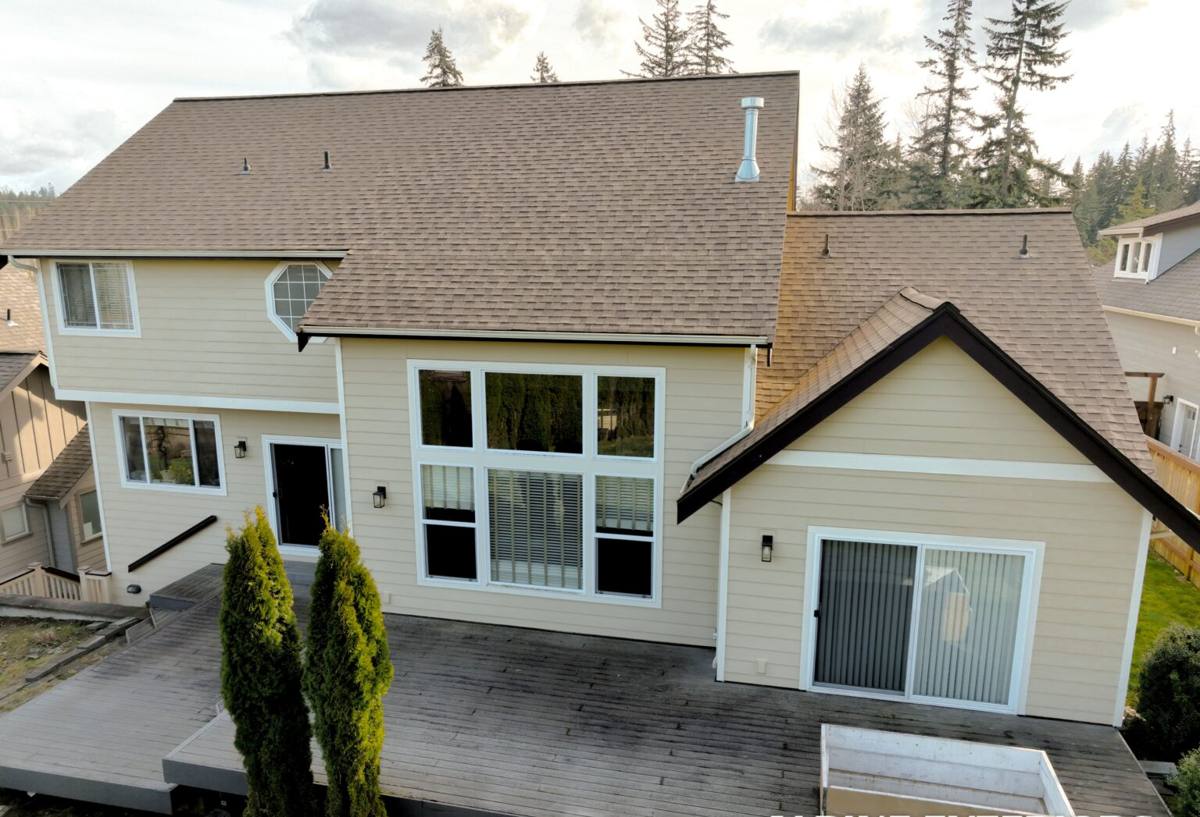
Signs Your Samish Home's Windows Need Attention
Windows rarely fail all at once — they give warning signs first. In this area, watch for:
- Fogging or a milky haze between panes on double- or triple-glazed units — the seal has failed and the gas fill is gone
- Soft or discolored wood at the sill or bottom corners of the frame, especially on walls that face prevailing wind and rain
- Moss or dark green-black staining building up on exterior trim, sills, or the bottom of the frame
- Drafts or a noticeable temperature difference near the window even when it's fully latched
- Paint that keeps blistering or peeling on the exterior casing no matter how often it's touched up
- Windows that stick, won't stay open, or take real effort to latch — often a sign the frame has swelled or shifted
Any one of these can usually be patched. Several together, especially on an older single-pane or early double-pane window, usually means replacement is the more honest answer than another round of caulk and paint.
What a Correct Installation Actually Involves
The window unit itself gets most of the attention when homeowners are shopping, but in a climate like this, the installation details matter as much as the product. A window is only as weather-tight as the flashing and sealing around it.
Flashing and Water Management
Proper installation means integrating the window into the wall's water-resistive barrier correctly — flashing tape or flashing pan at the sill, overlapping house wrap at the head and sides in the right shingle-lap order, and a drainage path so any water that does get behind the trim has somewhere to go besides into your wall framing. This is the single most common thing we find done wrong on older installs and cheap replacement jobs: the window looks fine, but the water management behind the trim was never set up to handle sustained, wind-driven rain.
Sealing Without Trapping Moisture
It's tempting to seal a window airtight all the way around and call it done, but a window assembly needs to manage moisture in both directions — keeping bulk water out while still letting incidental moisture escape rather than get trapped in the wall cavity. We use sealants and backer rod appropriate for this, not just a bead of caulk around the trim.
Fastening and Shimming
A window that isn't shimmed level and square will bind, won't latch tightly, and will wear its weatherstripping unevenly — which shows up a few years later as a draft. Fastening schedules matter too, especially on larger picture or slider units that need to hold their shape under wind load off the bay.
Frame Material Comparison for This Climate
There's no single "best" frame material — each has trade-offs worth understanding before you choose, especially with salt air and near-constant moisture in the mix.
| Material | How It Handles Salt Air & Moisture | Maintenance | Typical Lifespan |
|---|---|---|---|
| Vinyl | Won't corrode or rot; performs well near salt air | Low — occasional cleaning | 20–30+ years |
| Fiberglass | Very stable, minimal expansion/contraction, handles moisture well | Low | 30+ years |
| Aluminum | Can corrode over time near salt air unless properly coated/finished | Moderate — watch for pitting near the coast | 20–30 years, coating-dependent |
| Wood (with exterior cladding) | Needs the cladding and flashing detail to be right, or moisture works into the wood core | Higher — exterior finish and caulking need periodic attention | 20+ years, install-dependent |
| Wood (unclad) | Most exposed to moss, rot, and paint failure in this climate | Highest — regular repainting and sealing | Varies widely with upkeep |
We don't push one material on every homeowner — it depends on your home's style, your budget, and how much upkeep you actually want to do. What we won't do is install a frame material in a wall assembly it's a poor match for and call it a good outcome. If you want the look of wood, clad options exist that give you that appearance with a lot less long-term maintenance burden in a climate this wet.
New Construction, Retrofit, or Full-Frame Replacement
Insert (Pocket) Replacement
The existing frame stays in place and a new window unit is set inside it. This is faster and less invasive, and it's a solid option when the existing frame and flashing are still sound. It's not the right call if there's already hidden water damage — installing a new window into a compromised frame just hides the problem.
Full-Frame Replacement
The window and frame come out down to the rough opening, which lets us inspect and, if needed, repair the sheathing and flashing underneath before the new window goes in. This is the right approach whenever there's visible rot, staining, or a history of leaks — which we see more often on homes that have taken years of direct exposure to wind and rain off the water.
We'll tell you honestly which approach your home needs after a look at the existing openings — not which one is easier for us.
How We Approach a Window Project
- On-site assessment — we look at each window opening, check for existing moisture or frame damage, and note anything specific to that wall's sun and weather exposure
- Straight-talk estimate — what needs replacing, what approach (insert vs. full-frame) fits, and honest pricing with no pressure to decide on the spot
- Scheduling around the weather — installation involves an open wall for a period of time, so we plan around forecasted rain rather than hoping it holds off
- Removal and inspection — old units come out and we check the rough opening and existing flashing before anything new goes in
- Installation — proper flashing, shimming, fastening, and sealing, done to hold up to sustained wind-driven rain, not just pass a quick visual check
- Interior and exterior finish work — trim, caulking, and touch-up so the job looks finished, not just functional
- Walkthrough — we go over the finished windows with you before we consider the job done
What to Look for in a Window Installer Who Works This Area
Plenty of crews can hang a window on a calm, dry day. Fewer have a real handle on installing correctly in an area that gets sustained wind-driven rain off the bay for months at a stretch. Before hiring anyone for window work near Samish, it's worth asking:
- Do they flash and integrate the window with the house wrap, or just caulk around the trim?
- Will they inspect the rough opening for hidden rot before installing the new window?
- Do they have experience with the wind exposure specific to homes near the bay and hillside?
- What's the warranty structure — on the product, and separately on their labor and installation?
- Will they give you a straight answer on insert vs. full-frame replacement, even if one option is more work for them?
- Do they clean up debris and old materials, or leave that to you?
A crew that already works this specific area — Chuckanut, Samish, and the surrounding parts of Whatcom County — has already run into the local quirks: which wall orientations take the worst of the weather, where moss builds up fastest, and what flashing details actually hold up here versus what looks fine on paper.
After Installation: Keeping Windows Performing in This Climate
A correctly installed window still benefits from basic upkeep in a wet, moss-prone environment. Rinse pollen, salt residue, and organic buildup off frames and glass a couple times a year. Keep gutters and nearby vegetation trimmed back so water and moss-friendly debris aren't sitting against the trim. Check exterior caulking annually, particularly after a hard winter, and address any cracking before it becomes a path for water. None of this is heavy maintenance — it's the kind of routine check that keeps a well-installed window performing for its full lifespan instead of needing early attention.
Let's Take a Look at Your Windows
If your windows near Samish are fogging, drafting, sticking, or just showing their age, we're happy to come take a look and give you a straight, no-pressure assessment of what's actually going on and what it would take to fix it right. Use the form below to request a free estimate.