 Chuckanut Exterior
 Living Near Lake Samish Changes What Your Windows Need
Lake Samish sits in a pocket between Chuckanut Mountain and the water, and that setting does things to a house that a home a few miles away in open Bellingham doesn't deal with in the same way. Tree cover keeps siding and window frames shaded and damp longer after a storm. Humidity coming off the lake sits against the north and west sides of a house. And the broader Chuckanut climate — the driving rain that blows in off the water, the salt-tinged air along the coastal stretch, and a moss season that can run most of the year — means window frames, trim, and the seals around them are working harder than a spec sheet ever accounts for.
None of that means Lake Samish needs exotic products. It means the installation has to be done with the site's actual conditions in mind — where water wants to travel, where shade keeps wood wet, and where a rushed sealant job will fail two years earlier than it would in a drier spot. That's the difference between a window install that looks fine at handoff and one that's still tight ten winters later.
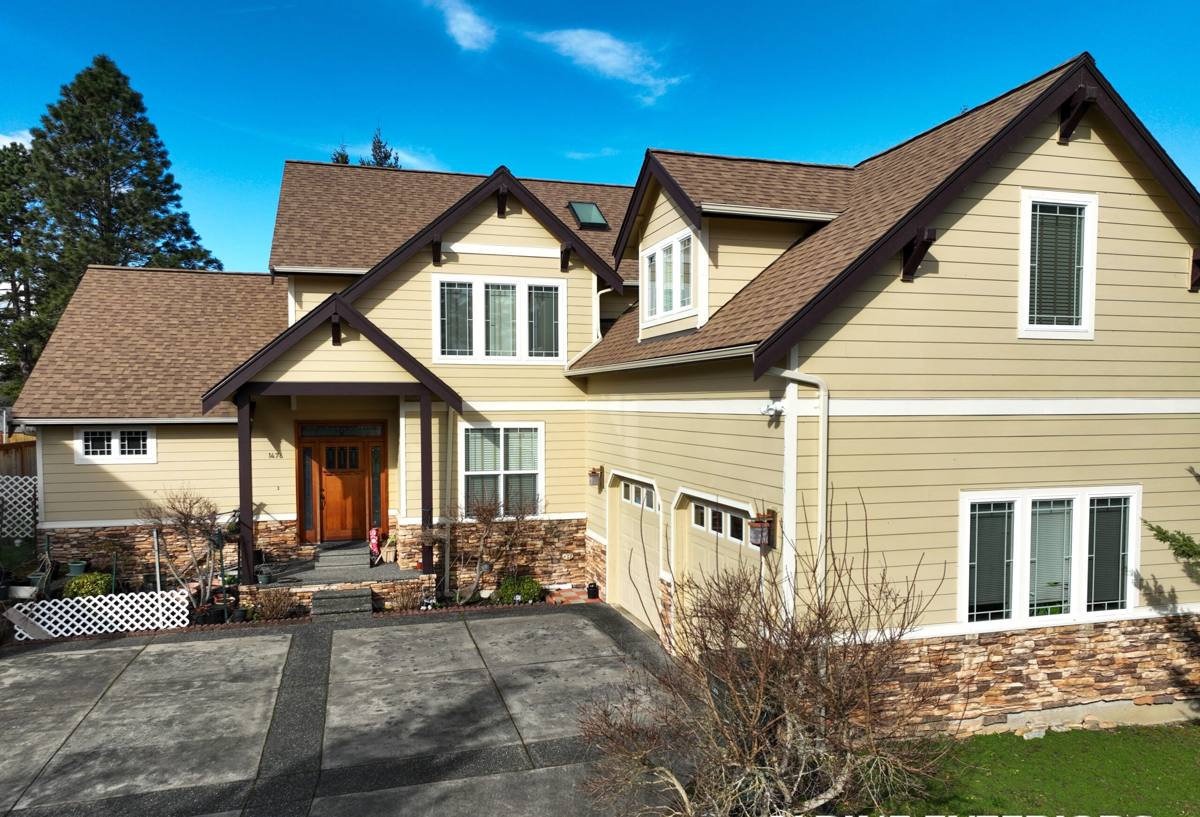
How the Local Climate Wears Down Windows
Older windows around the lake tend to fail in a predictable order. Wood sashes and sills that stay shaded and damp start to soften at the corners and at the bottom rail, where water sits the longest. Aluminum frames, common in homes built a few decades back, conduct cold straight through and sweat on the inside during cool, humid stretches — that condensation is what eventually rots the sill beneath them. Vinyl frames that were installed without proper flashing let wind-driven rain track behind the frame and into the wall cavity, where it does damage you don't see until the siding or interior trim already shows it.
Moss and algae growth on north- and west-facing glass and frames is mostly cosmetic, but it holds moisture against the surface longer than a clean, sun-exposed window would, which speeds up whatever seal or finish breakdown is already underway. In a lake setting with heavy tree cover, that's a bigger factor than most homeowners expect.
Signs It's Time to Replace, Not Just Repair
Not every drafty window needs full replacement — sometimes new weatherstripping or a re-glazed sash solves it. But certain signs point to the window unit itself failing, not just wearing:
- Fogging or a permanent haze between panes (the seal on the insulated glass unit has failed)
- Soft, spongy, or visibly rotted wood at the sill or bottom corners
- Windows that are difficult to open, close, or lock without extra force
- Visible daylight or a draft you can feel around the frame with the window shut
- Condensation forming on the inside of the glass regularly, even in mild weather
- Moss, mold, or dark staining building up on the frame itself rather than just the glass
- A noticeable jump in heating costs with no other explanation
If you're seeing two or more of these on a given window, replacement usually costs less over time than continuing to patch it.
Choosing Materials That Hold Up Near the Lake
Material choice matters more here than in a dry inland climate, because the frame is going to spend a lot of its life damp or shaded. Here's how the common options stack up for a Lake Samish setting:
| Material | Moisture Behavior | Maintenance | Typical Fit |
|---|---|---|---|
| Vinyl | Won't rot; performs well if flashed correctly | Low — occasional cleaning | Most homes; best value |
| Fiberglass | Very stable in wet, shaded conditions; minimal expansion/contraction | Low | Higher-exposure walls, lake-facing sides |
| Wood-clad | Good if the cladding is intact; interior wood needs protection from condensation | Moderate to high | Homes prioritizing a traditional interior look |
| Aluminum | Conducts cold, prone to interior condensation in humid stretches | Low, but condensation drives sill damage | We steer most Lake Samish homeowners away from this for exterior walls near the water |
We're not against wood or aluminum as a category — they're both legitimate products used correctly in the right setting. But given the amount of shade and moisture around the lake, we generally point homeowners toward vinyl or fiberglass for anything on a north- or west-facing wall, simply because they hold up with the least ongoing attention. Where the look of real wood matters to a homeowner, wood-clad units are still an option — it's a conversation about trade-offs, not a rule.
What a Correct Installation Actually Involves
Removal and Assessment
Every install starts with pulling the old unit and actually looking at what's behind it. This is the step that gets skipped on a rushed job. If there's soft sheathing, rotted framing, or a missing moisture barrier behind the old window, that has to be addressed before a new one goes in — otherwise you're sealing a problem behind a nice-looking frame.
Flashing and Weatherproofing
This is the part that actually determines whether a window stays dry for the next twenty years. Flashing tape and a properly lapped moisture barrier need to be integrated with the existing wall's water-resistive barrier so water is directed out and down, never trapped behind the frame. Given how much wind-driven rain this area sees off the water, we treat this step as non-negotiable — it's where most installation failures we're called to fix actually started.
Setting and Sealing
The window has to be shimmed level, plumb, and square, then fastened per the manufacturer's schedule — not just caulked into a rough opening. Insulation goes into the gap around the frame, and the exterior gets sealed with a sealant rated for the material and exposure, not just whatever's on the truck.
Trim and Cleanup
Interior and exterior trim gets reset or replaced, gaps get finished, and the site gets cleaned up — old units and debris hauled off, not left stacked against the house.
Our Process for Lake Samish Projects
We start with an on-site look at every window being considered, not just a phone estimate. That's where we catch the things that change the scope — rot behind an old frame, a wall that's shadier and damper than it looks, or a window that's a nonstandard size because of the home's age. From there we walk through material and style options based on that specific wall's exposure, put together a written estimate, and schedule the work around weather — you don't want a wall open to the elements on a day the forecast says otherwise.
Install day itself is usually one window per few hours depending on size and condition of the opening, with the crew moving room to room so the house isn't left with multiple openings exposed at once. We walk the finished work with the homeowner before we consider it done.
Why Local Experience Around Lake Samish Matters
A crew that's worked this specific area knows which walls take the worst of the weather, how much shade a given lot actually holds through the year, and what kind of flashing detail actually holds up here versus what looks fine on install day and fails in year three. That's not something you get from a general contractor passing through the county once. It also means we're not guessing at scheduling around this area's weather patterns or figuring out access on lake-adjacent lots for the first time on your job.
What Affects the Cost of Window Installation Here
Costs vary enough from house to house that we won't quote a number without seeing the job, but the main factors are consistent:
| Factor | Why It Matters |
|---|---|
| Number and size of windows | Larger openings and specialty shapes cost more in unit price and labor |
| Material selected | Vinyl is typically the most affordable; fiberglass and wood-clad cost more upfront |
| Condition behind the old window | Rotted sheathing or framing found during removal adds repair scope |
| Wall exposure | Lake-facing or heavily shaded walls may warrant a higher-spec flashing detail |
| Access | Second-story, tight side-yard, or steep-lot access adds labor time |
| Old window disposal | Hauling and disposal of old units is usually a modest line item, but it's real |
As a rough, honest range, straightforward vinyl replacements tend to run in the low-to-mid thousands per window installed, with the total moving up from there based on the factors above. We'd rather give you an accurate number after seeing the house than a low estimate that grows once work starts.
Keeping Your New Windows Performing
New windows still need a little attention in this climate, especially on shaded, lake-facing sides of the house:
- Rinse frames and sills once or twice a year to clear moss, pollen, and grime buildup
- Check exterior caulking annually for cracking or separation and have it touched up before a gap opens
- Keep gutters and downspouts clear so overflow isn't running down onto window heads
- Trim back branches or foliage that keep a window in constant shade and damp
- Operate each window through its full range a few times a year so hardware doesn't seize
None of this is heavy maintenance — it's the difference between windows that look and perform the same in year fifteen and ones that start showing the same problems the old ones had.
If you're noticing drafts, fogged glass, or rot on windows around your Lake Samish home, we're glad to take a look and walk you through honest options — no pressure, no obligation. Use the form below to request a free estimate.