 Chuckanut Exterior
 Why Decks in the Mount Vernon Area Wear Out Faster Than You'd Expect
If you've owned a home in Mount Vernon for more than a few years, you've probably noticed that decks here age differently than they do in drier parts of the country. It isn't one thing — it's the combination. Salt-laden air moving in off the water accelerates corrosion on fasteners and metal connectors. Long stretches of driving rain push moisture into every seam, gap, and end cut in the wood. And the moss season — which in this part of Washington can stretch across most of the year — turns any shaded or north-facing deck surface into a slick, moisture-holding mat if it isn't kept clean.
None of that means a deck is doomed. It means a deck built or replaced without accounting for this climate will fail years before it should. We've seen decks that looked fine on the surface but had soft, spongy framing underneath because water had been finding its way in for years through a poorly flashed ledger board or an under-sized gap between boards. Replacement done right in this area isn't just about swapping old boards for new ones — it's about correcting the details that let moisture win in the first place.
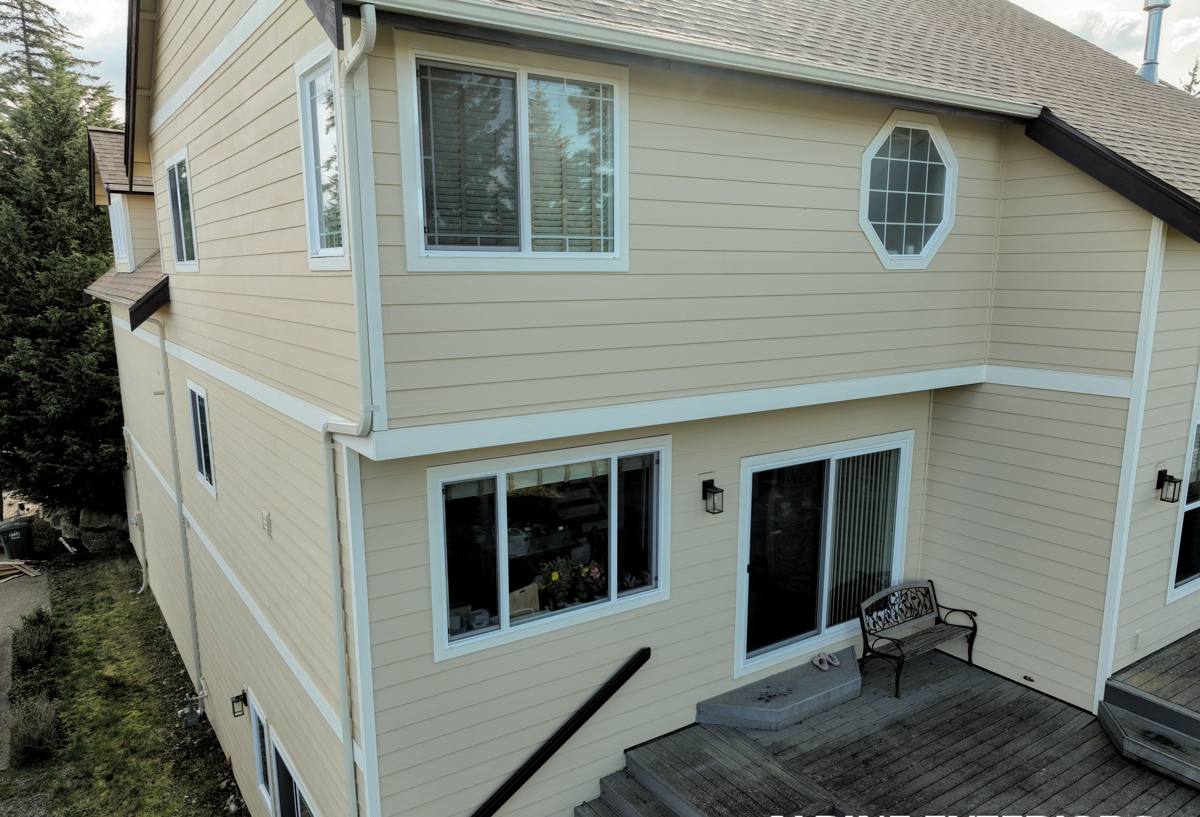
Repair, Resurface, or Full Replacement — Knowing Which One You Actually Need
Not every tired-looking deck needs to be torn out completely. Part of an honest estimate is telling you when a repair or resurfacing job will genuinely hold up, and when it won't. The distinction usually comes down to what's happening below the decking boards, not just what you can see on top.
When Repair or Resurfacing Makes Sense
If the framing, ledger, footings, and structural connections are sound and the problems are limited to the surface — worn or splintering boards, cosmetic fading, a handful of loose fasteners — resurfacing on top of solid framing can be a reasonable, lower-cost path.
When Full Replacement Is the Right Call
If joists are soft or discolored where they meet the ledger, if you can flex the deck underfoot, if railings feel loose at their posts, or if the structure was built without proper flashing to begin with, patching the surface just hides the problem for another season or two. In our experience, this is far more common on older Mount Vernon decks than homeowners expect, simply because the region's rain load punishes any shortcut in the original build.
Material Options That Actually Hold Up Here
Every decking material has trade-offs. Our job is to lay those trade-offs out honestly rather than push whatever has the best margin. In a climate with this much sustained moisture and salt exposure, the differences between materials show up faster than they would in a drier region.
| Material | Moisture Behavior | Maintenance | Typical Lifespan Here |
|---|---|---|---|
| Pressure-treated wood | Absorbs moisture readily; needs sealing to resist cupping and checking | Annual cleaning and re-sealing recommended | 10-15 years with upkeep |
| Cedar | Naturally rot-resistant but still needs seasonal care in this rain load | Periodic cleaning, oiling, or staining | 15-20 years with upkeep |
| Composite decking | Doesn't absorb water into the board itself; still requires proper drainage below | Occasional washing to prevent surface mold/algae | 20-30 years, varies by product |
| PVC/capped polymer | Fully moisture-resistant surface; performance still depends on substructure | Low — mainly washing | 25-30+ years, varies by product |
Composite and capped polymer boards are popular choices for this area precisely because they don't wick moisture the way natural wood does, which matters when a deck sits under moss-friendly shade for months at a time. That said, no decking surface — wood or composite — makes up for a poorly built structure underneath. We'll talk through what fits your budget and how you use the space, not just what resists moss the best.
Our Standard: Why We're Selective About What We Install
We don't install every product on the market, and that's a deliberate choice, not a limitation. Some engineered decking products are more sensitive to installation gapping and fastening tolerances than others, and getting those details wrong voids the manufacturer warranty even if the deck looks fine at handoff. We stick to products where we can stand behind both the material and the install, and we're upfront if a product a homeowner asks about isn't one we'd recommend for a rainy, shaded, or salt-exposed site.
What's Underneath Matters More Than What's On Top
The decking boards are the part everyone notices, but the structure underneath is what determines whether a deck lasts 10 years or 30. In a climate like this, three areas deserve particular attention:
- Ledger attachment and flashing: Where the deck meets the house is the single most common source of hidden water damage. Proper flashing directs water away from the house band joist instead of letting it wick in behind the ledger board.
- Joists and framing hardware: Fasteners and joist hangers rated for exterior and coastal-adjacent use resist corrosion far longer than standard hardware, which matters given the salt content in the air here.
- Footings and post bases: Posts sitting in standing water or direct soil contact rot from the bottom up. Elevated post bases and properly poured, code-depth footings keep moisture away from end grain.
A full replacement is the opportunity to fix all three at once, since the old decking is already off and the frame is fully exposed. Skipping this step to save time is the most common reason a "brand new" deck develops problems within a few years.
How Our Deck Replacement Process Works
1. On-Site Assessment
We start by inspecting the existing deck from the ground up — ledger, framing, footings, and railings — not just the surface boards. This tells us honestly whether you're looking at a repair, a resurface, or a full tear-out.
2. Scope, Materials, and a Straight Estimate
We walk through material options based on your budget, how the space is used, and sun/shade exposure, then put together a clear, itemized estimate. No vague allowances, no surprise change orders for things we could have identified up front.
3. Permits Where Required
Deck replacement projects — especially those involving structural changes to framing, footings, or railings — often require a permit locally. We handle that process rather than leaving it for the homeowner to sort out.
4. Tear-Out and Structural Correction
Old decking, and any compromised framing, ledger flashing, or footings, come out. This is where we correct the drainage and flashing details that caused the original deck to fail early.
5. Framing, Decking, and Railing Installation
New framing goes in to current code, followed by decking installed to the manufacturer's specified gapping and fastening — a detail that matters both for warranty coverage and for how the deck handles seasonal wood movement and moss growth.
6. Final Walkthrough
We walk the finished deck with you, cover basic care for whatever material you chose, and make sure everything meets what was agreed to in the estimate.
What Affects the Cost of a Deck Replacement
Every project is different, but the same handful of factors drive most of the cost variation we see on deck replacements in this area.
| Factor | Why It Affects Cost |
|---|---|
| Deck size and shape | More square footage and complex angles or multiple levels mean more material and labor |
| Decking material chosen | Composite and PVC products cost more upfront than pressure-treated wood but need less long-term maintenance |
| Condition of existing framing | Rotted joists, ledgers, or footings found during tear-out add scope that a surface-only estimate wouldn't capture |
| Railing style and height | Code-required railing height and style (cable, glass, wood baluster) vary significantly in material and labor cost |
| Site access | Decks with limited access for material delivery or debris removal take more labor time |
| Permit and inspection requirements | Structural changes typically require permitting, which adds time but protects you as the homeowner |
Signs Your Deck Is Telling You It's Time
Homeowners often wait longer than they should because a deck can look okay from a distance while having real problems underneath. Watch for these signs:
- Boards that feel spongy, soft, or noticeably springy underfoot
- Visible gaps, cracking, or splitting concentrated near fasteners
- Persistent moss or algae film that returns quickly after cleaning
- A railing or post that wiggles or feels loose when you lean on it
- Discoloration or soft wood where the deck meets the house (the ledger area)
- Fasteners that are rusted, popped up, or corroded looking
- A deck more than 15-20 years old that has never had structural components inspected
If you're seeing two or more of these, it's worth getting a real inspection rather than guessing.
Why Hiring a Crew That Already Works in Mount Vernon Matters
Deck building isn't the same job everywhere. A crew used to building in a dry climate can do everything "by the book" and still hand over a deck that struggles here, simply because the book they're following doesn't account for sustained rain, salt exposure, and heavy moss growth. Working regularly in Whatcom County and the greater Mount Vernon area means we've already seen how different materials, fasteners, and flashing details actually perform after a few wet seasons — not just how they're rated on a spec sheet.
It also means we're familiar with the local permitting process, typical soil and drainage conditions homeowners deal with here, and the kind of framing shortcuts that tend to show up in older decks in this area. That local track record is worth asking about directly when you're vetting any contractor for a project this size.
Caring for Your New Deck in This Climate
A well-built deck still needs some seasonal attention here, especially with a long moss season and steady rainfall. A few habits go a long way:
- Sweep debris and standing leaves off the surface regularly, especially in shaded areas
- Clean moss and algae buildup before it gets a foothold, rather than after it's established
- Check that gaps between boards stay clear so water can drain rather than pool
- Inspect railings and fasteners once a year for looseness or corrosion
- Re-seal or re-stain wood decking on the schedule the product recommends — don't stretch it out
If you'd like an honest look at what your current deck actually needs — repair, resurface, or full replacement — we're happy to come take a look. The estimate is free, there's no pressure, and you'll get a straight answer about what your deck needs and why.