 Chuckanut Exterior
 Understanding Siding Repair Needs in York's Coastal Climate
The York area sits inside a stretch of Whatcom County where weather doesn't do a home any favors. Salt-laden air off the water, long stretches of driving rain, and a moss season that can run half the year all work on exterior siding in different ways. A repair that would be cosmetic somewhere drier can be a real structural concern here if it's left alone, because moisture that gets behind siding in this climate doesn't dry out quickly. It sits, and it spreads.
Siding repair isn't just patching a hole or replacing a cracked board. Done right, it's a diagnostic job first: figuring out how water got in, how far it traveled, and what has to happen so the same failure doesn't repeat in the same spot next winter. That's the standard we hold every repair to in York, whether it's one damaged section or several.
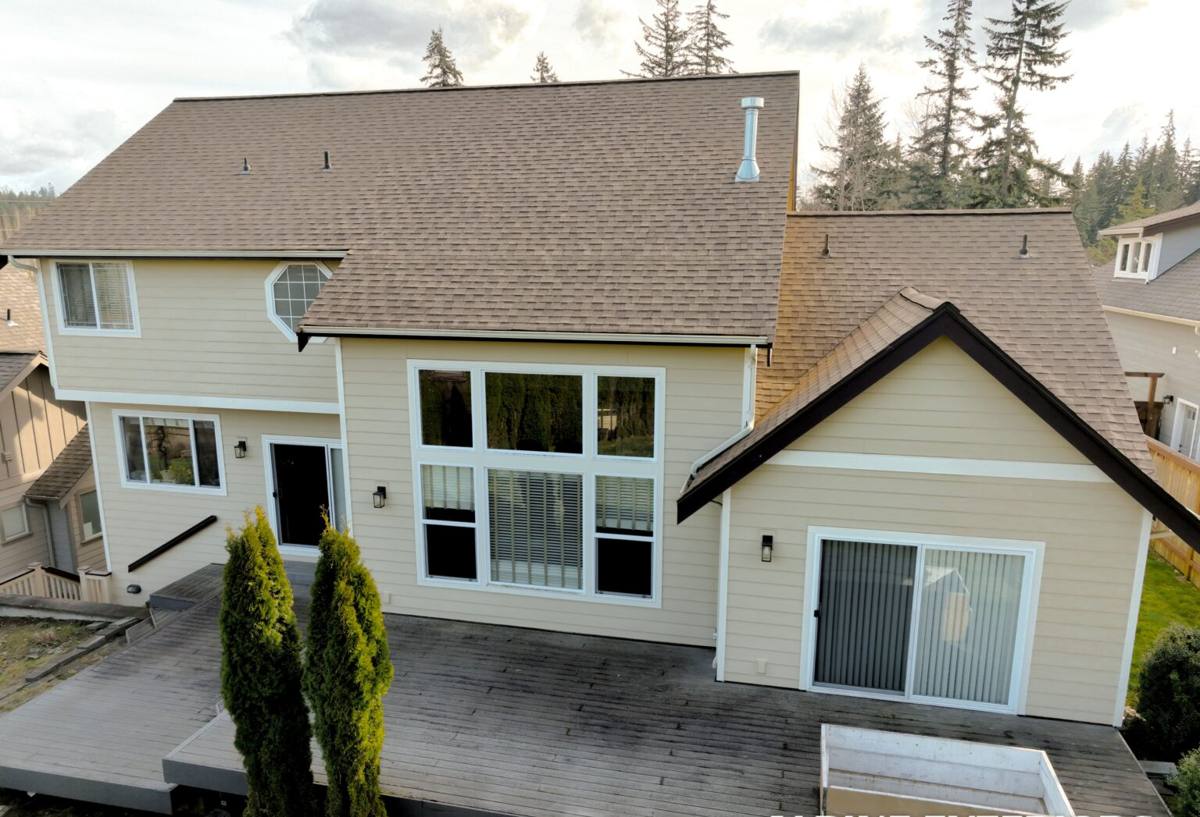
Signs Your York Home's Siding Needs Attention
Most siding problems give warning signs well before they become expensive. Homeowners in Chuckanut should watch for these, especially after a wet winter:
- Soft or spongy spots when you press on the siding, especially near the bottom courses
- Paint that's bubbling, peeling, or failing in one localized area rather than evenly across the wall
- Visible cracks, splits, or gaps at seams and corners
- Dark streaking, green or black discoloration, or a persistent musty smell near an exterior wall
- Moss or algae buildup that stays damp for days after rain instead of drying out
- Siding that's pulling away from the wall, warping, or showing fastener heads working loose
- Interior signs — a damp patch on drywall, a musty closet, or a window that's started sticking — that trace back to an exterior wall
Any one of these can be minor. Several together, or any sign paired with soft wood underneath, usually means water has been getting behind the siding for a while.
What's Really Happening Behind the Siding
Salt Air and Corrosion
Homes closer to the water pick up airborne salt that settles on every exterior surface. It accelerates corrosion of exposed fasteners, staples, and trim fasteners, and it can chalk or degrade certain paint finishes faster than a standard weathering timeline would predict. When we open up a repair section and find rusted fasteners or corroded flashing, salt exposure is almost always part of the story.
Driving Rain and Water Intrusion
Chuckanut doesn't just get rain — it gets wind-driven rain that hits siding at an angle instead of falling straight down. That matters because it pushes water into seams, laps, and butt joints that were never designed to shed water sideways. A repair that only replaces the visible damaged board without correcting the flashing or lap detail underneath will fail again the next time the wind blows the same direction.
Moss and Trapped Moisture
A long moss season means organic growth has months to establish itself on north-facing walls, under eaves, and anywhere shade keeps a surface from drying between storms. Moss holds moisture directly against the siding surface far longer than bare material would sit wet, which is exactly the condition that lets rot start in wood-based products and lets water find its way into any existing gap or crack.
Repair or Replace? How We Make That Call
Not every damaged area needs a full re-side, and we don't sell a full replacement when a targeted repair will genuinely hold up. The decision comes down to a few factors we walk through on-site.
| Factor | Leans toward repair | Leans toward replacement |
|---|---|---|
| Extent of damage | Isolated to one or two sections | Spread across multiple walls or elevations |
| Underlying structure | Sheathing and framing are sound | Rot has reached the wall sheathing |
| Age of existing siding | Siding is mid-life and otherwise performing | Siding is near or past its expected service life |
| Cause of failure | A single identifiable event (impact damage, one bad flashing detail) | A systemic issue — original installation defects, wrong product for the exposure |
| Material match | Matching material and finish is available | Original product is discontinued or won't color-match |
We'll tell you honestly which category your home falls into. If a repair is the right call, that's what we'll recommend and price — there's no reason to sell a full job when the problem is contained.
What a Correct Siding Repair Actually Involves
Matching Material and Finish
A repair that looks patched from the street is a bad repair. We match profile, exposure, and finish as closely as the existing siding allows, and when an exact match isn't possible we're upfront about it before starting, not after.
Flashing and Water Management
Every repair includes checking — and where needed, replacing — the flashing, house wrap, and water-resistive barrier behind the damaged section. Given how much of York's siding damage traces back to wind-driven rain finding a gap, we're not willing to close up a repair without confirming the water management behind it is actually correct.
Fastening and Sealing
Corroded fasteners get replaced with corrosion-resistant hardware appropriate for coastal exposure, not whatever was on hand. Sealant is used at manufacturer-specified joints only — over-caulking a repair traps moisture rather than keeping it out, which is one of the more common mistakes we see in prior patch jobs.
Why We Repair and Replace Only With James Hardie Fiber Cement
We install and repair one exterior siding system: James Hardie fiber cement. We don't install LP SmartSide, vinyl, Cemplank, Allura, primed spruce, or cedar, and when a repair calls for new material, we use Hardie board matched to the existing product where possible or transition thoughtfully where it isn't.
That's not a knock on every other product — vinyl is inexpensive and low-maintenance in mild climates, engineered wood siding has genuine strengths, and cedar has real appeal. But in a climate that combines salt air, driving rain, and a long wet season, we've found the trade-offs with those products — moisture sensitivity at cut edges, UV and impact vulnerability, the maintenance cycle wood-based products demand — show up faster here than in drier regions. Fiber cement is non-combustible, dimensionally stable, and holds its factory ColorPlus finish through the kind of weather cycling York homes actually see. When we're the ones putting our name on a repair, that's the material we stand behind.
Our Repair Process, Start to Finish
- On-site inspection — we look at the visible damage and probe the area around it to find out how far moisture has actually traveled, not just where it's visible
- Honest diagnosis — we tell you what's causing the failure, whether it's a repair or a replacement situation, and why
- Material matching — we source Hardie product and ColorPlus finish to match existing siding as closely as possible
- Removal and inspection of the substrate — damaged siding comes off, sheathing and framing get checked, and any rot gets addressed before anything new goes on
- Flashing and barrier correction — water management details get fixed, not just covered back up
- Installation to manufacturer spec — correct fastening, clearances, and sealing per Hardie's installation requirements
- Final walkthrough — we show you what was done and why, so you understand the repair rather than just seeing the invoice
Why a Crew That Already Works in York Matters
Siding repair done by a crew unfamiliar with the local exposure often treats every job the same way regardless of climate. A crew that already works in and around Chuckanut knows which elevations in this area typically take the worst wind-driven rain, where moss holds on longest through the year, and how salt exposure closer to the water changes fastener and finish choices. That local pattern recognition is the difference between a repair that solves the actual problem and one that just replaces the visible damage and waits for it to come back.
It also means faster, more accurate estimates. We're not guessing at how Whatcom County weather affects a repair timeline or material choice — we're applying what we've already learned doing this work in the same conditions your home faces every year.
If you're seeing any of the warning signs above, or you just want a second opinion on a repair someone else already quoted, we'll come take a look. The estimate is free, there's no pressure, and you'll get a straight answer about whether your York home needs a repair, a replacement, or nothing at all right now.