 Chuckanut Exterior
 The Siding Problem in Samish Is Different From Inland Whatcom County
Homes in Samish sit close enough to the water and the tree line that they take a different kind of weather beating than a house further inland. Salt-laden air off the water works into seams, fastener heads, and paint film over time, slowly breaking down anything not built to shrug it off. Driving rain — the kind that comes in sideways during a fall or winter system — doesn't just wet the siding surface, it pushes moisture up under laps and around trim if the installation details aren't right. And the heavy tree cover that gives this area its character also brings shade, damp air, and a moss season that can run most of the year on the north and west faces of a house.
None of that is unusual for this stretch of Washington. But it does mean the siding on a Samish home works harder, year-round, than the same product would on a house in a drier inland climate. Installation shortcuts that might pass unnoticed elsewhere show up here as staining, soft trim, and premature paint failure within a few seasons.
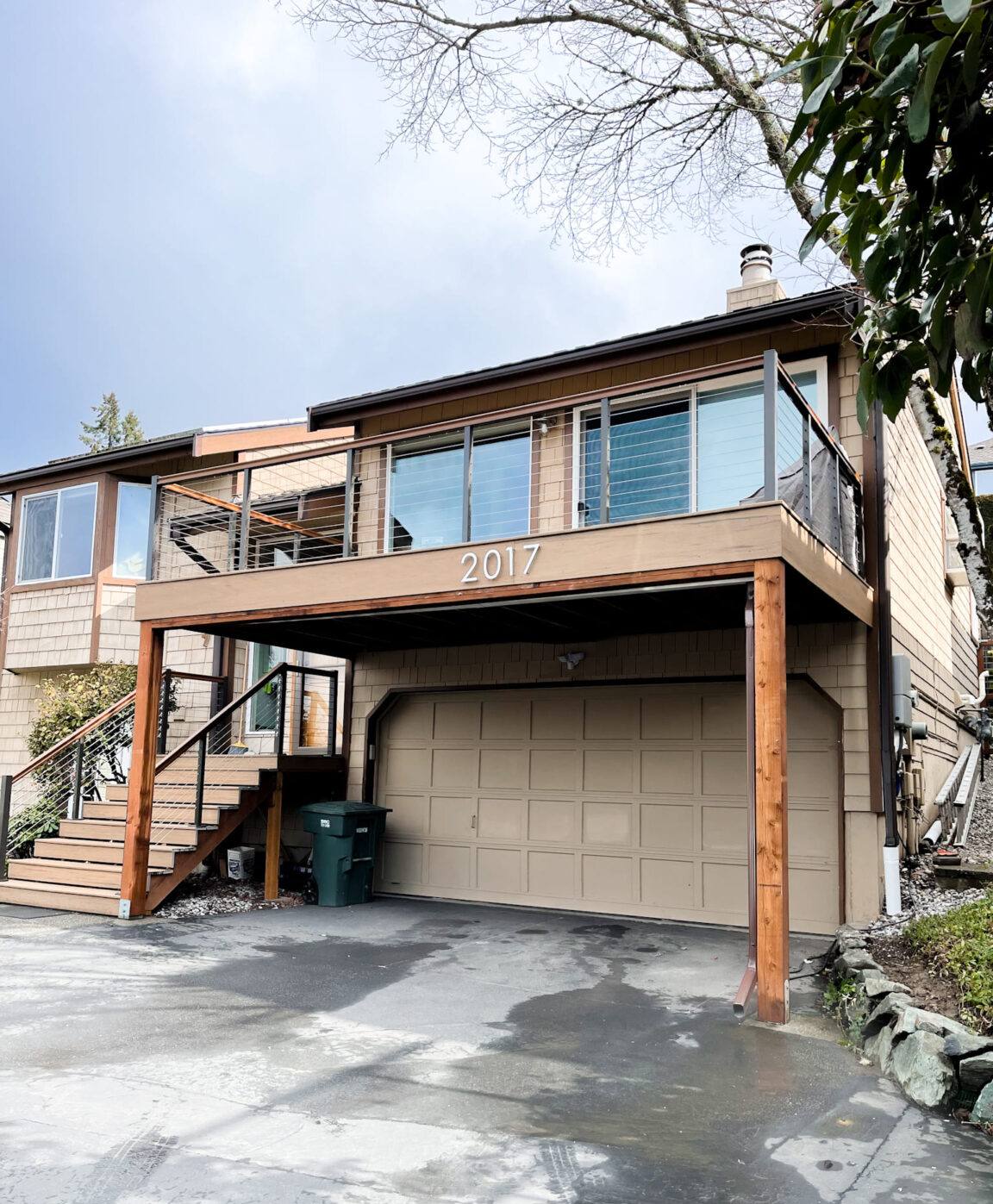
What Samish Homes Actually Need From Their Siding
Moisture Management, Not Just Water Resistance
Every siding material sheds some water. The real question is what happens to the water that inevitably gets past the surface — wind-driven rain finds its way behind laps and around penetrations no matter what's installed. A correctly built wall assembly manages that moisture with a drainage plane, proper flashing, and enough of a gap behind the siding for water to find its way back out instead of sitting against sheathing. This matters more in Samish than in a lot of places, because the combination of onshore wind and long wet stretches means the siding is wet, or at least damp, for a large share of the year.
Rot and Moss Resistance Where the House Meets the Ground and the Trees
The bottom few feet of a wall, and any section shaded by trees or a neighboring structure, sees the most moss and the slowest drying. Wood-based siding products are the most vulnerable here because moss holds moisture directly against the material. Fiber cement doesn't feed rot the way wood does, but detailing still matters — proper clearance above grade, roofs and decks, and correct caulking at trim joints keep water from sitting where moss and mildew get a foothold.
A Factory Finish That Holds Up to Salt Air
Field-applied paint on any siding product breaks down faster in a salt-air environment than it does inland — salt is abrasive to paint film over time and accelerates UV and moisture damage. A finish baked on at the factory, cured under controlled conditions, and backed by its own warranty holds color and integrity far longer near the water than paint applied on site after installation.
Why We Only Install James Hardie Fiber Cement
We get asked fairly often why we don't offer vinyl, LP SmartSide, or one of the other fiber cement brands on the market. It's not that those products have no place in the industry — it's that we made a decision, as a company, about what we're willing to put our name behind on homes in this climate. Vinyl expands and contracts with temperature swings and can crack or warp under impact, and it's not a fire-resistant material. Wood-based engineered siding still relies on wood fiber as its core, which means it's more sensitive to sustained moisture exposure than a true cement-based product. Other fiber cement brands exist, and some are reasonable products, but we've standardized on one manufacturer, one installation process, and one warranty structure so that every job we do meets the same bar.
James Hardie fiber cement is non-combustible, doesn't expand and contract the way vinyl does, and comes with a factory ColorPlus finish engineered for exactly the kind of coastal, wet-climate exposure Samish sees. That combination — material, finish, and a single consistent install standard — is why it's the only siding system we install.
What a Correct Fiber Cement Installation Actually Involves
Fiber cement is an unforgiving material to install poorly. It doesn't rot if water gets behind it the way wood does, but a bad installation still causes staining, trim failure, and voided warranty coverage. A correct install follows a specific sequence, and skipping steps is where most of the siding failures we get called to look at actually start.
- Weather barrier and drainage plane — a code-compliant water-resistive barrier goes over the sheathing first, lapped correctly from the bottom up so water sheds outward, not into the wall.
- Flashing at every penetration — windows, doors, hose bibs, light fixtures, and any other wall penetration get properly integrated flashing before a single piece of siding goes up.
- Starter strip and clearance — the first course sits on a proper starter strip with correct clearance above rooflines, decks, and grade so water and debris don't sit against the bottom edge.
- Fastening to manufacturer spec — corrosion-resistant fasteners, placed at the specified location and spacing, driven flush (not overdriven) so the board isn't crushed or left loose.
- Joint and butt seam treatment — factory-primed cut edges get sealed, and butt joints are flashed or caulked per Hardie's published details, not just butted and painted over.
- Caulking at trim and transitions — a quality, paintable exterior sealant at trim boards, corners, and transitions keeps wind-driven rain from tracking behind the assembly.
- Final inspection walk — every course, corner, and penetration gets checked before we call a job finished.
Every one of those steps matters everywhere fiber cement is installed. In Samish, the combination of salt air and driving rain simply means there's less room for error — a flashing detail that's slightly off might take years to show a problem in a dry inland climate, but shows up much faster here.
The James Hardie Product Lines We Use in This Climate
James Hardie builds its siding in climate-specific formulations, called HZ5 and HZ10 systems, engineered for the moisture and freeze-thaw conditions of different regions. For Whatcom County's wet, coastal, moss-prone climate, we install the HZ5 line, which is formulated for wetter, harsher weather exposure rather than the drier-climate version sold in other parts of the country. On top of that, the ColorPlus factory finish process bakes color onto the board under controlled conditions before it ever reaches the site, which gives it more consistent coverage and better long-term color retention than field-applied paint — particularly relevant given how much faster site-applied paint can degrade in salt air.
Board profile also matters for a Samish home. Lap siding remains the most common choice and performs well across most house styles, while panel and shingle profiles are available where a homeowner wants a different architectural look. All of them run through the same non-negotiable installation standard.
Our Process, Start to Finish
We keep the process straightforward because homeowners are usually living in the house while the work happens.
- On-site assessment — we look at the existing siding, sheathing condition, trim, and any moisture or moss problem areas before quoting anything.
- Written estimate — a clear scope covering tear-off (if needed), sheathing repair allowances, flashing details, product line and color, and timeline.
- Sheathing and moisture check — once old siding comes off, we check for hidden rot or water damage before anything new goes up, since covering a problem area is worse than finding it.
- Weather barrier, flashing, and installation — done to the sequence above, with attention to the areas most exposed to wind-driven rain and shade-driven moss.
- Final walkthrough — we go over the finished job with the homeowner before considering it complete.
What Fiber Cement Siding Costs in the Samish Area
Cost depends on the size and complexity of the house, how much of the existing siding and trim needs to come off, and what condition the sheathing is in underneath. The table below covers the main factors that move a project's price up or down — it's not a quote, but it's a realistic picture of what drives cost on a real job.
| Cost Factor | Why It Matters |
|---|---|
| Tear-off vs. new construction | Removing and disposing of old siding adds labor and disposal cost compared to new-build installs |
| Sheathing condition | Rot or moisture damage found underneath old siding needs repair before new siding goes on |
| Board profile and trim detail | Lap siding is the most economical; panel, shingle profiles, and detailed trim work add labor |
| House complexity | Dormers, multiple stories, and cut-up wall lines take more time than a simple rectangular footprint |
| Color and finish | Factory ColorPlus finishes come in a range of standard colors; custom color matching can add cost |
| Access | Tree cover, steep grades, or tight lot lines common in this area can affect staging and labor time |
Keeping Your Siding Ahead of Moss and Moisture
Fiber cement needs far less maintenance than wood, but a Samish climate still rewards a little regular attention. A short annual check catches small issues before they become expensive ones.
- Rinse siding annually, focusing on shaded, north- and west-facing walls where moss and mildew build up fastest
- Keep gutters clear so overflow doesn't run down the wall face repeatedly in the same spot
- Trim back tree limbs and shrubs that keep a wall section shaded and damp longer than the rest of the house
- Check caulking at trim joints and penetrations every year or two, since sealant is the first thing to wear out, not the siding itself
- Look at the bottom few feet of siding near grade and decks for any staining or soft spots at trim
- Address any paint chipping or fading at repair points promptly so bare cut edges aren't left exposed
Why It Matters That We Already Work in Samish
A crew that already works this part of Whatcom County knows which walls on a typical Samish lot take the worst of the wind-driven rain, where moss builds up fastest under tree cover, and how local permitting and inspection expectations run. That's not something a crew coming from outside the area picks up on the first job. It shows up in small decisions — where to add extra flashing attention, which wall to prioritize for moisture checks, how to sequence a job around this area's wetter stretches of weather — that add up to a siding job that actually holds up here, not just on paper.
If you're weighing a siding project on a Samish home, we're glad to come take a look and walk you through what your house specifically needs. Reach out for a free, no-pressure estimate — there's a form below to get started.