 Chuckanut Exterior
 Deck Repair Built for Samish's Climate, Not a National Checklist
Homes along Samish, just outside Chuckanut in Whatcom County, sit in one of the toughest spots on the map for an outdoor deck to survive. You've got salt-laden air rolling in off the water, long stretches of driving rain through fall and winter, and a moss season that seems to start earlier every year and hang on longer. A deck built or repaired without that combination in mind will fail faster than the warranty paperwork suggests, no matter what species of wood or composite board went into it.
This page is specifically about deck repair for the Samish area — not a general "we fix decks everywhere" pitch. The fasteners that corrode here, the ledger boards that trap moisture here, and the moss that gains a foothold here are all shaped by this particular stretch of coastline and county. A crew that already works this area day to day sees the same failure patterns repeat house after house, and that pattern recognition is worth more than any generic inspection checklist.
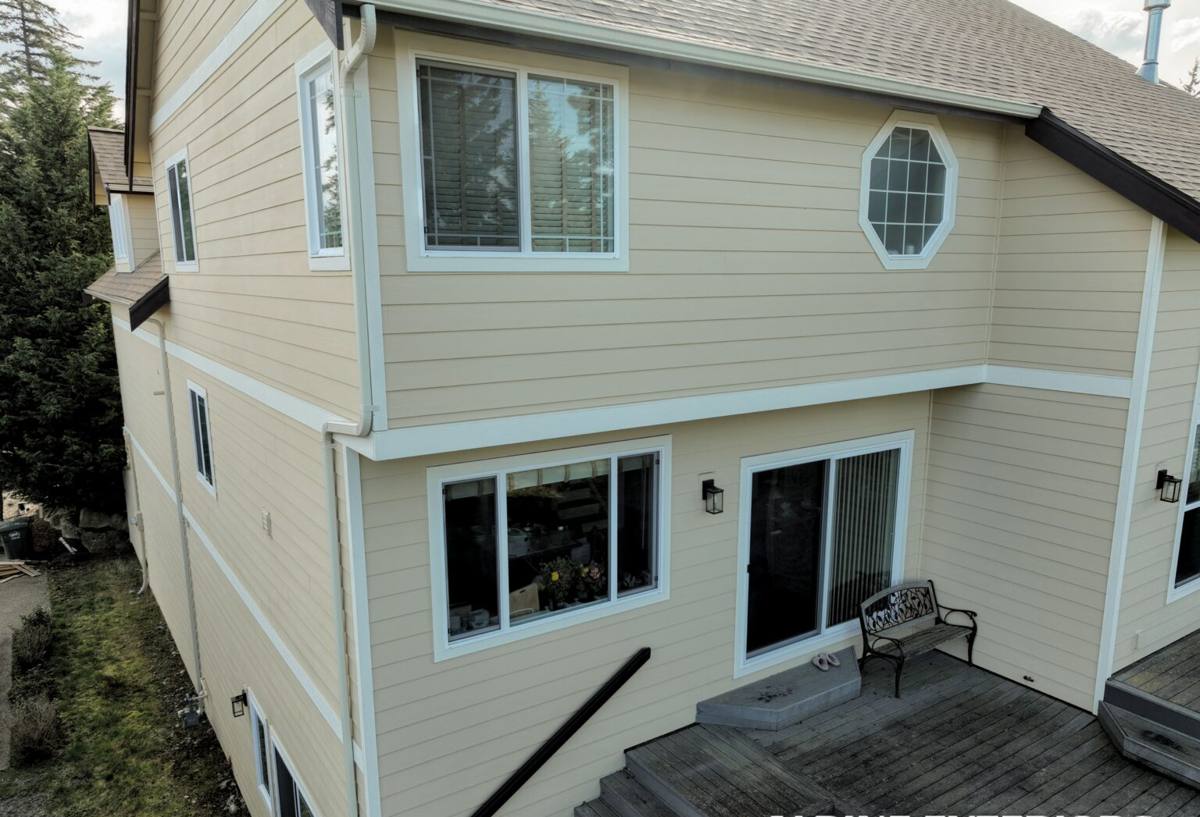
What Samish's Climate Actually Does to a Deck
Salt Air and Metal Fatigue
Coastal salt air accelerates corrosion on anything metal — joist hangers, structural screws, bolts, flashing. Standard zinc-coated hardware that would last two decades inland can start showing rust streaks and pitting in half that time this close to the water. Once a fastener weakens, the board it's holding isn't actually as secure as it looks from the top, even if the wood itself seems fine.
Driving Rain and Trapped Moisture
Whatcom County's rain doesn't just fall straight down — wind-driven rain gets pushed sideways into ledger connections, under poorly flashed rim joists, and into any gap where boards butt up against the house. That moisture doesn't evaporate quickly in our climate. It sits, it soaks into end grain, and it starts rot from the inside before there's any visible sign on the surface.
Moss, Algae, and Surface Breakdown
A long moss season means more months where a deck surface stays damp, shaded, and slow to dry. Moss and algae aren't just cosmetic — they hold moisture against the board surface, make walking areas slippery, and on painted or stained decking they accelerate coating failure, which then exposes bare wood to the weather.
Common Repair Calls We See in This Area
- Soft or spongy boards near the house where the ledger meets the siding — almost always a flashing or gap problem, not just old wood
- Rusted or failing joist hangers and structural screws, especially on decks over 10-12 years old
- Railing posts that wiggle at the base from moisture wicking up through end grain
- Persistent moss and algae staining on the shaded side of the deck that keeps coming back after cleaning
- Stair stringers showing rot at ground contact points
- Gaps or cupping in decking boards from repeated wet-dry cycling
What a Correct Deck Repair Actually Involves
A repair that's done right starts below the decking, not on top of it. Anyone can screw down a new board over a rotten joist and have it look fine for a season. The difference between a patch and a repair that lasts is what happens underneath.
Step 1: Structural Inspection First
Before we touch a single board, we check the ledger connection, joists, beams, and posts for moisture damage, rot, and hardware corrosion. This is the part of the deck holding everyone's weight, and it's also the part most likely to be quietly failing while the surface still looks presentable.
Step 2: Address the Moisture Source
If we find rot, we trace it back to why the water got in — missing or damaged flashing, a gap that should have been sealed, poor drainage underneath, or decking installed without enough spacing to let it dry. Replacing rotten wood without fixing the entry point just means the same repair again in a few years.
Step 3: Match Hardware to the Environment
Given the salt air here, we don't reuse standard hardware in a repair just because it's what was there originally. Stainless steel or heavy hot-dip galvanized fasteners and connectors cost more up front but hold up far longer against coastal corrosion, which matters more for structural pieces than it does for a screw you can see and swap out later.
Step 4: Rebuild to Handle Moss and Moisture Going Forward
Where moss and standing moisture have been a repeat problem, we look at whether board spacing, ventilation underneath the deck, or drainage grading needs adjusting as part of the repair — not just replacing what failed, but reducing the odds it fails the same way again.
Repair vs. Replacement: How We Help You Decide
Not every deck with problems needs to come down. But a deck with widespread structural rot, repeated failures in the same spots, or a frame that's simply undersized for how it's being used may cost more to keep patching than to rebuild properly. Here's the general breakdown we walk homeowners through:
| Condition Found | Usually Repairable | Usually Needs Replacement |
|---|---|---|
| Isolated soft boards, surface only | Yes | — |
| Rot at ledger or a few joists | Yes, with structural work | — |
| Rot throughout most of the frame | — | Yes |
| Persistent moss/algae, surface only | Yes | — |
| Undersized or outdated framing for current use | — | Yes |
| Corroded hardware, sound wood | Yes | — |
An honest inspection is the only way to know which column your deck falls into. We'll tell you straight if repair makes sense or if you're better off putting the money toward a rebuild.
Materials: What Holds Up Here vs. What Struggles
Material choice matters more in a coastal, high-moisture climate like Samish's than it does in drier parts of the state. We're happy to work with what's already on your deck when a repair calls for matching, but when a section is being rebuilt, here's how the common options generally perform in this environment:
- Pressure-treated lumber — affordable and widely used, but needs consistent sealing and is more sensitive to moisture at cut ends and fastener points; a good fit when properly maintained
- Cedar — naturally more rot-resistant and handles our moisture reasonably well, though it still needs periodic finishing to look good and resist graying
- Composite decking — very low maintenance and resists moisture absorption in the board itself, though we still install it with proper spacing and ventilation since trapped moisture underneath any material can cause problems over time
Whatever material is chosen, our standard is proper installation and moisture management first — no product performs well if it's fighting a bad installation underneath it.
Why a Crew That Already Works Samish Matters
Deck repair isn't one-size-fits-all, and it isn't the same job in Samish as it is somewhere dry and inland. A crew that regularly works this stretch of Whatcom County has already seen which fastener types fail early near the water, which framing details invite rot given our rain patterns, and which spots on a deck collect moss year after year regardless of how often it's cleaned. That means less time spent diagnosing from scratch and more time spent fixing the actual cause.
It also means realistic expectations. We're not going to tell you a deck near Chuckanut will behave like one in a dry climate, and we're not going to oversell a coating or product as a permanent fix to a moisture problem that needs a structural solution instead.
A Simple Maintenance Checklist Between Repairs
Once your deck is repaired, a little seasonal attention goes a long way in this climate:
- Clear leaves and debris from between boards before wet weather sets in, so water has somewhere to drain
- Rinse off moss and algae buildup before it spreads, rather than waiting until it's established
- Check railing posts and stair connections once a year for any looseness
- Look at flashing where the deck meets the house after major storms
- Reseal or restain wood decking on the manufacturer's recommended schedule, not just when it looks faded
Getting an Honest Look at Your Deck
If your deck near Samish has soft spots, rust streaks, persistent moss, or just feels less solid than it used to, it's worth having someone look underneath before the next wet season adds to the damage. We offer free, no-pressure estimates — we'll tell you plainly what we find, what it'll take to fix it right, and what your options actually are, no upsell required. Use the form below to get started.