 Chuckanut Exterior
 Roofing in Bow Isn't the Same Job as Roofing Somewhere Dry
Homes in the Bow area, tucked along the Whatcom County coastline near Chuckanut, sit in one of the more demanding roofing environments in the state. It isn't one big threat — it's three smaller ones working together year-round. Salt-laden air off the water accelerates corrosion on anything metal. Driving, wind-pushed rain finds every weak seam and gap instead of just running off the surface like it would in a calmer climate. And a long, wet, shaded moss season gives organic growth months at a time to take hold on north-facing slopes and anywhere debris collects. None of these is dramatic on its own. Together, over ten or fifteen years, they're exactly why roofs here fail earlier than the manufacturer's warranty label suggests they should.
A roof replacement done right in Bow accounts for all three from the start — not just the shingle on top, but the underlayment, flashing, fasteners, and ventilation underneath it. Get those wrong and you'll be back to patching within a few years no matter how good the shingles looked on install day.
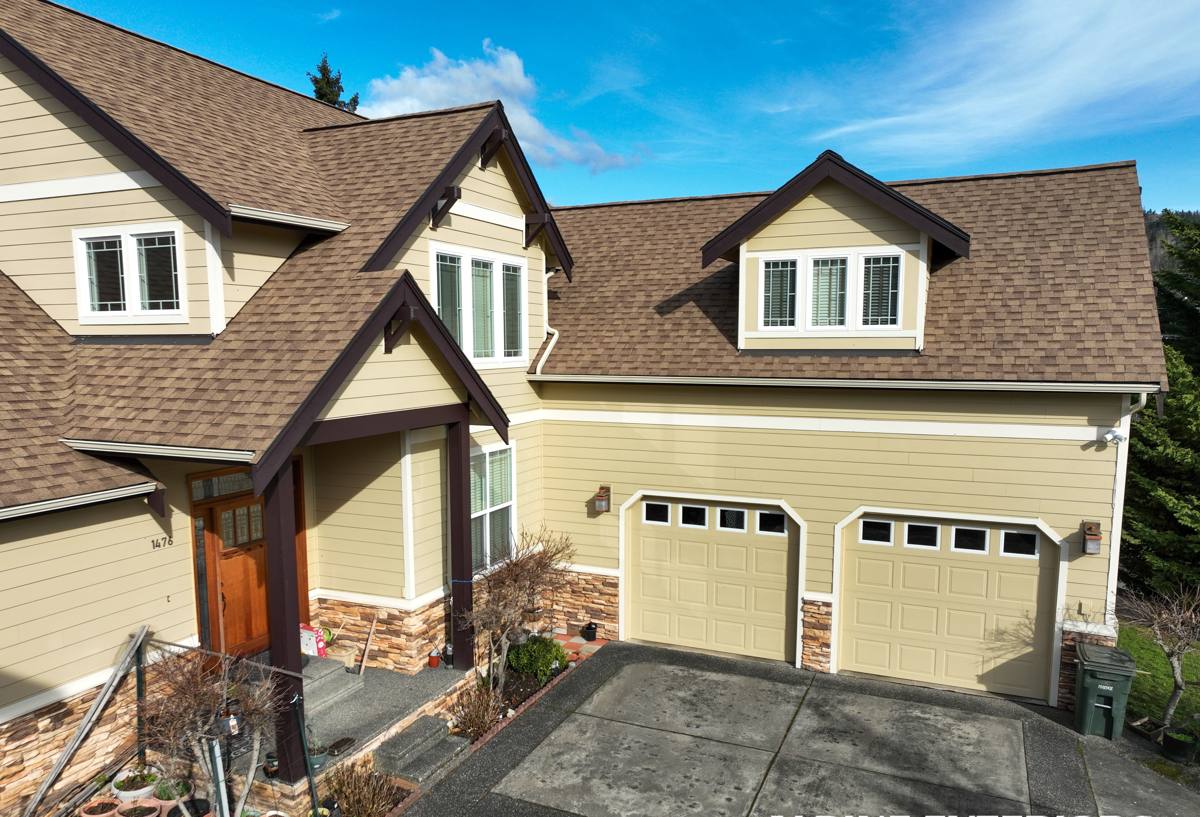
Signs Your Bow Home Needs Replacement, Not Another Repair
Every roof reaches a point where repair stops being the honest answer. In this climate, that point tends to show up a bit earlier than homeowners expect, because moisture exploits small problems faster here than in drier regions. Some signs worth taking seriously:
- Granule loss heavy enough that you're finding grit in gutters or downspouts every season
- Shingles that are cupping, curling at the edges, or visibly brittle
- Moss or algae that keeps returning within months of cleaning, especially on shaded slopes
- Soft spots in the decking you can feel when walking the roof, or sagging visible from the ground
- Flashing around chimneys, vents, or skylights that's rusted, lifted, or was never properly step-flashed to begin with
- Daylight visible through the attic decking, or insulation that's damp or matted
- A roof already past 20-25 years old, which is a realistic upper bound for standard composition shingles under coastal exposure
One or two of these might mean a targeted repair is still enough. Several at once, especially combined with age, usually means repair money is better spent toward a full replacement.
What a Correct Roof Replacement Involves Here
Tear-Off and Deck Inspection
We remove the old roofing down to the deck rather than layering over it. That's the only way to actually see the plywood or plank sheathing underneath — and in a wet climate, hidden rot under an old roof is common enough that it needs to be checked, not assumed away. Any soft or delaminated decking gets replaced before anything new goes down.
Underlayment That Matches the Exposure
This is where a lot of roofs in this area are under-built. Standard felt underlayment is fine in a mild, dry market. Along the Whatcom County coast, wind-driven rain can push water sideways under shingle tabs, and a synthetic or self-adhering underlayment at the eaves and valleys gives that moisture a second line of defense instead of a first and only one.
Flashing and Fasteners
Flashing failures — not shingle failures — cause most of the leaks we get called out for. Step flashing at walls, proper counter-flashing at chimneys, and correctly lapped valley metal matter more to a leak-free roof than the shingle brand on the box. Fasteners matter too: in salt air, corrosion-resistant nails and metal components hold up meaningfully longer than standard-grade hardware.
Ventilation
A roof that can't breathe traps moisture in the attic, and trapped moisture shortens the life of decking, insulation, and the underside of the roofing itself. Balanced intake at the eaves and exhaust at the ridge is a basic requirement we check on every replacement, not an upsell.
Roofing Material Options for This Climate
There's no single "best" roofing material — there's a best fit for your home, your roof pitch, your budget, and how much moss and salt exposure your particular lot gets. Here's how the common options actually compare in a market like Bow's:
| Material | Typical Lifespan Here | Handling Salt Air & Moss | Relative Cost |
|---|---|---|---|
| Architectural asphalt shingle | 20-30 years | Good with proper algae-resistant granules; needs periodic moss removal | Lowest to mid |
| Standing seam metal | 40-60+ years | Excellent shedding of moisture and moss; needs a marine-grade or coated finish near the water to resist salt corrosion | Highest |
| Cedar shake | 20-30 years with upkeep | Attractive but demands consistent maintenance in a wet, mossy climate; moisture retention is a real ongoing concern | Mid to high |
| Synthetic/composite shingle | 30-50 years | Resists moisture absorption well; performance varies by manufacturer | Mid to high |
We install and stand behind more than one of these — the right call depends on your roof's exposure, your home's style, and how much long-term maintenance you actually want to take on. We'll walk through the honest trade-offs for your specific roof rather than pushing whatever's easiest to install.
Our Roof Replacement Process
- On-site inspection — we walk the roof (weather permitting) and the attic, not just look from the ground, and photograph anything that affects the estimate
- Written estimate — clear scope, material options, and a price range with no vague allowances
- Scheduling around weather — in this climate, timing a tear-off to avoid an open deck sitting exposed overnight matters, and we plan for it
- Tear-off and deck repair — old roofing removed, decking inspected and replaced where needed
- Underlayment, flashing, and ventilation installed — the parts that actually determine how long the roof lasts
- Final roofing material installed to manufacturer specification, since that's what keeps the warranty valid
- Cleanup and walkthrough — magnetic sweep for nails, debris hauled off, and we walk the finished roof with you
Moss, Algae, and What Actually Keeps Them From Coming Back
Moss doesn't just sit on a roof looking bad — it holds moisture against the shingle surface and, over years, can work into the granule layer and lift edges. In a market with a moss season as long as this one's, prevention matters more than any one-time cleaning.
A few things that make a real difference long-term:
- Choosing shingles with algae-resistant granules where moss and algae are a known issue on the lot
- Zinc or copper strips near the ridge, which let rainwash carry trace metal down the roof and discourage regrowth
- Keeping overhanging branches trimmed back so shaded, damp sections of roof get more light and airflow
- Clearing gutters and valleys regularly so debris doesn't create the damp pockets moss needs to establish
None of this replaces a properly built roof — but paired with one, it meaningfully stretches the time before the next full replacement.
Why a Crew That Already Works Bow Matters
A roofing crew that works this stretch of the Whatcom County coast regularly has already seen how these specific conditions play out on real roofs over real years — which flashing details tend to fail first here, which north-facing slopes need extra attention, how fast moss actually comes back on a given roof pitch. That's different from general roofing knowledge. It shows up in small decisions: where to add an extra course of underlayment, which valleys need wider metal, whether a given lot's tree cover changes the ventilation math.
It also means being reachable after the job is done. A roof replacement should come with a real warranty and a crew you can actually call if something needs a second look — not a phone number that stops answering once the invoice is paid.
Before You Sign a Roofing Contract, Check This
- Is the contractor licensed and insured for roofing work in Washington, and will they show you proof without being asked twice?
- Does the estimate specify underlayment type, not just the shingle brand?
- Are flashing details (step flashing, valley metal, counter-flashing) called out specifically, or just "as needed"?
- Is attic ventilation addressed, or only the roof surface itself?
- What's the manufacturer's warranty, and what's the contractor's own workmanship warranty on top of it?
- Does the estimate include deck repair as a contingency, with a clear per-sheet price, instead of a vague allowance?
- Will they put a start date and expected timeline in writing?
Get a Straightforward Estimate
If your roof is showing its age, dealing with recurring moss, or you're just not sure whether it's a repair-or-replace situation, we're happy to take a look and give you an honest answer either way. The estimate is free, there's no pressure attached to it, and you'll get a clear scope and price range for your specific roof — not a generic quote. The form below gets you started.