 Chuckanut Exterior
 Siding Built for What Mount Vernon Actually Deals With
Homes in and around Mount Vernon don't face the same weather load as houses fifty miles inland. Between the salt-laden air moving in off the water, driving rain that comes sideways more often than straight down, and a moss season that can stretch for months, exterior siding here works harder than most manufacturers' marketing brochures assume. We install fiber cement siding for Mount Vernon homeowners because it's the one product category that holds up to all three of those pressures at once, and we install exclusively James Hardie because not every fiber cement product on the market handles them equally well.
This page is specifically about fiber cement siding for Mount Vernon properties — what the local climate does to siding over time, what a correct installation looks like, and how we approach the job from first estimate to final walk-through.
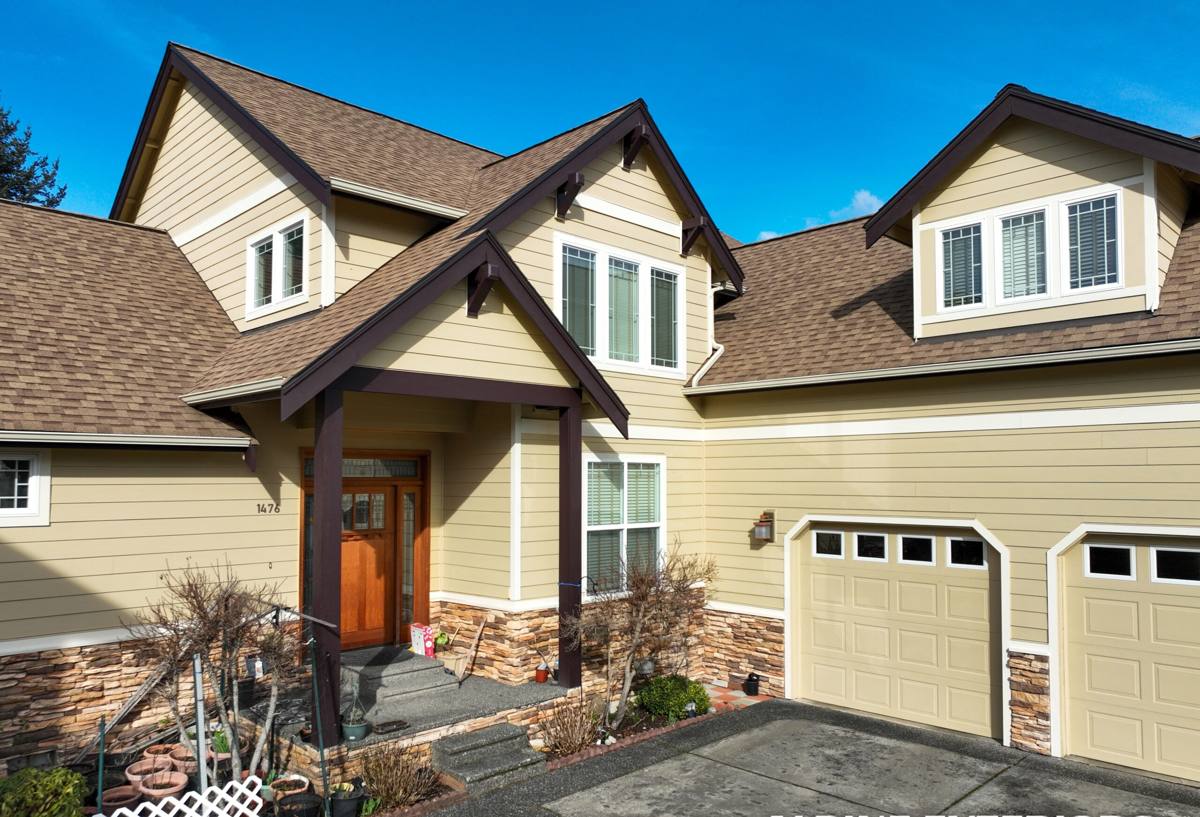
What Mount Vernon's Climate Does to Siding Over Time
Salt Air and Coastal Moisture
Salt-carrying air accelerates corrosion on fasteners, flashing, and any exposed metal components on a home's exterior. It also breaks down cheaper paint films and coatings faster than inland conditions would, leading to chalking, fading, and early clear-coat failure on siding that wasn't engineered with coastal exposure in mind.
Driving Rain and Wind-Driven Water
Whatcom County storms don't just drop water straight down — wind pushes rain sideways into seams, laps, and trim joints. Siding systems depend on correct overlap, flashing, and drainage to keep that water moving out and away from the wall assembly. When installation details are wrong, water finds its way behind the cladding, and that's where the real damage happens, usually out of sight until it's expensive.
Moss and Sustained Dampness
Long stretches of damp, low-light weather are ideal conditions for moss and algae growth on north-facing walls and anywhere airflow is limited. Moss holds moisture against a wall surface far longer than open air would, which matters a lot when the underlying material is something that swells, rots, or delaminates when it stays wet.
Why We Install James Hardie — Not Vinyl, Not LP, Not Cedar
We made a deliberate decision to install only James Hardie fiber cement siding, and we think Mount Vernon homeowners deserve an honest explanation of why, not just a sales pitch.
Vinyl
Vinyl is inexpensive and low-maintenance in mild climates, but it's a petroleum-based product that expands and contracts with temperature swings, can warp or crack in wind-driven weather, and is not fire-resistant. In salt air, the fasteners and trim accessories used with vinyl systems are often the first thing to corrode, and vinyl's seams are a common water entry point when installation isn't precise.
LP SmartSide and Other Engineered Wood
Engineered wood siding has improved over the decades, but it's still wood-based, which means it's vulnerable to moisture absorption at cut edges, seams, and fastener penetrations. In a climate with this much sustained dampness and moss pressure, that's a real long-term maintenance liability, not a hypothetical one.
Primed Spruce and Cedar
Natural wood siding can look excellent when new, but it requires ongoing refinishing, is susceptible to rot and insect damage, and demands more diligent maintenance than most homeowners realistically keep up with year after year. In a marine climate, that maintenance burden compounds fast.
Why Fiber Cement, and Why Specifically James Hardie
Fiber cement is non-combustible, dimensionally stable, and doesn't absorb moisture the way wood-based products do. James Hardie engineers its siding lines for specific climate zones, backs its products with a factory-applied ColorPlus finish designed to resist fading and hold up to UV and moisture exposure, and offers a strong transferable warranty when the product is installed to their specifications. That combination is why it's the only siding brand we put on homes.
What Correct Fiber Cement Installation Actually Involves
Fiber cement is only as good as the installation behind it. A lot of the siding failures we get called out to inspect aren't product failures at all — they're installation shortcuts that let water in behind a perfectly good material.
Flashing and Water Management
Every window, door, and penetration needs correctly lapped flashing so water sheds outward at every layer, not just at the surface. Housewrap and weather-resistive barriers need to be installed and taped so the whole wall assembly drains as a system, not board by board.
Fastening and Clearances
James Hardie specifies exact nailing patterns, fastener types, and minimum clearances from grade, roof lines, and other siding terminations. Skipping ground clearance or butting siding tight against a deck or walkway is one of the most common shortcuts we see, and it's a direct path to moisture wicking at the bottom course.
Caulking and Joints
Not every joint should be caulked, and the ones that should use the right sealant, applied correctly. Over-caulking traps moisture; under-caulking leaves gaps. Getting this right is part of following manufacturer installation guidelines, not a matter of preference.
Choosing the Right Hardie Product Line and Finish
James Hardie engineers its siding for different climate demands, and the right choice for a Mount Vernon home depends on exposure, wall orientation, and the look the homeowner wants.
| Option | Best Suited For | Key Consideration |
|---|---|---|
| HardiePlank lap siding | Most homes, traditional look | Available in multiple exposures and textures |
| HardieShingle | Accent gables, dormers | Adds texture variation without switching materials |
| HardiePanel vertical siding | Modern facades, accent walls | Works well combined with lap siding for contrast |
| ColorPlus factory finish | Homes prioritizing long-term color retention | Reduces early repainting compared to field-applied paint |
Because this region sits in a marine climate zone with sustained moisture and salt exposure, we generally steer clients toward climate-engineered HZ product lines and ColorPlus finishes over field-painted options, since the factory finish is formulated and tested for this kind of exposure rather than relying on a site-applied coating to hold up over time.
How Our Process Works
Our approach on every Mount Vernon fiber cement project follows the same sequence, because skipping steps is how water problems start.
- On-site inspection of existing siding, sheathing, and any signs of prior moisture intrusion
- Assessment of wall orientation and exposure to determine flashing and product needs
- Removal of old siding and inspection of sheathing for hidden damage before anything new goes up
- Installation of housewrap, flashing, and trim per James Hardie's published specifications
- Siding installation with correct fastening, clearances, and joint treatment
- Final walk-through covering caulking, touch-up, and care guidance for the homeowner
Cost Factors for Mount Vernon Fiber Cement Projects
Every home is different, but the same variables tend to drive the price of a fiber cement job in this area:
| Factor | Why It Matters Here |
|---|---|
| Existing sheathing condition | Hidden moisture damage from prior siding failures adds repair scope |
| Wall exposure and complexity | Multiple stories, dormers, and trim details add labor time |
| Product line and finish | ColorPlus finishes and specialty textures carry different material costs |
| Flashing and water management scope | Coastal-driven rain exposure often calls for more thorough detailing at windows and roof lines |
We provide specific numbers only after seeing the home in person — anything else is a guess, and guesses aren't useful when you're planning a project like this.
Maintenance: What to Actually Expect
One of fiber cement's real advantages over wood-based or vinyl siding is how little ongoing maintenance it needs when installed correctly. That said, Mount Vernon's climate still calls for some routine attention:
- Rinse siding periodically to remove salt residue and organic buildup, especially on north-facing walls
- Check caulked joints annually for cracking or separation
- Keep gutters and downspouts clear so water isn't overflowing directly onto siding runs
- Trim back vegetation and maintain airflow near walls to discourage moss and algae growth
- Address any paint or finish chipping promptly to prevent moisture entry at the exposed spot
Why Hiring a Crew That Already Works This Area Matters
A siding crew that regularly works Whatcom County job sites already understands how far to size overlaps for wind-driven rain, which wall orientations need extra flashing attention, and how moss pressure changes maintenance recommendations for a given home. That local familiarity shows up in the details — the parts of the job that don't show up in a sales brochure but determine whether the siding is still performing well in fifteen years. We'd rather spend the extra time getting those details right the first time than come back later to fix a shortcut.
If you're considering fiber cement siding for a Mount Vernon home, we're happy to take a look and talk through what your home specifically needs. Request a free, no-pressure estimate using the form below.