 Chuckanut Exterior
 Metal Roofing in Edison: Built for Coastal Conditions
Edison sits close enough to the water that its roofs deal with a different set of stresses than homes further inland. Salt-laden air moves through on a regular basis, rain arrives sideways as often as it falls straight down, and the shoulder seasons stretch long and damp enough that moss has months to establish itself before a good dry spell ever shows up. A roof out here isn't just shedding water — it's fighting corrosion, wind-driven moisture intrusion, and organic growth all at the same time, year after year.
Metal roofing, installed correctly, handles that combination better than most other systems. But "installed correctly" is doing a lot of work in that sentence. A metal roof that's flashed, fastened, and detailed for inland conditions won't perform the same way three miles from open water. This page covers what Edison homes actually need from a metal roof, what a proper installation looks like, and how our process is built around the realities of this specific stretch of coastline.
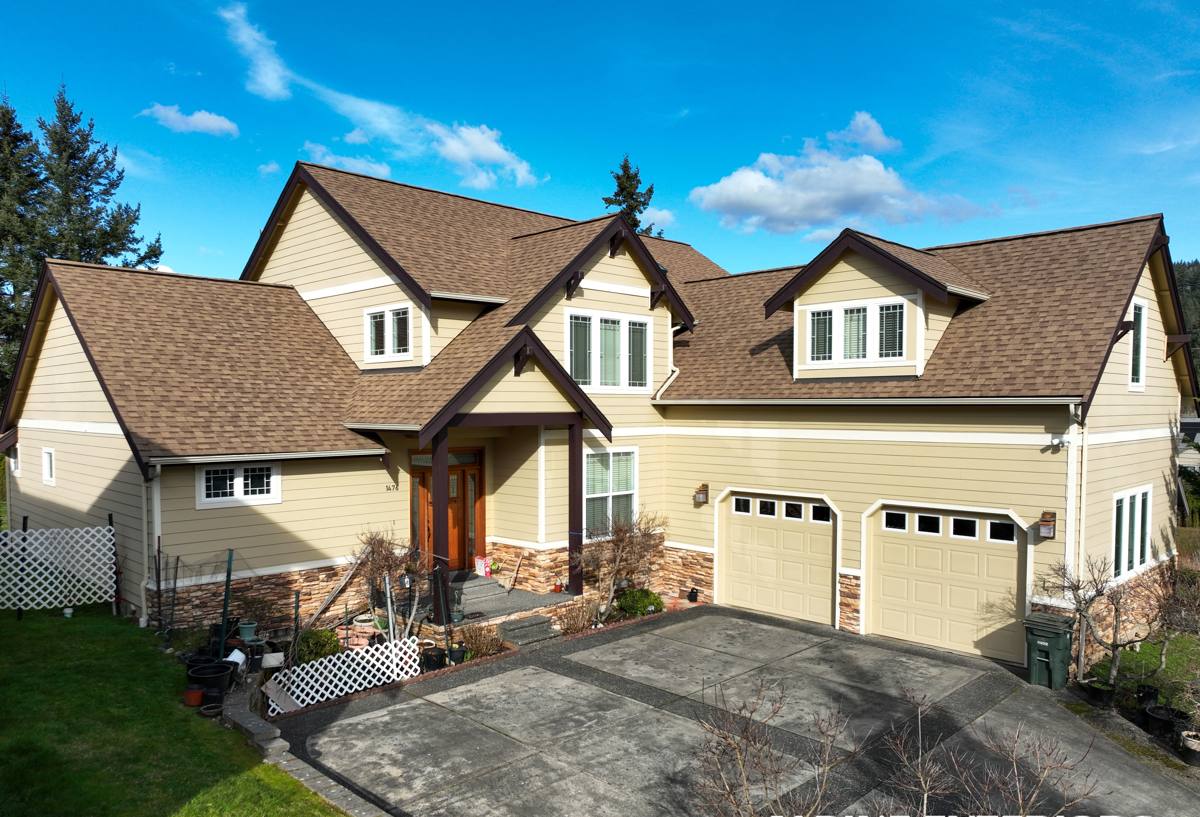
What Edison's Climate Actually Does to a Roof
Salt Air and Corrosion
Airborne salt doesn't need direct spray to cause problems — it settles as fine particulate on any exposed metal, and over time it accelerates corrosion at fasteners, cut edges, and any spot where the protective coating has been scratched or worn through. This is why the coating system and the fastener hardware matter as much as the panel material itself. It's also why mixing incompatible metals on the same roof — say, an aluminum panel with steel screws, or copper flashing draining onto steel — is a mistake we avoid; that kind of pairing sets up galvanic corrosion that can eat through metal from the inside of the joint, invisible until it's already failed.
Driving Rain and Wind-Driven Water
Rain that comes in at an angle behaves differently than rain that falls straight down. It gets pushed up under lapped seams, forced sideways at valleys, and driven into any gap around a vent pipe or chimney that wasn't sealed with wind in mind. A roof detailed for calmer conditions can leak here even though the same detailing would hold up fine somewhere more sheltered.
The Long Moss Season
Cool, damp stretches that run for months give moss and algae plenty of time to take hold on any roof surface that stays wet and holds organic debris. Moss doesn't just look bad — its root structure lifts shingle edges and traps moisture against the roof deck, and on any roofing material it accelerates wear wherever it's allowed to establish itself.
Why Metal Roofing Makes Sense for This Area
None of this means metal roofing is magic or maintenance-free. It means metal, done right, deals with these three pressures better than most alternatives:
- Fast water shedding. A steep, smooth metal surface gives rain far less time to sit, pool, or work its way sideways under a seam than a textured shingle surface does.
- Little organic material for moss to grip. Moss needs something to root into. A clean, factory-coated metal surface offers it much less purchase than shingle granules or wood, which slows growth even though it doesn't eliminate it.
- Long service life when the coating holds. A quality coating system on a properly installed metal roof is built to hold up for decades in coastal exposure — the coating and the installation quality are what determine whether that promise gets kept.
- No organic material to feed rot. Unlike wood shakes or aging asphalt, metal doesn't decompose, which matters in a climate that rarely gives a roof a long enough dry stretch to fully recover between wet periods.
Choosing the Right Metal Roofing System
Not all metal roofing is the same product wearing a different color. The panel style, gauge, and coating all change how the roof performs here specifically.
| System | How It Handles Salt Air | Maintenance | Best Fit |
|---|---|---|---|
| Standing seam (concealed fastener) | Best — no exposed screws to corrode or back out | Low; occasional debris and gutter clearing | Homes closer to open water or with high wind exposure |
| Exposed-fastener panel (corrugated/ribbed) | Good, but fastener gaskets age and need periodic checking | Moderate; fastener inspection every few years | Outbuildings, secondary roofs, budget-conscious projects |
| Stone-coated steel | Good; coating protects the steel core, but cut edges need careful sealing | Moderate; behaves more like a textured surface for debris and moss | Homeowners wanting a traditional shingle or shake look with metal underneath |
For most homes in Edison's exposure zone, we lean toward standing seam because it has no exposed fasteners for salt air to attack over time. That said, the right system always depends on the roof's pitch, orientation, and how close it sits to open water — which is part of what we look at during an on-site assessment rather than guessing from a photo.
What a Correct Installation Actually Involves
Metal roofing is unforgiving of shortcuts in a way that shingles sometimes aren't. A panel installed slightly wrong doesn't fail immediately — it fails in year four or five, after the coating's been compromised or water has found a path the installer didn't account for. The details that matter most in this climate:
- Self-adhered underlayment at eaves, valleys, and penetrations — a full water barrier that doesn't rely on the panel alone to keep water out.
- Correct clip and fastener spacing so panels can expand and contract with temperature swings without oil-canning or stressing the seams.
- Matched, compatible metals throughout — flashing, fasteners, and panels that won't set up galvanic corrosion against each other.
- Flashing detail at every penetration — vent pipes, chimneys, skylights — cut and sealed for wind-driven rain, not just straight-down rain.
- Adequate ventilation so condensation doesn't build up on the underside of the panels, which can cause problems that have nothing to do with the roof's exterior performance.
- Proper edge and drip detailing so water is directed into gutters instead of running behind fascia or siding.
Our Process, Start to Finish
We walk every roof before we quote it. That means checking the condition of the existing deck, looking at how the roof is currently ventilated, and noting anything — tree cover, roof complexity, existing damage — that will affect the job. From there:
- Assessment and measurement. We evaluate the deck, existing roofing, flashing points, and ventilation, and take precise measurements for panel fabrication.
- System selection. We walk through panel type, gauge, and coating options based on the roof's exposure and your budget — no upselling to a system the roof doesn't need.
- Tear-off or overlay decision. Most jobs call for a full tear-off so the deck and underlayment can be inspected and corrected if needed; we'll tell you honestly if an overlay is a reasonable option for your specific roof.
- Installation. Underlayment, flashing, and panels go on in sequence, with attention to the fastening and sealing details above.
- Final walk-through. We inspect every seam, flashing point, and edge with you before we call the job finished.
Maintenance Through a Long Moss Season
A well-installed metal roof asks for less upkeep than most alternatives, but "less" isn't "none," especially with months of damp weather to contend with. A short, honest maintenance routine:
- Keep gutters and valleys clear of needles and leaf debris — trapped organic matter is what gives moss somewhere to start, even on metal.
- Have penetration sealant and flashing checked periodically; sealant is the one component on a metal roof that ages faster than the panels themselves.
- Avoid walking the roof yourself — metal can be deceptively slick when damp or mossy, and it's easy to scuff a coating without realizing it. Leave inspections to a crew with the right footwear and safety setup.
- Watch for staining or streaking near fasteners or seams, which can be an early sign a detail needs attention before it becomes a leak.
What Affects the Cost of a Metal Roof in Edison
Every roof is different, so we won't quote a number without seeing the job, but these are the factors that move a price up or down:
| Factor | Why It Matters |
|---|---|
| Panel system chosen | Standing seam generally costs more upfront than exposed-fastener panels, reflecting its labor-intensive installation and better long-term coastal performance |
| Roof pitch and complexity | Steep roofs, multiple valleys, and dormers all add labor and material for proper flashing |
| Tear-off vs. overlay | Removing old roofing adds cost but lets us inspect and fix the deck underneath — often the right call on an older roof |
| Access and site conditions | Tree cover, tight lot lines, or difficult staging near the water can add time to a job |
| Gutter and flashing upgrades | Roofs in this climate often benefit from upgraded gutters or drip edge done at the same time, which is more efficient than doing it later |
As a broad reference point, most standing seam installations in this region land somewhere in the mid-to-upper range of roofing costs compared to asphalt shingles — the tradeoff being a system built to last multiple shingle lifetimes in this exposure. A firm number only comes after we've actually seen the roof.
Why Hire a Crew That Already Works in Edison
A roofer who mostly works drier, inland jobs can still install a technically sound metal roof — but they may not think to double up underlayment at a valley facing prevailing wind, or flag that a particular fastener won't hold up long-term this close to salt air. Crews who work this stretch of the Chuckanut coastline regularly see how roofs here actually age, which shapes decisions on detailing, coating choice, and ventilation before problems ever show up. That local pattern recognition is worth as much as any single product spec.
If you're weighing a metal roof for a home in the Edison area, we're happy to take a look and walk you through what your specific roof needs — no pressure, no upsell, just a straight assessment. Use the form below to request a free estimate.