 Chuckanut Exterior
 Windows Around Lake Samish Take a Different Kind of Beating
Lake Samish sits in a pocket of Whatcom County where three things overlap in a way that's tough on window frames, seals, and sills: moisture off the lake itself, salt-tinged air that drifts in from the nearby Puget Sound shoreline, and heavy tree cover that keeps everything shaded and damp longer than it should be. A window that would hold up fine in a dry, open subdivision can start failing years early out here, and it usually doesn't announce itself with a dramatic leak. It shows up as a soft spot in the sill, a foggy pane, or a window that suddenly takes real effort to open.
This page is about one job, done right, for this one area: replacing windows on homes around Lake Samish. Not a general "windows" pitch — the specific conditions this neighborhood deals with, what a correct replacement actually involves, and how we handle it.
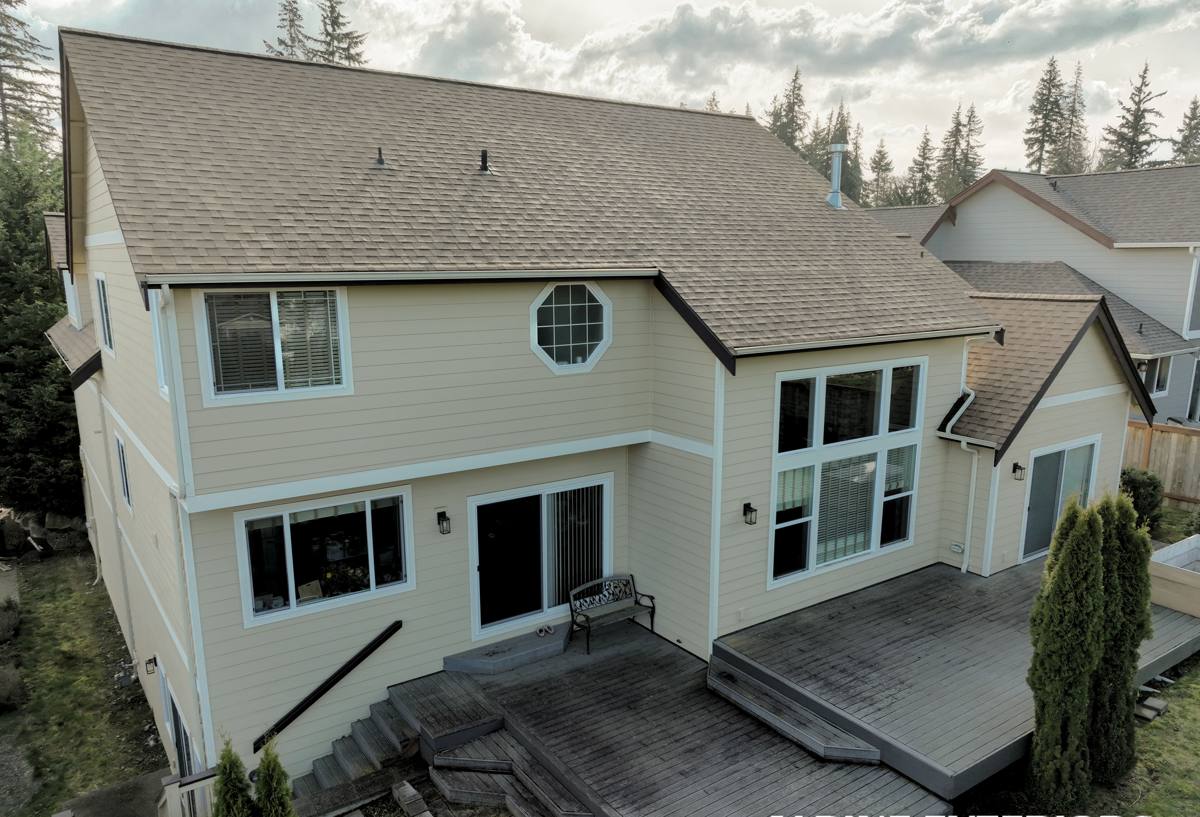
What the Local Climate Actually Does to a Window
Chuckanut and the Lake Samish area sit under a wet, marine climate for most of the year. That means long stretches of low sun angle, slow-drying surfaces, and rain that comes in sideways during winter wind events. Add the lake's own humidity and the tree canopy that shades a lot of these homes, and you get conditions that are rougher on wood, vinyl, and seals than most manufacturers' warranty testing assumes.
Driving rain and wind-driven water
Storms off the water don't just fall straight down — wind pushes rain sideways into window assemblies, testing flashing and seals in ways calm rain never does. Older installations, or ones that were flashed as an afterthought, are where we find the water damage.
Salt air and hardware corrosion
Homes closer to the water side of the area see salt-laden air accelerate corrosion on hardware, screens, and some lower-grade metal components. It's slower than direct coastal exposure, but it's real, and it shows up first in locks and cranks that get stiff or pit years before the glass itself is a problem.
Moss, shade, and slow drying
Tree cover around the lake keeps a lot of window trim and sills in shade for most of the day. Combined with the long wet season, that means moss and algae get a foothold on sills, trim boards, and anywhere water sits instead of shedding. Once moss is established against wood trim, it holds moisture against the surface and speeds up rot — it's not just a cosmetic issue.
Signs a Lake Samish Home Actually Needs Replacement (Not Just Repair)
Not every problem window needs full replacement. Sometimes new weatherstripping or a resealed frame solves it. Here's what we actually check before recommending a full replacement:
- Soft, spongy, or discolored wood at the sill or lower frame corners — a sign moisture has gotten into the wood itself, not just the surface
- Fogging or a visible haze between panes on double- or triple-glazed units, meaning the seal has failed and the gas fill is gone
- Windows that are hard to open, won't stay up, or have locks that no longer engage cleanly
- Visible daylight or a draft you can feel around the frame when it's closed and locked
- Moss or dark staining building up on the sill or trim that keeps coming back after cleaning
- Noticeably higher heating bills in a room with older single-pane or early-generation double-pane windows
- Condensation forming on the inside of the glass regularly, even with normal household humidity
If a window shows one or two of these, repair might still make sense. If it's several at once, or the frame itself is compromised, replacement is usually the more honest recommendation — patching a rotten frame just delays the real fix.
What a Correct Window Replacement Job Involves Here
The window unit itself is only part of the job. Around Lake Samish, the install details around the window matter as much as the window's quality rating, because that's where water actually gets in.
Flashing and moisture management first
Before a new window goes in, the opening gets checked for existing water damage and properly flashed — meaning water that hits the wall above and around the window is directed out and away from the sheathing, not down into it. This is the step that gets rushed on cheap installs, and it's the one that determines whether a window lasts 10 years or 30 in a wet climate like this.
Frame material suited to shade and moisture
We steer homeowners away from raw wood exteriors in heavily shaded, lake-adjacent spots unless they're committed to real ongoing maintenance — shade plus moisture is exactly the combination that feeds rot and moss growth. Vinyl and fiberglass frames handle that combination with a lot less upkeep, which is why we lean on them as our standard recommendation here, not because wood is a bad product, but because it's a higher-maintenance one in this specific setting.
Glass package suited to tree cover and lake glare
Homes with a lot of shade don't need the same solar-heat-blocking glass as a south-facing open lot, but they do benefit from good thermal performance since shaded rooms can run cooler and damper. Homes with more open lake exposure benefit from glare and heat control on that side. We size the glass package to each elevation of the house rather than using one spec for the whole project.
Sealing and finish work
Interior and exterior sealing gets finished properly — no gaps left for wind-driven rain to find, and exterior trim detailed so water sheds away from the wood instead of pooling against it, which is exactly the setup that invites moss.
Comparing Frame Options for a Lake Samish Install
| Frame Material | Handles Local Moisture | Maintenance Needed | Typical Fit |
|---|---|---|---|
| Vinyl | Good — won't rot, doesn't feed moss growth | Low — occasional cleaning | Most homes around the lake, especially shaded lots |
| Fiberglass | Very good — stable in temperature swings and damp conditions | Low | Homes wanting a stiffer frame or larger window sizes |
| Wood (clad exterior) | Good on the exterior face, since cladding protects the wood | Moderate — interior wood still needs periodic attention | Homes wanting a wood interior look without full wood-exterior upkeep |
| Wood (unclad) | Poor in shaded, damp spots without diligent upkeep | High — regular repainting/sealing to prevent rot and moss | Open, sunnier sites where upkeep is already part of the plan |
None of these are wrong choices in general — the point is matching the material to how shaded, damp, or salt-exposed a given side of the house actually is, instead of using the same spec on every elevation.
How Our Process Works
- Walkthrough and assessment — we look at every window being considered, check sills and frames for hidden moisture damage, and note which sides of the house get the most wind-driven rain or shade.
- Honest recommendation — repair where it makes sense, replace where it doesn't. We'll tell you if a window can be saved.
- Written estimate — frame material, glass package, and flashing detail spelled out per window or per elevation, not a single vague line item.
- Removal and inspection — once the old window is out, we check the framing behind it before anything new goes in. This is where hidden rot or past water intrusion actually gets found.
- Install with proper flashing and sealing — the step that determines long-term performance in this climate.
- Final check — operation, seal, and finish work confirmed before we consider the job done.
Why a Crew That Already Works Lake Samish Matters
A lot of window problems out here aren't about the window brand — they're about whether the person installing it understood what this specific location does to a house. A crew that mostly works drier, more open parts of Whatcom County can still do a technically fine install and have it underperform here, simply because they didn't think to prioritize the flashing detail or steer away from a shade-prone wood frame.
Working this area regularly means we've already seen where water tends to find its way in around here, which sills tend to hold moss, and which frame choices actually hold up under this much tree cover and lake humidity. That's not a marketing point — it changes what we recommend and how we detail the install.
What Affects the Cost
Every home and window count is different, so we won't quote a number without seeing the job, but these are the factors that actually move the price:
| Factor | Why It Matters |
|---|---|
| Number and size of windows | Larger openings and full-house projects have different labor and material scaling than a single window swap |
| Frame material chosen | Vinyl, fiberglass, and clad-wood options carry different material costs |
| Condition of the existing opening | Hidden rot or past water damage found during removal adds repair work before the new window goes in |
| Glass package | Upgraded thermal or glare-control glass costs more than a standard package |
| Access and site conditions | Upper-story windows, tight lake-side access, or landscaping around the work area can add time |
As a broad range, homeowners in this area typically see window replacement projects run anywhere from a few thousand dollars for a single window up into the higher five figures for a full-house replacement — the estimate walkthrough is what narrows that down for your actual house.
Keeping New Windows Performing in This Climate
A correct install goes a long way, but a little seasonal attention keeps it performing for the long haul:
- Rinse sills and trim periodically, especially on shaded sides where moss and algae build up fastest
- Check exterior caulking once a year for cracking or gaps, particularly after a hard winter
- Keep gutters and downspouts clear so overflow isn't running down onto window heads
- Trim back branches or vegetation that keep a window in constant shade and slow drying time
- Operate locks and cranks a few times through the year so hardware doesn't seize from disuse
None of this is complicated, but skipping it is how a good install still ends up with moss and moisture problems a few years down the road.
If windows in your Lake Samish home are showing any of the signs above, or you're just ready to stop fighting drafts and fogged glass, we're happy to come take a look. The form below gets you a free, no-pressure estimate — no obligation, just a straight assessment of what your home actually needs.