 Chuckanut Exterior
 Metal Roofing Built for Lake Samish, Not for a Catalog Photo
Lake Samish sits in a pocket of Whatcom County where the weather doesn't play by generic Pacific Northwest rules. You get the salt-laden air pushing in off the Chuckanut corridor, long stretches of driving rain off the water, and a moss season that can run most of the year on shaded, north-facing slopes. A metal roof that's installed the same way it would be in a dry inland town is going to disappoint a Lake Samish homeowner within a few years. The metal itself is rarely the problem — the installation choices around it are.
This page is specifically about metal roofing for homes around Lake Samish. If you're comparing materials in general, that's a broader conversation. Here we're talking about what actually holds up on this lake, in this climate, on this terrain.
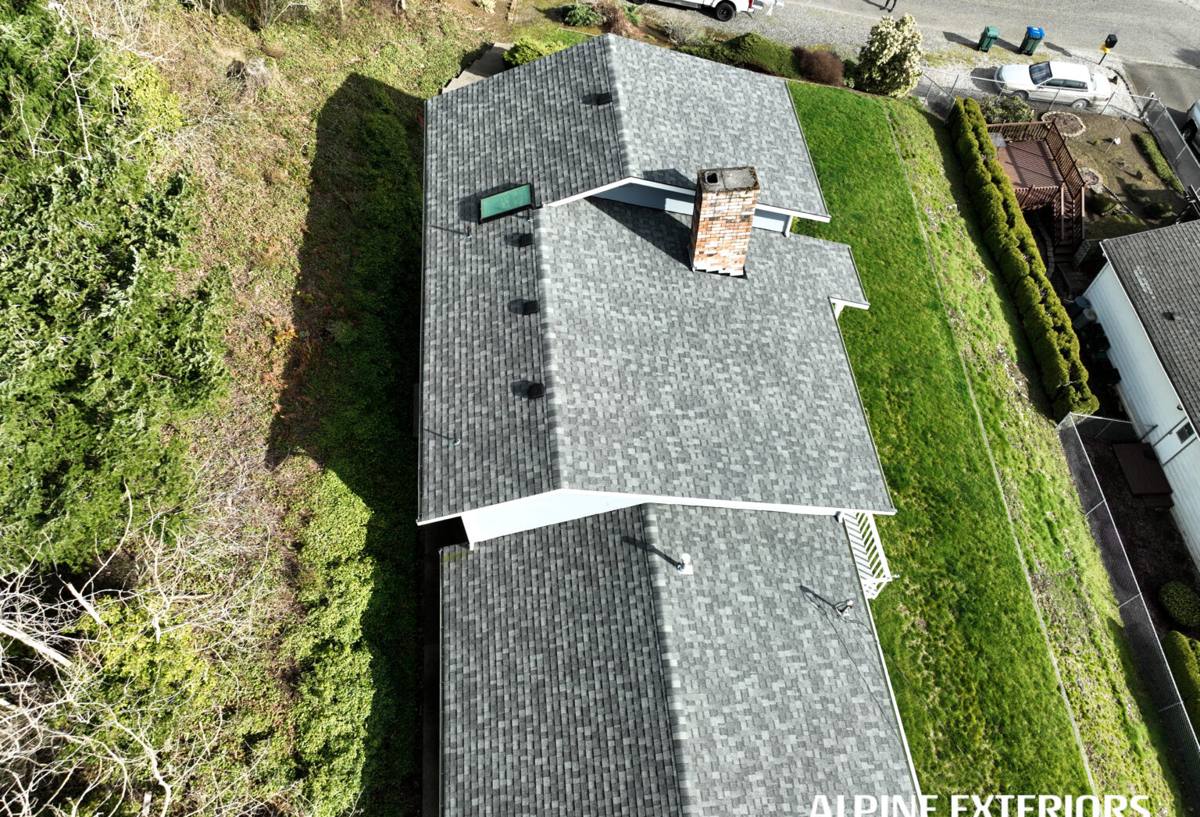
What the Local Climate Actually Does to a Roof
Salt Air
Salt-bearing air moving through the Chuckanut area accelerates corrosion on fasteners, flashing, and any exposed cut edges of metal panels. It doesn't happen overnight, but over years it will find the weak point — usually a fastener with a worn-out gasket or a panel edge that wasn't properly coated or sealed at installation.
Driving Rain
Wind-driven rain off the lake doesn't fall straight down — it gets pushed sideways under laps, around penetrations, and into any gap that a "good enough" installation left open. On a standard shingle roof this shows up as slow leaks. On metal, it shows up at seams, flashing details, and fastener penetrations, which is exactly where corner-cutting installers tend to save time.
Moss Season
Tree cover around the lake keeps a lot of roof surfaces shaded and damp for extended stretches, which is exactly what moss needs to establish. Moss holds moisture against the roof surface, and on metal roofing it can trap water against fasteners and seams if the roof wasn't designed with enough slope, ventilation, and clean water shed in the first place.
None of these three factors is unusual on its own. What's unusual is having all three working on the same roof at the same time, which is the normal situation for most homes around Lake Samish.
What a Correctly Installed Metal Roof Involves
A metal roof is a system, not just a layer of panels. Every part of that system matters more here than it would in a milder climate.
- Underlayment: A high-temperature, self-adhering underlayment at eaves, valleys, and penetrations gives you a backup water barrier if wind-driven rain gets past the panels.
- Fasteners: Corrosion-resistant fasteners matched to the panel material, with intact rubber gaskets, installed at the correct torque — too tight compresses and fails the gasket, too loose leaves a gap.
- Flashing: Custom-formed flashing at valleys, walls, chimneys, and penetrations, not generic stock pieces bent to "close enough."
- Panel laps and seams: Properly overlapped and, on standing seam systems, mechanically seamed rather than relying on sealant alone.
- Ventilation: Adequate intake and exhaust airflow so moisture doesn't condense against the underside of the panels.
- Slope and water shed: Panels run and detailed so water moves off the roof quickly rather than sitting in shaded, moss-prone areas.
Skip any one of these and the roof will likely still look fine for a few years. The failures on metal roofing tend to show up gradually, at the details, not as a dramatic leak on day one.
Standing Seam vs. Exposed Fastener: Which Fits a Lake Samish Home
Both systems are legitimate metal roofing options. The right one depends on your roof's slope, how much shade and moss exposure it gets, and your budget.
| Factor | Standing Seam | Exposed Fastener |
|---|---|---|
| Fastener exposure | Hidden, clipped underneath panels | Visible screws through the panel face |
| Salt-air durability | Fewer exposed points for corrosion to start | Requires periodic gasket and fastener checks |
| Upfront cost | Higher | More budget-friendly |
| Maintenance | Lower long-term maintenance | Fasteners may need re-torquing or replacement over time |
| Best fit | Shaded, moss-prone, or higher-exposure roofs near the water | Simpler roofs, secondary structures, tighter budgets |
We'll walk your specific roof and tell you honestly which system makes sense — not just quote whichever one is easiest for us to install.
Why We Don't Push Every Metal Option on Every Roof
Some lower-cost metal roofing products cut corners on coating thickness or panel gauge to hit a price point. On a dry, low-exposure roof that might hold up fine. On a Lake Samish roof dealing with salt air and sustained moisture from moss and shade, a thinner coating or lighter gauge panel shows wear faster — chalking, fading, or early corrosion at cut edges. That's not a claim against any specific brand; it's a trade-off we factor into what we recommend for this particular climate. Our standard is to spec panels and coatings that are built for coastal-adjacent, high-moisture conditions, even if that's not the cheapest option on the shelf.
Our Process, Start to Finish
1. On-Site Assessment
We walk the roof and the attic, not just the roof surface. Ventilation, existing moisture damage, decking condition, and moss patterns all get checked before we talk materials.
2. Straight Answers on Options
We explain the real trade-offs between panel systems for your specific roof — slope, shade exposure, and how the roof ties into walls, valleys, and existing flashing.
3. Tear-Off and Deck Prep
Old roofing comes off, decking gets inspected and repaired where needed. Installing new metal over a soft or rotted deck is a mistake we won't make just to save a step.
4. Underlayment and Flashing First
The water-management layer goes in correctly before a single panel is set. This is the part of the job you'll never see again once it's done, and it's the part that determines whether the roof performs in ten years.
5. Panel Installation
Panels are run, seamed or fastened, and detailed at every penetration, valley, and edge according to manufacturer specifications — not shortcuts.
6. Final Walkthrough
We walk the finished roof with you, explain what maintenance (if any) it needs, and answer questions before we call the job done.
Keeping a Metal Roof Healthy Around Lake Samish
A correctly installed metal roof needs far less maintenance than shingles, but "far less" isn't "none" in this environment. A short annual checklist goes a long way:
- Clear overhanging branches and debris that keep sections of the roof shaded and damp longer than necessary.
- Rinse off accumulated moss, pollen, or organic debris before it has a chance to establish and hold moisture.
- Check gutters and downspouts so water actually leaves the roof instead of backing up at the eaves.
- Look over exposed fasteners (if your system has them) for loose screws or worn gaskets every year or two.
- Have flashing at valleys, chimneys, and wall intersections inspected periodically — this is where most metal roof issues actually start.
What Drives the Cost
Metal roofing costs vary based on a handful of real factors rather than a flat rate. Broadly, homeowners in this area should expect a range depending on system type and roof complexity, with standing seam running higher than exposed fastener systems for the reasons covered above.
| Cost Factor | Why It Matters |
|---|---|
| Panel system | Standing seam costs more upfront than exposed fastener but needs less long-term upkeep |
| Roof complexity | Valleys, dormers, and multiple roof planes mean more custom flashing and labor |
| Decking condition | Rot or damage found during tear-off adds repair costs before installation can proceed |
| Coating and gauge | Heavier-gauge panels with better coatings cost more but hold up longer against salt air |
| Ventilation upgrades | Adding or correcting attic ventilation adds cost but protects the whole system |
We'll give you a written estimate that breaks these factors down for your roof specifically, not a vague ballpark.
Why It Matters That We Already Work This Area
A crew that regularly works around Lake Samish already knows how the shade patterns run, how aggressive the moss growth typically is, and how far wind-driven rain travels up under eaves during a real Chuckanut storm. That's not something you learn from a spec sheet — it's something you learn by doing roofs in this specific pocket of Whatcom County, season after season. We bring that local experience to every detail of the installation, from how we flash a valley to what ventilation adjustments we recommend for a shaded, lake-facing slope.
If you're weighing metal roofing for your home near Lake Samish, we're happy to take a look and give you a straightforward assessment — no pressure, no upsell. Reach out using the form below and we'll set up a free estimate.