 Chuckanut Exterior
 Deck Repair Built for Lake Samish Conditions
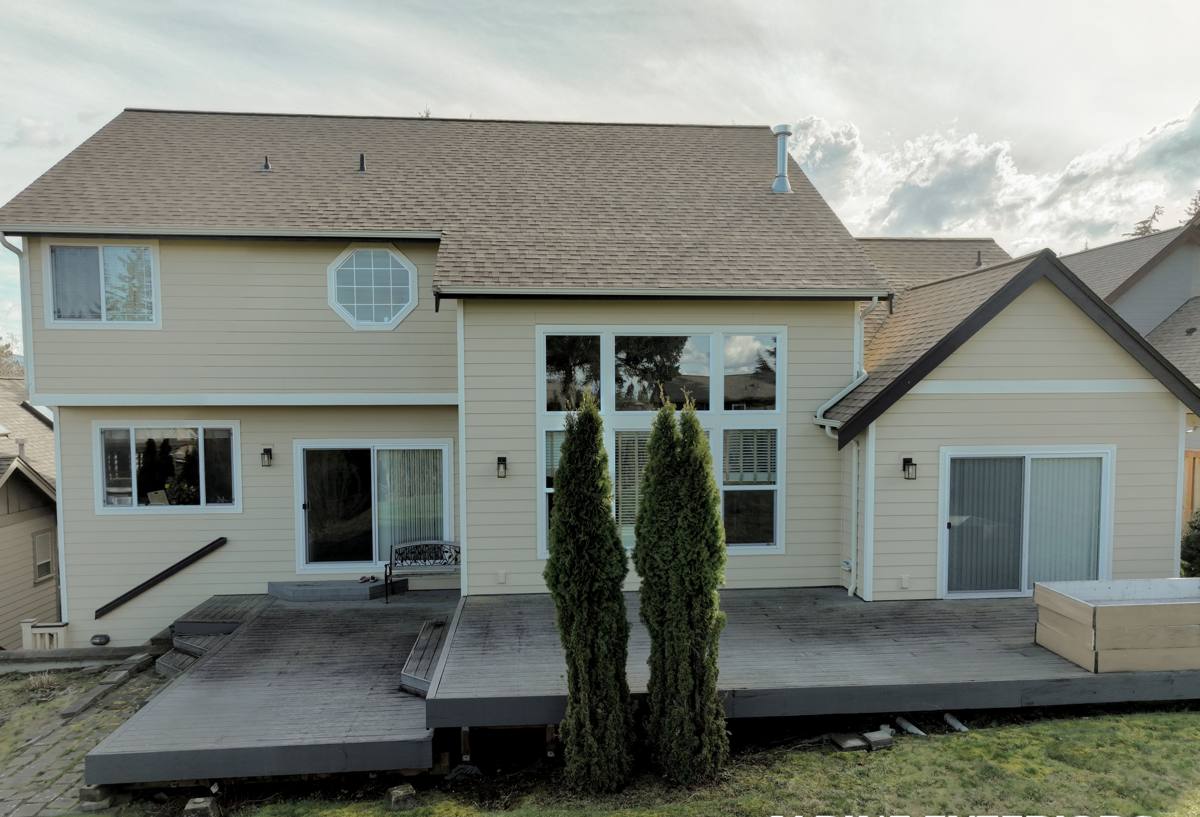
Homes around Lake Samish sit in one of the wetter, shadier pockets of Whatcom County, and the deck out back usually shows it first. Between the moisture pulled off the lake, the tree cover common on wooded lots in this part of Chuckanut, and the driving rain that rolls in off the water for months at a time, a deck here ages differently than one on a dry, open lot elsewhere in the county. We've repaired enough of them to know what actually fails, why, and what a repair needs to include to hold up through another wet season instead of just looking better for a year.
This page covers deck repair specifically, not new deck construction, for homes in and around Lake Samish. If your deck is structurally sound but showing wear, rot, or damage in specific areas, repair is usually the right call. If the framing itself is compromised, we'll tell you that honestly too.
Why Lake Samish Decks Wear the Way They Do
Three things drive most of the repair calls we get in this area:
Driving Rain and Standing Moisture
Pacific storm systems push rain sideways through this part of Whatcom County for much of the fall, winter, and spring. On a deck, that means water doesn't just fall and drain — it gets driven under railings, into fastener holes, and along ledger boards where the deck meets the house. Wood that stays damp for days at a time, rather than drying out between rains, is the wood that rots first.
A Long Moss and Algae Season
Shade from surrounding trees plus lake humidity gives moss and algae a long growing window on horizontal wood surfaces — deck boards, stair treads, and railing caps especially. Beyond looking bad, moss holds moisture against the wood surface and turns decking into a slip hazard, particularly on stairs and any sloped or transition area.
Coastal and Marine Air Influence
Being close to open water means salt-laden air reaches exposed metal fasteners, hinges, and hardware even at homes set back from the shoreline. Standard fasteners corrode faster here than they would inland, and corroding hardware is one of the more common hidden causes of a deck that feels "loose" or springy even though the boards themselves look fine.
Signs Your Deck Needs Repair
Most homeowners call us after noticing one or two obvious problems, but a proper inspection often turns up more. Here's what we look for, and what you can check yourself first:
- Soft, spongy, or springy spots when you walk across the deck
- Boards that are visibly cupped, splitting, or pulling away from joists
- Rust streaks running down from screws, nails, or metal connectors
- Gaps or movement where the deck ledger meets the house wall
- Wobbly or loose railings and posts
- Persistent moss, algae, or black staining that keeps returning after cleaning
- Stair stringers that flex or feel uneven underfoot
- Visible daylight or rot at the base of support posts
Any one of these on its own might be a small fix. Several together, especially near the ledger board or support posts, usually points to a structural issue worth a full inspection before it becomes a safety problem.
What a Correct Deck Repair Actually Involves
Deck repair that lasts starts underneath the decking, not on top of it. A repair that only replaces visible boards without checking what's underneath is a repair that gets redone in two or three years.
Structural Framing First
We check joists, beams, and the ledger board connection before touching the surface. This part of the deck carries the actual load, and it's also the part most likely to be hiding rot, since it stays damp longer than exposed decking and gets far less airflow.
Fasteners and Hardware
Given the coastal air influence here, we replace corroded fasteners and connectors with hardware rated for wet, coastal-adjacent exposure rather than reusing standard fasteners that are already showing rust. This is one of the most skipped steps in a cheap repair, and it's one of the first things to fail again.
Decking Boards and Stair Treads
Individual boards are replaced where rot, splitting, or cupping has gone past the point of sanding or sealing. We match spacing and fastening pattern to the rest of the deck so repaired sections don't trap water differently than the surrounding boards.
Railings and Guards
Loose railings almost always trace back to a post connection, not the railing itself. We address the connection point, not just the wobble, since a railing that's re-tightened without fixing the post attachment will loosen again within a season.
Surface Protection
Once structural and surface repairs are done, we clean the deck properly and, where appropriate, reseal or restain it. This step matters more here than in drier parts of the state — an unsealed or under-sealed deck in this climate starts absorbing moisture again almost immediately.
Repair or Replace? What Actually Drives the Decision
Not every deck problem needs a full rebuild, and not every deck is worth repairing. Here's how we think through it:
| Factor | Leans Toward Repair | Leans Toward Replacement |
|---|---|---|
| Framing condition | Solid joists and beams, isolated soft spots | Widespread rot in structural members |
| Ledger board | Sound connection to the house | Rotted or improperly flashed ledger |
| Age of deck | Under 15-20 years, built to a reasonable standard | Original construction was undersized or poorly detailed |
| Extent of damage | Concentrated in a few boards, posts, or connections | Damage spread across most of the deck surface |
| Code compliance | Railings, spacing, and footings already meet current standards | Original build predates current guardrail or footing requirements |
We'll always give you our honest read on which side of that table your deck falls on. There's no benefit to us talking a homeowner into a full replacement when a targeted repair will hold up fine, and there's no benefit to patching a deck that's genuinely past the point of safe repair.
Permits and Code on Older Decks
Some decks around Lake Samish were built years ago under different code requirements, particularly around guardrail height, baluster spacing, and footing depth. A repair project is often a natural point to check whether those elements meet current standards, especially if we're already replacing a damaged railing or post. Whatcom County requires permits for certain deck work depending on scope and height above grade, and we'll tell you up front if your repair is likely to need one rather than leaving you to find out later.
How Our Repair Process Works
- Inspection. We walk the full deck, check framing from underneath where accessible, test railings and posts, and check the ledger connection. This is where we find the problems that aren't visible from the top.
- Honest assessment. We tell you what's actually wrong, what's optional versus necessary, and give you a repair scope you can understand — not just a list of line items.
- Repair plan and estimate. You get a clear scope and price range before any work starts, including what hardware and materials we're planning to use and why.
- The repair itself. Structural fixes first, then decking and railings, then hardware, then surface finishing. We don't cover up a framing issue with new boards on top.
- Final check and finish. We walk the deck with you when it's done, and where sealing or staining is part of the scope, we make sure it's applied to hold up through the wet months ahead.
Timing Repairs Around the Wet Season
When a repair is scheduled matters almost as much as how it's done in a climate where dry stretches aren't guaranteed. Sealants and stains need real drying time to cure, and wood needs to be dry before it's sealed, since sealing over damp lumber traps moisture in rather than keeping it out. Late spring through early fall is generally the best window for repairs that include resealing or restaining, since it gives the wood the best chance to dry fully before the next round of driving rain moves through. Structural repairs are the exception — a soft joist, a loose post, or a failing railing connection shouldn't wait for ideal weather if there's a safety concern, and we'll prioritize those first regardless of season.
Materials and Hardware: Our Standard for This Climate
What we use for a Lake Samish repair is driven by the conditions, not by what's cheapest to source. A few of our defaults and the reasoning behind them:
- Corrosion-resistant fasteners. Coastal-adjacent air corrodes standard fasteners faster than inland conditions do, so we use hardware rated for wet, salt-influenced exposure rather than standard-grade screws and nails.
- Proper flashing at the ledger. Where the deck meets the house is the single most common source of hidden rot. Correct flashing detail here isn't optional in our book, even on a repair scope.
- Matched or compatible decking material. Whether your deck is wood or composite, we match repairs to the existing material and finish rather than mixing products that age or move differently.
- Breathable, appropriate sealants. Wood needs to dry out between rains, not stay trapped under a coating that locks moisture in. We choose products based on how the specific decking material actually performs wet, not just how it looks fresh out of the can.
We're straightforward about trade-offs, too. Every decking material has a maintenance rhythm and a moisture behavior — wood needs periodic resealing, composite needs different cleaning to manage moss and algae buildup. We'll walk you through what your specific deck needs rather than pushing a one-size-fits-all fix.
Living With Moss: Maintenance Between Repairs
A repair only holds up as long as the deck is kept up afterward, and moss is the biggest ongoing maintenance issue for shaded, lake-adjacent properties in this area. A few habits go a long way:
- Sweep leaves and debris off the deck regularly through fall, since trapped organic matter feeds moss growth
- Clean moss and algae off boards and stairs before it builds up, rather than waiting until it's slick
- Keep gutters and downspouts clear so runoff isn't draining directly onto or under the deck
- Reseal or restain wood decking on the schedule appropriate to the product, not just when it starts looking gray
- Trim back overhanging branches where practical to give the deck more sun and airflow
None of this replaces a proper repair when something's structurally wrong, but it's what keeps a repaired deck from ending up back on our schedule in two years.
Why a Local Chuckanut Crew Makes a Difference
Deck repair isn't the same job in every part of Whatcom County, and a crew that mostly works drier, more open sites elsewhere doesn't always account for what a lake-adjacent, tree-covered property actually needs. Working regularly in and around Chuckanut and Lake Samish means we're not guessing at how fast moss comes back here, how much flashing detail actually matters at the ledger, or which hardware holds up against the coastal air influence versus what fails within a couple of seasons.
It also means shorter response times for inspections and estimates, and a crew that's already familiar with the kind of access, terrain, and site conditions common to homes in this area — wooded lots, slopes, and properties set back from the road.
If your deck has soft spots, loose railings, rust stains, or moss that keeps coming back no matter how often you clean it, it's worth getting a straightforward opinion before those small issues turn into a full rebuild. We'll inspect it, tell you honestly what's going on, and give you a clear repair scope — no pressure, no upsell. Use the form below to request a free estimate for your Lake Samish deck repair.