 Chuckanut Exterior
 Asphalt Shingle Roofing Built for the Lake Samish Environment
Lake Samish sits in a pocket of Whatcom County where lake moisture, forest cover, and coastal weather systems all meet. Homes here don't face just one kind of weather stress — they face several at once. Moist air rolling off the lake keeps roof surfaces damp longer than homes further inland. Tree cover means constant shade on portions of most roofs. And driving rain off Chuckanut's exposed hillsides pushes water sideways into laps and flashing that a calmer rain would never reach. Asphalt shingle roofing can hold up very well here, but only when it's installed with these specific conditions in mind, not treated like a generic install.
This page is about that one job, done right, for this one area: what a correct asphalt shingle roof looks like for a Lake Samish home, what tends to go wrong when it isn't installed for local conditions, and how we approach it.
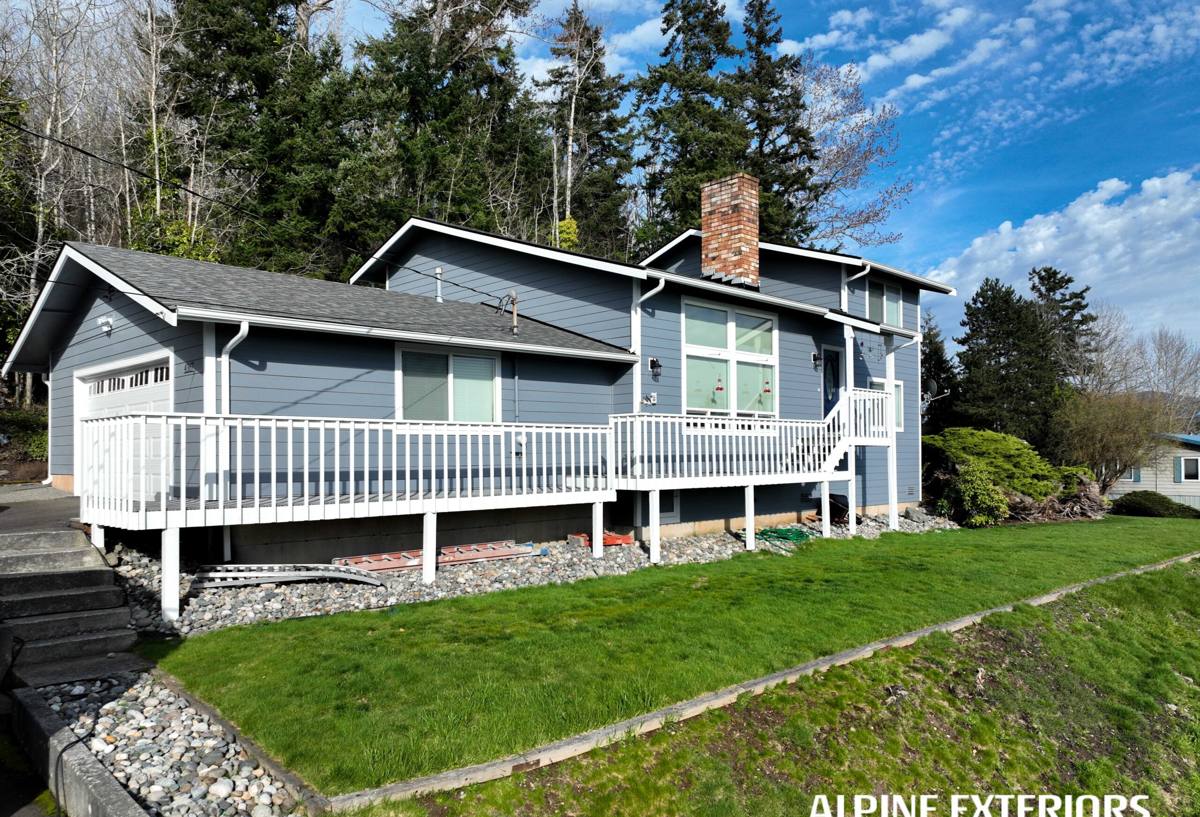
Why Lake Samish Is a Different Roofing Environment
Moisture that lingers
Proximity to the lake and heavy tree canopy mean roof decks around Lake Samish stay damp longer after rain than they would in a more open, sun-exposed neighborhood. Shingles that are fine in direct sun elsewhere can stay saturated here, and that extended dampness is exactly what algae and moss need to take hold.
A long moss season
Moss isn't a cosmetic issue on a shingle roof — it's a moisture trap. Once moss establishes on shaded north-facing slopes, it holds water against the shingle mat far longer than bare granules would, accelerating wear and working moisture under shingle edges over time. In this area, moss season isn't a few weeks; it's most of the year on shaded slopes.
Driving rain and wind-driven water
Storms coming off the water and through the Chuckanut corridor often carry a horizontal component, not just straight-down rainfall. That matters because standard shingle underlayment and lap spacing assume rain falls mostly vertically. Wind-driven rain finds gaps in flashing, ridge details, and shingle overlaps that would never leak in calmer conditions.
Salt-influenced air
Homes closer to open water in Whatcom County deal with a degree of salt-laden air that accelerates corrosion on exposed metal — nails, flashing, vent stacks, and fasteners. It's a slower process than moisture damage, but it shortens the working life of hardware that isn't rated or protected for it.
What a Correct Asphalt Shingle Job Involves Here
An asphalt shingle roof is a system, not a single product. Every layer has to be chosen and installed with Lake Samish's conditions in mind, or the roof only performs as well as its weakest layer.
The deck and ventilation
Before any shingle goes down, we check the roof deck for soft spots, delamination, or trapped moisture from a prior leak. We also evaluate attic ventilation. Poor ventilation traps warm, moist air against the underside of the deck, which speeds up moss and mold growth from the inside just as much as surface conditions do from the outside.
Underlayment
Given how long roof surfaces stay damp here, we favor synthetic underlayment with strong water resistance over older felt products, and we pay particular attention to ice-and-water shield style membrane at eaves, valleys, and around penetrations — the spots where wind-driven rain is most likely to get pushed backward under the shingle course above.
Shingle selection
Algae-resistant shingles (rated to resist the blue-green algae that causes dark streaking) are worth the modest upcharge in a lake-adjacent, tree-shaded setting like this one. We also weigh wind rating carefully, since exposed lots near the lake and along the Chuckanut corridor see stronger gusts than sheltered inland streets.
Flashing and fasteners
This is where salt air does the most damage over time if it's overlooked. We use corrosion-resistant flashing and fastener specifications appropriate for a coastal-influenced environment, particularly at chimneys, sidewalls, valleys, and vent penetrations — the details that fail first and cause the most water damage when they do.
Moss and algae prevention built in
Where a roof has shaded, moss-prone slopes, we can install zinc or copper control strips near the ridge. Rain washing over these strips releases a small amount of metal ion that inhibits moss and algae regrowth on the slopes below — a passive, long-term line of defense rather than a one-time treatment.
Our Process
- On-site inspection. We walk the roof (or inspect from the deck/ground where pitch or access requires it) and check the attic from inside, looking at ventilation, decking condition, and any signs of past moisture intrusion.
- Honest assessment. We tell you plainly whether you need a full replacement, a repair, or simply a maintenance service like a moss treatment and gutter clean-out. Not every roof at every age needs full replacement.
- Written scope and estimate. You get a clear breakdown of what's being done, the materials specified, and the price — no vague allowances.
- Tear-off and deck check. On replacements, we remove old roofing down to the deck and inspect it, since covering a compromised deck just hides a problem instead of fixing it.
- Underlayment and flashing first. These layers get installed and detailed before a single shingle goes down, because they're what actually keeps water out.
- Shingle installation to manufacturer spec. Correct nailing pattern, exposure, and starter course — the details that determine whether a shingle roof reaches its full rated lifespan or fails early.
- Final walk-through. We review the completed work with you before considering the job done.
Repair, Re-Roof, or Maintenance: How to Tell
Not every issue on a Lake Samish roof means a full replacement. Here's how we generally think about it:
| Situation | Likely Approach | Why |
|---|---|---|
| Isolated leak, roof under 15 years old | Targeted repair | Localized flashing or shingle failure doesn't mean the whole system has failed |
| Heavy moss on shaded slopes, shingles otherwise sound | Moss removal + control strip install | Addresses the moisture trap without replacing good material |
| Granule loss, curling, or brittle shingles across the roof | Full re-roof | Widespread wear means the shingle mat itself is failing, not just one spot |
| Corroded flashing or fasteners at multiple penetrations | Repair now, plan re-roof timeline | Hardware failure is often an early warning sign, not an isolated issue |
| Soft or spongy deck sections found during inspection | Full re-roof with deck repair | Shingles can't be warrantied or perform properly over a compromised deck |
Maintenance That Actually Extends Roof Life Here
Because of the moss season and moisture patterns around Lake Samish, asphalt shingle roofs in this area benefit from a maintenance rhythm that's more active than what a drier neighborhood needs.
- Clear moss and debris from shaded slopes before it thickens into a moisture-holding mat
- Keep gutters and downspouts clear so water isn't backing up under the eave line
- Trim overhanging branches to reduce shade, debris load, and physical abrasion on shingles
- Check flashing and fasteners for early corrosion, especially near the lake-facing side of the home
- Confirm attic ventilation is unobstructed by insulation or storage
- Have a professional inspection after major wind events, not just on a fixed annual schedule
Why Local Experience with Lake Samish Roofs Matters
A shingle roof installed to a generic national spec will still hold water in this environment eventually — the spec doesn't account for how long a north slope near the lake stays damp, or how far wind-driven rain travels under a shingle lap during a Chuckanut storm. A crew that already works Whatcom County knows which slopes on a given lot are going to be the moss problem before the first winter, which flashing details need extra attention because of salt exposure, and how local ventilation and shading patterns affect deck condition over time. That's the difference between a roof that's technically installed correctly and one that's actually built for where it sits.
What Homeowners Should Watch For
Between inspections, a few signs are worth acting on quickly rather than waiting:
- Dark streaking or thick moss growth concentrated on shaded slopes
- Granules collecting in gutters, which signals accelerating shingle wear
- Shingles that look curled, cupped, or lifted at the edges
- Rust staining below metal flashing or vent stacks
- Any water stain on an interior ceiling, even a small one, which almost always means the roof has already let water through
Catching these early is usually the difference between a repair and a full replacement.
Get an Honest Look at Your Roof
If you're dealing with moss buildup, a suspected leak, or you're just planning ahead for a roof that's getting older, we're glad to take a look and give you a straight answer about what it actually needs. Use the form below to request a free, no-pressure estimate for your Lake Samish home.