 Chuckanut Exterior
 Siding Installation for Happy Valley Homes
Happy Valley sits inside a stretch of Whatcom County where the weather doesn't cut homeowners much slack. Salt air works into every seam and fastener over time, driving rain comes in sideways during winter storms, and the tree cover that makes this neighborhood so livable also means long stretches of shade where moss and algae never fully dry out. Siding here isn't just a cosmetic layer — it's the first line of defense against a climate that's actively trying to get behind it. A siding installation done right in Happy Valley looks a lot like a siding installation done right anywhere else on the surface, but the details underneath — the flashing, the gaps, the fastener choices, the product itself — are what actually determine whether a home stays dry for the next 30 years or starts showing rot in year eight.
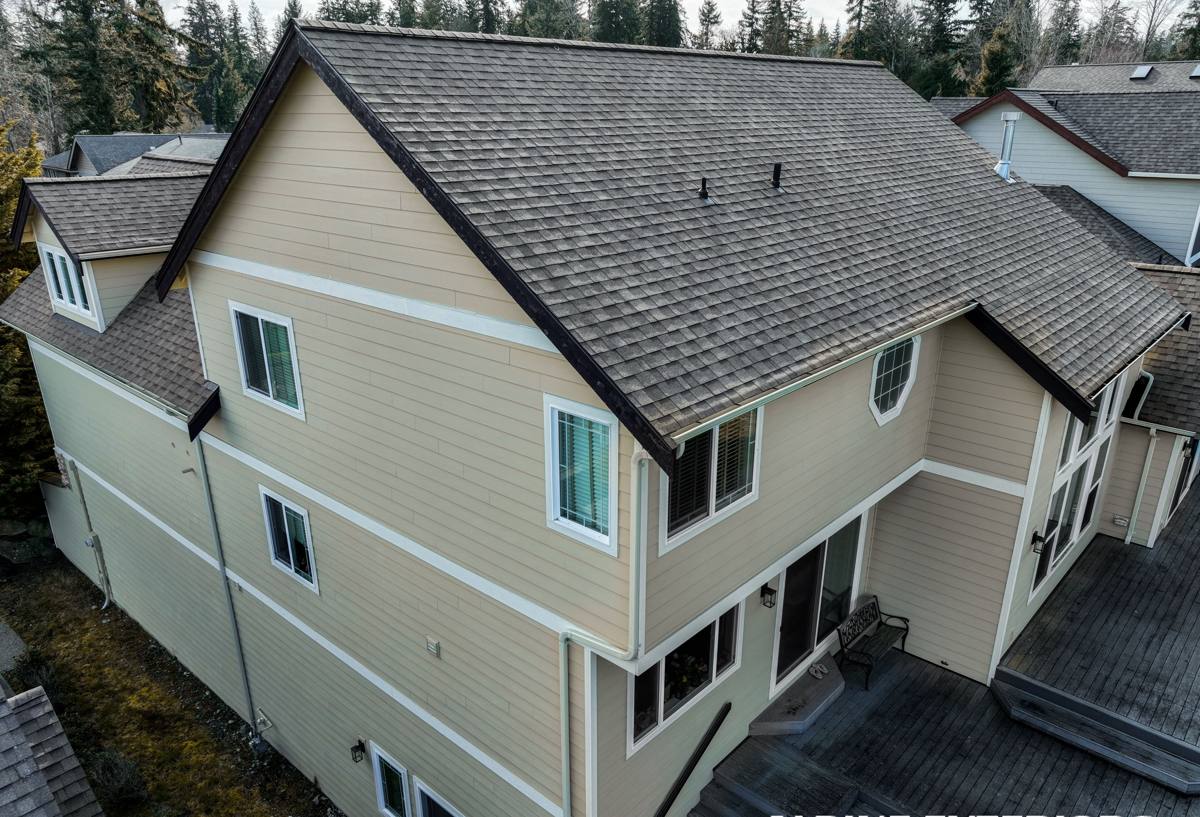
What Happy Valley's Climate Actually Demands
Three conditions define siding performance in this part of Chuckanut, and each one calls for a different response from the installer.
Salt Air
Airborne salt accelerates corrosion on fasteners, flashing, and any exposed metal trim. It also degrades cheap coatings faster than inland weather ever would, which is why the finish on your siding matters as much as the siding material itself.
Driving Rain
Wind-driven rain doesn't just hit siding — it gets pushed into laps, seams, and butt joints under pressure. A siding system that isn't installed with proper overlap, clearance, and a continuous drainage plane behind it will eventually let that water find a way to the sheathing, even if the surface looks fine.
Moss Season
Shaded, north-facing walls and anything tucked under mature trees stay damp for weeks at a time in fall and winter. Porous or poorly sealed siding gives moss and algae something to grip onto, and once organic growth takes hold, it holds moisture against the wall even longer — a cycle that speeds up rot underneath.
Why a Generic Install Doesn't Hold Up Here
A lot of siding failure in this region isn't a materials problem — it's an installation problem. The siding itself can be rated for coastal conditions and still fail early if it's hung the way you'd hang it in a dry, low-wind climate. A correct installation for Happy Valley's conditions includes:
- A continuous, correctly lapped water-resistive barrier behind the siding — not just housewrap stapled up and covered
- Properly flashed windows, doors, and any wall penetrations, with the flashing integrated into the drainage plane rather than just caulked over
- Correct fastener type and placement — corrosion-resistant fasteners driven per the manufacturer's pattern, not "close enough"
- Minimum clearance between siding and grade, decks, roofing, and hardscape so water and moisture-holding debris can't sit against the bottom edge
- Factory-finished panels with sealed cut edges, since a raw cut edge is the fastest way for a coastal climate to get past the finish
Skip any one of these and the siding can look correct for years while moisture quietly works into the wall assembly behind it. By the time it shows on the surface — staining, soft spots, paint failure — the damage is usually already into the sheathing.
Our Process for a Happy Valley Installation
1. On-Site Assessment
We walk the home and note the specific exposure of each wall — which sides take the worst of the driving rain, which stay shaded and damp longest, where the current siding (if any) is already showing moisture stress. This determines product selection and detailing before a single panel goes up.
2. Tear-Off and Sheathing Check
Old siding comes off and we inspect the sheathing underneath. In a climate like this, hidden rot behind failed siding isn't rare — we flag any damaged sheathing or framing before covering it back up, rather than installing over a problem.
3. Weather Barrier and Flashing
A new water-resistive barrier goes on with correct overlap and integrated flashing at every window, door, and penetration. This layer does most of the real work of keeping a home dry — the siding is the second line of defense, not the first.
4. Siding Installation
Panels are hung to manufacturer spec: correct nailing pattern, proper clearances at grade and roofline, sealed and primed cut edges, and joints detailed to shed water rather than trap it.
5. Trim, Caulk, and Final Detail
Trim and joint sealing are done last, using products rated for the coastal exposure this neighborhood sees — not general-purpose caulk that chalks and cracks within a couple of seasons.
Why We Install James Hardie — and Nothing Else
We're a Hardie-only siding contractor, and Happy Valley's climate is a good illustration of why. James Hardie fiber cement is non-combustible, dimensionally stable, and engineered specifically for climate exposure through its HZ product lines — the version we spec for a marine, high-moss, high-rainfall area like this is built differently than the version sold for a dry inland climate. A few specifics that matter here:
- ColorPlus factory finish — baked-on, not field-applied, so it resists fading and holds up to salt air far longer than a job-site paint job
- Moisture and rot resistance — fiber cement doesn't absorb water and swell the way wood-based or wood-fiber siding products can, which matters directly in a long moss season
- Non-combustible core — a real advantage during Washington's dry summer wildfire-smoke stretches, even in a wet coastal county
- Strong transferable warranty — meaningful if you sell the home, since siding age and history come up in every inspection
We don't install vinyl, LP SmartSide, Cemplank, Allura, primed spruce, or cedar. Each of those has legitimate strengths on paper, but every one of them asks a homeowner in this exact climate to take on a maintenance burden, moisture risk, or long-term appearance trade-off that we're not willing to install and then walk away from. Hardie is the product we've standardized on because it's the one we're comfortable standing behind after the salt air, rain, and moss have had a few decades to work on it.
Cost Factors for a Happy Valley Siding Installation
Every home is different, but the same handful of factors drive most of the cost variation we see on jobs in this area:
| Factor | Why It Affects Cost |
|---|---|
| Tear-off vs. new construction | Removing and disposing of old siding, plus any sheathing repair from hidden moisture damage, adds labor and material |
| Home size and wall complexity | More corners, dormers, and roof lines mean more flashing detail and cut waste |
| Siding profile and trim package | Lap width, shingle-style accents, and trim boards vary in material and labor cost |
| Access and site conditions | Steep grades, mature trees, and tight setbacks common in Happy Valley can slow staging and scaffolding |
| HZ product selection | Climate-engineered HZ5 versus other configurations affects material pricing slightly |
| Existing damage | Rotted sheathing or framing found during tear-off is priced separately since it isn't visible until the old siding is off |
We give a firm, itemized number after the on-site assessment — not a phone estimate — because in this climate, the condition behind the old siding matters as much as the square footage.
Why Local Experience in Happy Valley Matters
A crew that already works this part of Chuckanut knows which walls in this neighborhood take the worst of the wind-driven rain, how long shaded siding stays wet after a storm rolls through, and what level of detailing actually holds up here versus what's just spec-sheet minimum. That's not something you get from a crew that mostly works drier inland jobs and treats this as a standard install. Local experience also means fewer surprises on permitting, disposal logistics, and scheduling around this area's wetter stretches — all of which keep a project moving instead of stalling out mid-install with panels exposed to the weather.
Signs Your Current Siding Is Losing the Fight
Whatcom County's climate gives clear warning signs before siding failure becomes a structural problem. Worth checking for:
- Persistent moss or algae staining that returns within weeks of cleaning
- Soft or spongy spots when you press on the siding, especially near the bottom courses
- Paint or finish that's peeling, bubbling, or chalking faster on shaded walls than sunny ones
- Visible gaps, warping, or cupping at panel joints
- Rust streaking from fasteners or trim
- Musty smell or visible staining on interior walls that share an exterior wall with siding issues
None of these mean the home needs siding replaced tomorrow, but they're worth a professional look before the next wet season adds to the damage.
What to Expect After Installation
A correctly installed James Hardie system in this climate needs very little from you: periodic rinsing to keep salt residue and organic buildup from accumulating, an annual walk-around to check caulking and trim, and prompt attention if a tree limb or storm debris ever damages a panel. That's a meaningfully lighter maintenance load than wood-based sidings carry in a moss-heavy, high-moisture neighborhood like this one, and it's a big part of why we recommend it without hedging.
If your Happy Valley home's siding is showing its age — or you're planning ahead before the next wet season — we're happy to walk the property and give you a straight, no-pressure estimate. There's no obligation, and you'll get a clear picture of what your home actually needs before you decide anything.