 Chuckanut Exterior
 Building a Deck That Holds Up in Happy Valley
Happy Valley sits close enough to the water and the tree line that its decks take a different kind of beating than a deck built twenty miles inland. Salt-laden air corrodes hardware faster, driving rain off the Sound finds every unprotected seam, and the shade from mature evergreens keeps surfaces damp long after a storm has passed. None of that means you can't have a deck you're proud of here — it means the deck has to be built with those conditions in mind from the footings up, not treated as an afterthought once the framing is standing.
We've built and repaired decks throughout Chuckanut and the surrounding Whatcom County communities long enough to know which shortcuts show up as problems in year three, not year one. This page walks through what we look at for a Happy Valley deck specifically — the material choices, the flashing details, the hardware, and the maintenance reality — so you know what to expect and what to ask for.
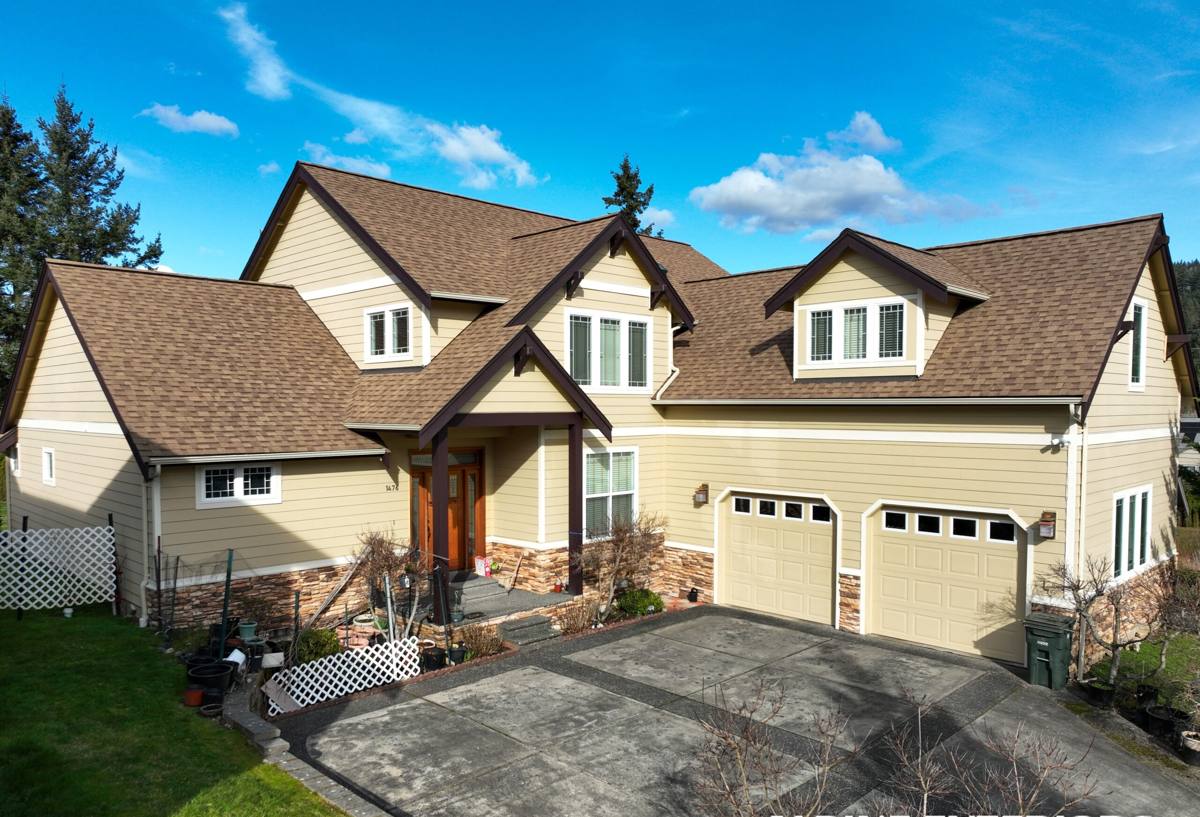
What Happy Valley's Climate Actually Does to a Deck
Salt Air and Corrosion
Even a few miles from saltwater, airborne salt accelerates rust on fasteners, joist hangers, and railing hardware. A deck built with standard interior-grade or even generic exterior screws will show rust bleed and loosening connections well before the wood itself is a problem. This is one of the most common issues we find when we're called out to look at an older deck in this area — the framing lumber is often fine, but the hardware holding it together has failed.
Driving Rain and Wind-Driven Moisture
Rain in this part of Washington rarely falls straight down. Wind pushes it sideways into ledger boards, under railing posts, and behind fascia trim. Any gap in flashing or caulking becomes an entry point, and once water gets behind a board it doesn't dry out quickly in our climate — it sits.
Moss, Algae, and Extended Dampness
Shaded lots and a long wet season mean moss and algae growth on deck surfaces is a near-certainty without some planning. Beyond the slip hazard, moss holds moisture against the decking material, which shortens the life of wood and can eventually cause staining or texture issues on composite products too.
What a Correct Deck Build Involves
A deck that's going to perform well in Happy Valley conditions isn't built differently in a dramatic way — it's built with more attention to the details that matter in a wet, salt-exposed climate. That includes:
- Ledger board flashing that properly sheds water away from the house rim joist, not just a bead of caulk
- Joist tape or a comparable moisture barrier on top of every framing member before decking goes down
- Stainless steel or heavy hot-dip galvanized fasteners and hardware rated for coastal/marine exposure
- Post bases that keep wood posts off standing water and concrete, not buried or set flush to grade
- Adequate airflow underneath the deck so the framing can dry out between rain events
- Decking gaps sized correctly for the material chosen, so water and debris don't pool between boards
Skipping any one of these doesn't usually cause an immediate problem — it shows up two, five, or ten years later as soft framing, rusted hangers, or a railing post that's gone spongy at the base. We build to the standard that avoids that call-back, not the standard that gets the deck built fastest.
Choosing a Decking Material for This Area
There's no single "right" decking material for Happy Valley — it depends on your budget, how much upkeep you want to do, and how much shade and moss pressure your specific lot gets. Here's how the common options actually compare in this climate.
| Material | Moisture & Moss Behavior | Maintenance | Typical Lifespan Here |
|---|---|---|---|
| Pressure-treated lumber | Absorbs water, needs sealing to resist moss staining | Annual cleaning, re-sealing every 2-3 years | 15-20 years with upkeep |
| Cedar | Naturally moderate rot resistance, still needs sealing in shade | Regular cleaning and periodic sealing | 15-20 years with upkeep |
| Composite decking | Doesn't absorb water like wood, but moss can still grow on the surface film in shaded areas | Periodic washing, no sealing/staining | 25-30+ years, manufacturer-dependent |
| PVC decking | Fully non-absorbent core, best resistance to moisture-driven damage | Occasional washing | 25-30+ years, manufacturer-dependent |
Composite and PVC cost more up front but remove the sealing/staining cycle entirely, which matters more here than in a drier climate because that cycle tends to get skipped once or twice and the wood pays for it. Wood costs less initially and can look excellent, but it's an honest ongoing commitment in a marine climate — we'll tell you that plainly rather than oversell either option.
Framing, Fasteners, and the Parts You Don't See
Most of what determines how long a deck lasts in this climate is invisible once the project is finished. We use fastener and connector hardware rated for coastal exposure on every project here, not just decks with an ocean view, because salt air travels further inland than people expect and standard hardware simply corrodes faster along this stretch of Whatcom County. Ledger flashing and joist protection tape are treated as standard practice, not an upgrade — cutting them out to save a few hundred dollars is the single most common cause of the structural repairs we get called to fix.
Railings, Stairs, and Code Requirements
Any deck more than 30 inches above grade needs a code-compliant guardrail, and stairs need proper rise/run consistency and graspable handrails under Washington's adopted building code. Beyond the legal requirement, railing posts are one of the first things to fail on a poorly built deck in wet climates, because they're a wood-to-concrete or wood-to-ledger connection that's constantly exposed. We anchor and flash railing posts the same way we treat the main structure — as a wet-climate detail, not a finishing touch.
Permitting requirements apply to most new decks and many rebuilds in Whatcom County depending on size and height. We handle that process as part of the project so you're not chasing it down yourself.
Living With a Deck in a Wet, Shaded Climate
Even a well-built deck needs a bit of seasonal attention here. A short annual routine keeps moss and moisture from becoming a bigger issue:
- Sweep leaves and debris off the surface regularly through fall, especially in shaded corners
- Wash the deck surface at least once a year to remove early moss and algae growth before it takes hold
- Check that gaps between boards are clear of debris so water keeps draining properly
- Inspect railing posts and stair stringers annually for soft spots or movement
- Reseal wood decking on the manufacturer's or a qualified builder's recommended schedule — don't stretch it because the wood "still looks fine"
- Confirm under-deck airflow isn't blocked by stored items or overgrown landscaping
None of this is difficult, but skipping it in this climate compounds faster than homeowners expect coming from drier regions.
Our Process for a Happy Valley Deck Project
We start with an on-site visit to look at your lot's specific exposure — how much direct sun it gets, how sheltered or exposed it is to wind-driven rain, and what the existing structure (if any) tells us about how the site behaves over time. From there we walk through material options honestly, including the real maintenance trade-offs, not just the upfront price. Once a design and material are set, we handle permitting where required, build to the flashing and hardware standards outlined above regardless of budget tier, and walk the finished deck with you before calling the job done.
Why Hiring a Crew That Works This Area Matters
A deck built to a generic national spec sheet can still fail early in a place like Happy Valley if the crew hasn't accounted for salt exposure, shade-driven moss pressure, and Whatcom County's rain patterns. We work this area regularly, which means we're not guessing at how a given product or detail performs here — we've seen what holds up and what comes back as a repair call a few years later. That local track record shapes every material recommendation and framing detail on this page, not just the ones that are easy to sell.
If you're planning a new deck or replacing one that's past its prime, we're happy to take a look and give you a straightforward, no-pressure estimate — just fill out the form below and we'll get in touch.