 Chuckanut Exterior
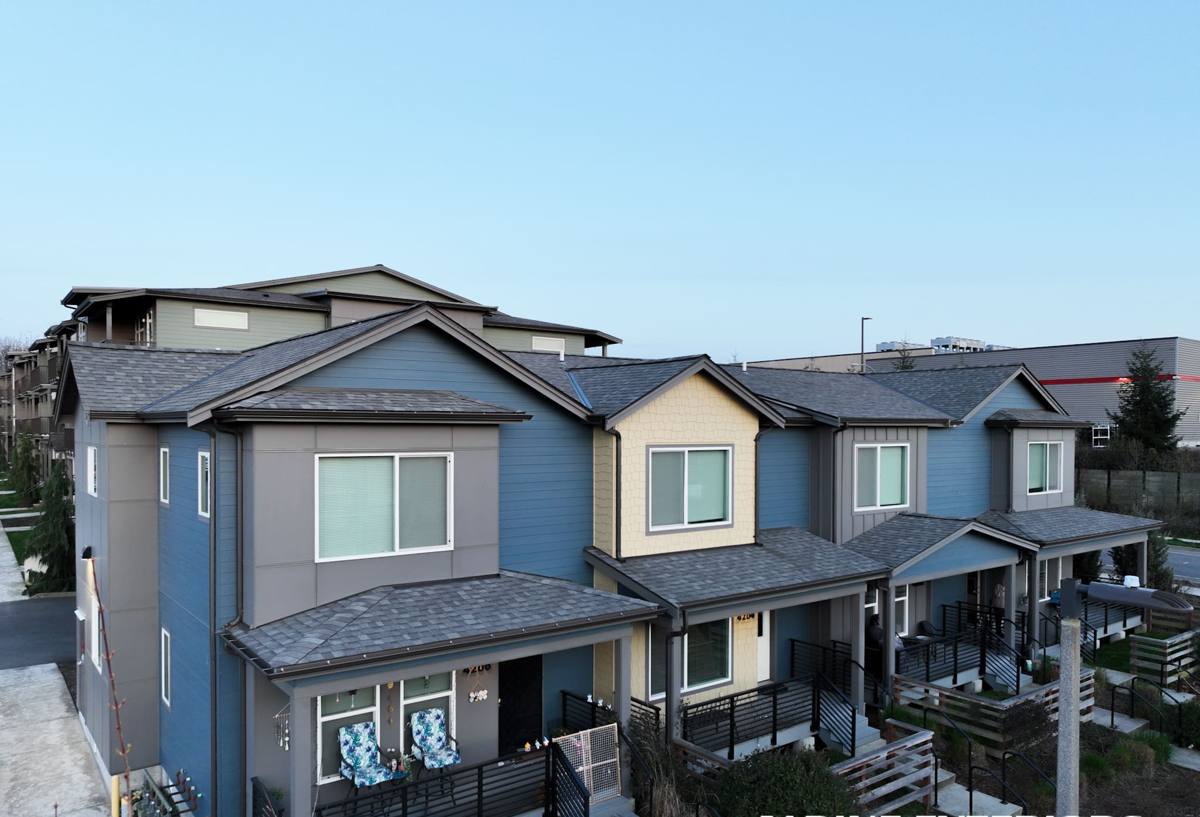
 Siding Built for Edison's Coastal Climate
Edison sits close enough to the water that salt-laden air is a daily fact of life, not an occasional nuisance. Add Whatcom County's long stretch of driving rain each fall and winter, plus a moss season that can run from October well into spring, and you have three separate forces working against whatever is nailed to the outside of a house. Most siding failures we see in this area aren't dramatic — they're slow. A finish that chalks and fades faster than it should. Panel edges that swell after years of wind-driven moisture finding a seam. Moss creeping up from the bottom courses because the wall behind it never fully dries out between storms.
A siding installation done right for Edison isn't just about picking a good product. It's about how that product is detailed against this specific combination of salt, rain, and shade. We install one product system — James Hardie fiber cement — and we install it the same disciplined way on every job, because that's what holds up here.
What Correct Installation Actually Involves
Siding is a system, not a single layer. The visible panel is the last piece installed and the first thing anyone judges, but the parts underneath it determine whether the house stays dry for the next 30 years.
The Water-Resistive Barrier and Flashing
Every wall needs a continuous water-resistive barrier (WRB) behind the siding, lapped correctly from bottom to top so water sheds outward rather than working its way in at the seams. Windows, doors, and any wall penetration need properly integrated flashing — not just caulk. Caulk is a maintenance item; flashing is the actual defense. In a climate with sustained wind-driven rain, a flashing detail that's "close enough" eventually shows up as a stain or soft spot on the interior side of the wall.
Drainage Behind the Siding
Fiber cement siding needs a way for incidental moisture to drain and for the wall assembly to dry. Depending on the wall and the specific James Hardie product, that means proper clearances, back-priming of cut edges, and attention to how the bottom of the siding terminates above grade, decks, and roof lines — all places we see moss and rot start on homes that were sided without enough thought given to airflow and drainage.
Fastening to Manufacturer Spec
James Hardie engineers its HZ5 product line specifically for high-moisture, high-wind climates like ours. That engineering only pays off if the fastener type, spacing, and placement match Hardie's published specifications. Under-fastened or incorrectly fastened panels can rattle loose, crack at fastener points, or fail to perform as rated in wind events — problems that show up years later and are hard to trace back to the installation.
Why We Only Install James Hardie
We get asked why we don't offer vinyl, LP SmartSide, or other fiber cement brands. The honest answer is that we've standardized on one product because it lets us guarantee one standard of work.
- Non-combustible core: Fiber cement doesn't feed a fire the way wood-based products can, which matters as wildfire smoke and dry-season risk become a bigger part of Pacific Northwest summers.
- Climate-engineered HZ5 line: Built specifically for the wet, moderate-freeze conditions common to Western Washington, rather than a one-size-fits-all national spec.
- ColorPlus factory finish: A baked-on finish applied under controlled conditions holds color and resists the chalking and fading that field-applied paint struggles with under constant UV and salt exposure.
- Moisture behavior: Fiber cement doesn't absorb and swell the way engineered wood products can when a seam takes on water repeatedly over a rainy season.
- Warranty structure: A transferable manufacturer warranty on both the substrate and the ColorPlus finish, which matters to resale value in a market where buyers ask about siding age and condition.
None of this means other products are junk — vinyl and engineered wood siding both have a place, and homeowners choose them for good reasons, including upfront cost. It means that after years of installing and repairing siding on Whatcom County homes, this is the product we're willing to put our name behind in a climate this demanding.
Our Installation Process
- On-site assessment: We walk the exterior, check for existing moisture damage, evaluate the current WRB and flashing condition, and note anything specific to the lot — shade, drainage patterns, proximity to salt air exposure.
- Scope and product selection: We recommend the right Hardie product line, plank exposure, and trim package for the home's style and exposure, and walk through color options in ColorPlus finishes.
- Tear-off and substrate check: Old siding comes off, and we inspect sheathing underneath for rot or damage before anything new goes up. This is where problems from years of moisture intrusion actually get found and fixed, not covered over.
- WRB and flashing installation: New water-resistive barrier, window and door flashing, and any needed drainage plane detailing, installed before a single piece of siding goes on.
- Hardie panel installation: Installed to manufacturer fastening spec, with attention to clearances at grade, decks, roof lines, and trim.
- Final finish and cleanup: Trim, caulking at appropriate joints only (not as a substitute for flashing), and a full site cleanup.
Signs Your Current Siding Needs Attention
Homeowners in Edison often call us after noticing one of these signs. None of them mean the whole house needs new siding immediately, but they're worth a professional look:
- Persistent moss or algae growth that returns within a season of cleaning
- Soft spots, bubbling, or visible swelling, especially near the bottom courses or around windows
- Paint or finish that's chalking, peeling, or fading unevenly across the wall
- Visible gaps or separation at seams and trim joints
- A musty smell or interior wall discoloration on an exterior-facing wall
Cost Factors for Siding Installation
Every home is different, but the following factors are what actually move the price on a siding project in this area:
| Factor | Why It Matters |
|---|---|
| Home size and wall complexity | More corners, dormers, and roof lines mean more cutting, flashing, and labor time |
| Substrate condition | Rotted sheathing found during tear-off requires repair before new siding can go on |
| Product line and plank style | HZ5 lap, shingle, and panel styles carry different material costs |
| Trim and accessory scope | Corner boards, window trim, and fascia detailing add material and labor |
| Access and site conditions | Steep lots, mature landscaping, or limited access near the water can affect staging and labor time |
| Removal and disposal | Tear-off and haul-away of old siding is part of most quotes, but scope varies by material |
We provide a written, itemized estimate before any work starts, so there are no surprises once tear-off begins.
Why Hiring a Crew That Already Works in Edison Matters
A crew that has installed siding on other homes in this area already knows how the salt air, rain patterns, and moss pressure here behave differently than they do 50 miles inland. That familiarity shows up in small decisions — how much clearance to leave at grade, which orientations need extra attention to drainage, how aggressively to flash a west-facing wall that takes the brunt of winter storms. It's the difference between a crew following a generic checklist and one that's actually seen how a job like this ages over a decade in this specific climate.
What to Look for in a Contractor
- Manufacturer training or certification on the specific product being installed
- A written scope that names the WRB, flashing approach, and fastening spec — not just "siding replacement"
- Willingness to show or explain substrate repair work if rot is found during tear-off
- A transferable warranty on both materials and workmanship
- References or completed work in your general area, not just company-wide claims
- A clear, itemized written estimate before any deposit changes hands
Life After Installation
James Hardie siding installed to spec is low-maintenance, but "low" isn't "none." An annual rinse-down to keep salt residue and moss spores from accumulating, a periodic look at caulked joints and trim, and prompt attention to any landscaping that's grown up against the wall will keep the assembly performing the way it's engineered to. Because ColorPlus finishes are factory-applied, you're not on a repainting cycle the way you would be with field-finished siding — which matters over the life of the product in a climate that's hard on exterior paint.
If your Edison home's siding is showing its age, or you're planning ahead for a replacement, we're happy to take a look and walk you through what your home specifically needs. Reach out for a free, no-pressure estimate using the form below.