 Chuckanut Exterior
 Roof Replacement Built for Edison's Climate
Edison sits close enough to Samish Bay and the open water of Skagit and Whatcom County that salt-laden air is a constant, low-grade stress on every roof in the area. Add in the driving rain that comes through on winter storms and the long, damp stretches of shoulder season when roofs barely get a chance to dry out, and you have a climate that wears out roofing materials faster than drier inland areas. Moss is the most visible sign of that stress, but it's rarely the only problem by the time it shows up.
A roof replacement done right in this part of Washington isn't just about swapping old shingles for new ones. It's about building a roof system — decking, underlayment, flashing, ventilation, and surface material — that's matched to salt air exposure, sustained moisture, and moss pressure specific to this stretch of coastline and farmland. That's the standard we hold every Edison roof to.
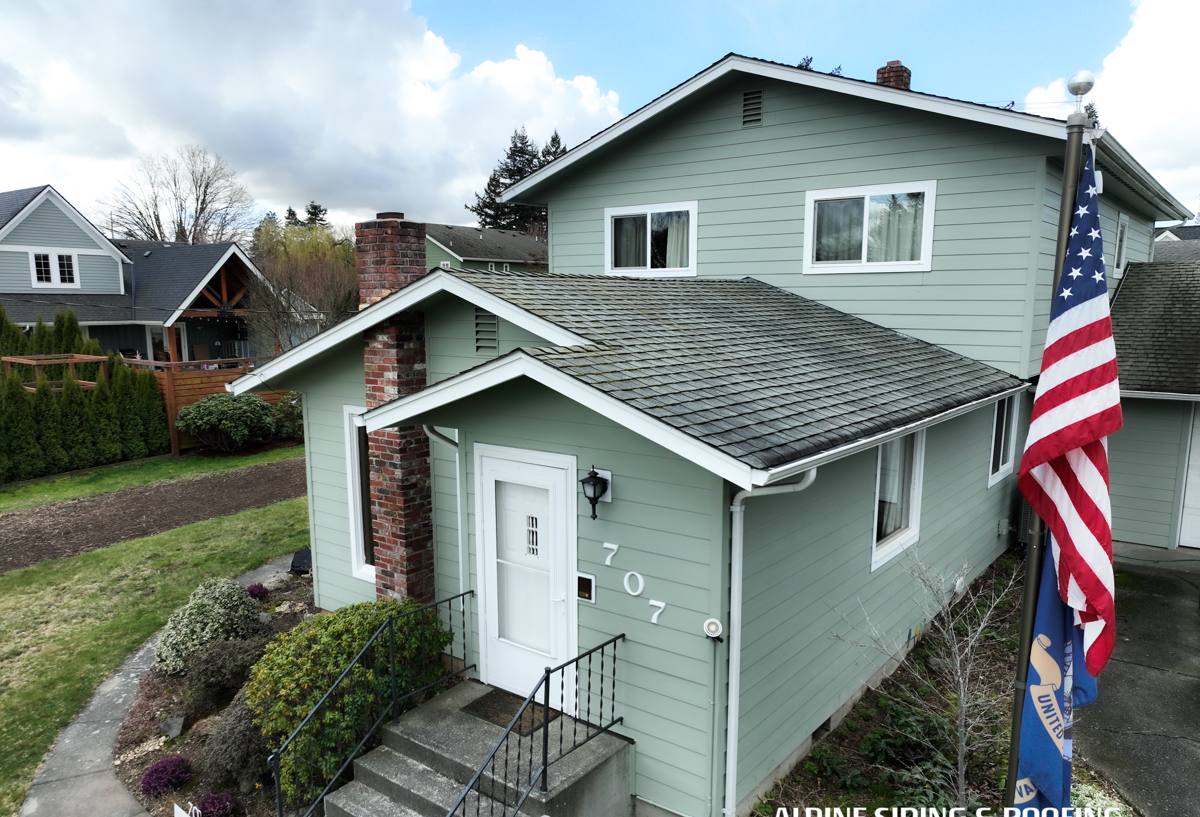
Why Roofs Age Faster Near Samish Bay
Salt Air and Metal Fatigue
Airborne salt accelerates corrosion on exposed metal — flashing, fasteners, vent boots, gutter hardware. On a roof that's otherwise sound, corroded flashing around chimneys, skylights, and valleys is often the first real failure point. It's a slow process, which is why it's easy to miss until water is already getting into the decking underneath.
Driving Rain and Wind-Driven Water
Storms coming off the water don't just drop rain straight down — wind pushes it sideways, up under shingle edges and lap joints that would stay dry in a calmer climate. Roofing details that work fine in low-wind regions (minimal underlayment overlap, standard nailing patterns, skimpy flashing) fall short here. Edison roofs need wider underlayment laps, properly sealed penetrations, and flashing sized for water moving sideways, not just down.
Moss and Trapped Moisture
Between tree cover, marine humidity, and mild temperatures that never really dry things out, moss finds ideal conditions on north-facing slopes and shaded sections of roof for a good part of the year. Moss holds moisture against the shingle surface, lifts tabs as it grows under them, and shortens the life of the roofing material well before its rated lifespan is up.
Signs a Roof Needs Replacing, Not Just Patching
Not every issue calls for a full tear-off. But in a climate this hard on roofing, certain signs mean repair is a short-term fix at best.
- Granule loss heavy enough that you're finding grit in gutters and downspouts every season
- Shingles that are cupping, curling, or cracking across large sections rather than one isolated spot
- Soft or spongy decking felt underfoot during inspection — usually a sign moisture has already gotten past the surface
- Persistent moss regrowth on the same slopes year after year despite cleaning
- Daylight visible through the roof deck from the attic, or water stains on interior ceilings
- A roof already past 20-25 years old (for asphalt) with multiple issues showing up at once
- Flashing that's visibly corroded, loose, or was never properly integrated with the roofing material
If a roof is showing one or two of these in isolation, targeted repair can still make sense. When several show up together, patching becomes a cycle of chasing leaks instead of solving the underlying problem.
What a Correct Replacement Involves
Full Tear-Off, Not Overlay
We remove existing roofing down to the deck rather than layering new shingles over old. Overlaying hides deck damage, traps moisture between layers, and voids most manufacturer warranties. On a coastal roof, whatever is happening under the old shingles — soft decking, corroded flashing, old moss damage — needs to be seen and dealt with directly.
Deck Inspection and Repair
Once the old material is off, we check the decking for rot, delamination, or soft spots, especially around valleys, chimneys, and eaves where water tends to concentrate. Any compromised sheathing gets replaced before anything new goes down. Skipping this step is one of the most common ways a "new roof" fails within a few years.
Underlayment Suited to the Climate
Given how much wind-driven rain this area sees, we don't treat underlayment as an afterthought. Synthetic underlayment with properly sealed laps, plus self-adhered membrane at eaves, valleys, and other vulnerable spots, gives the roof a real second line of defense if wind ever drives water past the surface layer.
Flashing and Metal Components
Given the corrosion risk from salt air, we pay close attention to flashing material and installation — proper step flashing at walls, correctly lapped valley flashing, and vent boots and fasteners chosen to hold up rather than corrode out early. Flashing done poorly is the single most common cause of "mystery leaks" on an otherwise good roof.
Ventilation
Balanced intake and exhaust ventilation keeps moisture from building up in the attic, which matters even more in a humid coastal climate. Poor ventilation shortens shingle life from underneath, independent of anything happening on the surface, and can contribute to the kind of trapped moisture that feeds moss and mildew.
Comparing Roofing Materials for a Marine Climate
Material choice matters more here than in drier regions. The table below reflects how common options actually perform under salt air, sustained moisture, and moss pressure — not just sticker price.
| Material | Moisture & Moss Resistance | Salt Air Durability | Typical Lifespan |
|---|---|---|---|
| Architectural asphalt shingles | Good with proper ventilation and periodic cleaning | Good; fasteners and flashing matter more than the shingle itself | 25-30 years |
| 3-tab asphalt shingles | Fair; more prone to curling and moss lift over time | Fair | 15-20 years |
| Standing seam metal | Excellent; sheds moisture and resists moss growth well | Good with coated, corrosion-resistant fasteners and panels | 40-50+ years |
| Cedar shake | Requires diligent maintenance; naturally moisture-prone without upkeep | Fair; needs regular treatment | 20-30 years with upkeep |
We install what fits the home, the budget, and the homeowner's tolerance for maintenance. A well-installed architectural asphalt roof with correct ventilation and flashing performs reliably here; metal is worth the added upfront cost for homeowners who want to minimize long-term moss and maintenance concerns.
Our Replacement Process
- On-site inspection — we look at the deck, attic ventilation, flashing condition, and any moss or moisture patterns specific to the roof's orientation and tree cover.
- Written estimate — a clear breakdown of material, labor, and any deck repair contingencies, with no vague allowances hiding the real cost.
- Scheduling around weather — we plan tear-off and dry-in around forecasted rain windows so the deck isn't exposed longer than necessary.
- Tear-off and deck repair — old material removed, deck inspected, any damaged sheathing replaced before underlayment goes down.
- Installation — underlayment, flashing, ventilation components, and final roofing material installed to manufacturer specs and matched to this climate's demands.
- Cleanup and walkthrough — site cleared of debris and nails, and we walk the finished roof with the homeowner so nothing is a surprise later.
What to Ask Before Hiring a Roofer in This Area
- Do they carry current Washington contractor licensing and liability insurance, and can they show proof without hesitation?
- Will they do a full tear-off, or are they proposing an overlay to save time?
- Do they inspect and quote deck repair as a real possibility, not an afterthought added mid-job?
- What underlayment and flashing details do they use, and why — can they explain the choice in plain terms?
- Do they have experience with roofs specifically in Edison, Bow, or the greater Skagit/Whatcom coastal area, where salt air and moss are ongoing factors?
- Is the warranty tied to correct installation, or just to the shingle material itself?
Why Local Experience in Edison Matters
A roofing crew that regularly works in and around Edison already understands things a crew from farther inland has to learn on the fly: which slopes on a given lot are going to hold moss year-round, how far wind-driven rain travels up under an eave in a coastal storm, and which flashing and fastener choices actually hold up against salt air over a decade instead of just on paper. That knowledge shows up in fewer callbacks and a roof that performs the way it was designed to.
Local familiarity also means fewer surprises with permitting and code requirements specific to Skagit and Whatcom County jurisdictions, and a realistic sense of how weather windows here actually work when it comes to scheduling a tear-off without leaving a deck exposed longer than it should be.
After the Replacement: Keeping Moss and Moisture in Check
A correctly installed roof still benefits from basic upkeep in this climate. Keeping gutters clear so water isn't backing up under the eaves, trimming back tree limbs that shade and dampen roof sections, and having moss growth addressed early rather than left to spread all extend the life of a new roof considerably. We're happy to walk any homeowner through a simple maintenance routine suited to their specific roof and tree cover after installation.
Get a Straight Answer About Your Roof
If you're seeing granule loss, recurring moss, soft spots, or you just know the roof is getting close to the end of its reasonable life, it's worth having someone look at it before a small problem becomes a bigger one. We offer free, no-pressure estimates for Edison homeowners — an honest look at what your roof actually needs, with no obligation attached. Fill out the form below and we'll get in touch to schedule a time that works.