 Chuckanut Exterior
 Why Edison-Area Roofs Wear Differently
Roofs in the Edison area near Chuckanut don't fail the way roofs do in drier parts of the state. Three things work on them at once: salt-laden air rolling in off the water, long stretches of driving rain that push moisture sideways into laps and fasteners, and a moss season that can run most of the year in shaded, north-facing sections. None of these alone would be a big deal. Together, over years, they change how a roof ages and what a repair actually needs to fix.
Salt air accelerates corrosion on exposed metal — nail heads, flashing, gutter fasteners, and any exposed screws on metal roofing. Driving rain, especially wind-driven rain off the water, finds the weak points in flashing and underlayment that a straight-down rain would never reach. And moss doesn't just look bad; its root structures lift shingle edges and hold moisture against the roof deck long after the rest of the roof has dried out. A repair that only addresses the visible symptom — a stain on the ceiling, a curling shingle — without accounting for these three factors tends to fail again within a season or two.
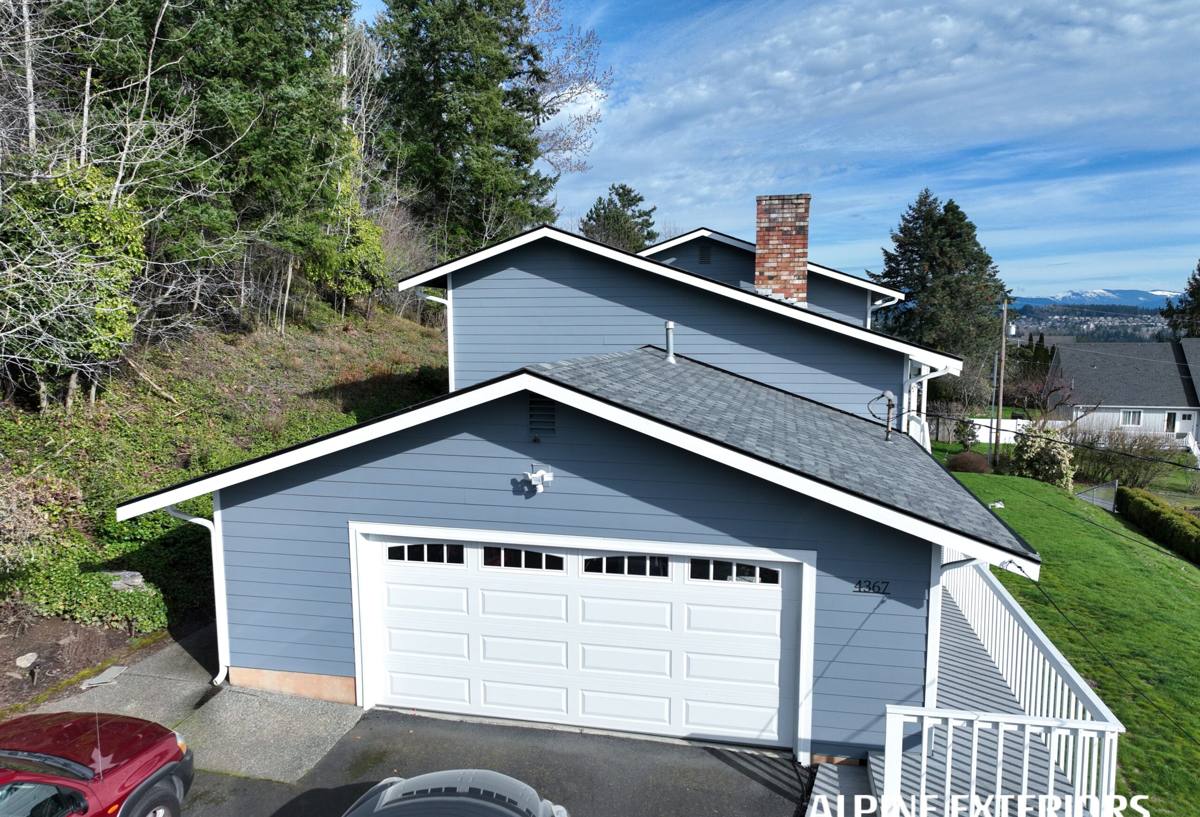
Signs Your Roof Needs Repair, Not Replacement
Most roofs don't need a full tear-off. They need targeted repair done correctly, which is both cheaper and less disruptive. The trick is telling the difference between a repairable problem and a roof that's genuinely past its service life.
- Isolated ceiling stains that track back to a specific flashing point (chimney, skylight, vent pipe, valley)
- Missing, cracked, or curling shingles in a defined area, with the rest of the field still intact
- Moss buildup concentrated on shaded slopes while sun-exposed slopes look fine
- Granule loss visible in gutters after a storm, but no widespread bald patches
- Soft or spongy decking felt underfoot in one localized spot, not throughout
- Rust or failure at a single flashing detail rather than across all metal on the roof
If the damage is spread evenly across the whole roof, or the decking is soft in multiple areas, that's usually a sign the roof is at the end of its life rather than in need of a patch. An honest inspection will tell you which situation you're in before any work starts — and sometimes the honest answer is "this doesn't need us yet."
What a Correct Repair Actually Involves
Diagnosis Before Anything Gets Touched
The most common mistake in roof repair isn't bad workmanship — it's treating the wrong spot. Water travels along the underside of decking and rafters before it shows up as a stain, so the ceiling mark inside the house is rarely directly below the actual leak. A correct repair starts on the roof itself, tracing the path back from the interior sign to the real entry point, usually at a flashing seam, a nail penetration, or a transition where two roof planes meet.
Flashing and Valleys Get Priority
In an area that sees driving rain, flashing failures cause more leaks than worn-out field shingles do. Chimney flashing, skylight flashing, and valley metal all rely on correct overlap and sealant that's still intact — not just visually present, but still adhered and flexible. Wind-driven rain can work its way under a flashing edge that would keep out a normal vertical rain, so these details get checked even when they don't look obviously damaged.
Moss and Organic Growth Removal Before Patching
Patching over or around active moss growth is a short-term fix. Moss holds moisture against the shingle and deck, so any repair done near an active moss patch needs the moss cleared first — by hand, not pressure-washed, which can strip granules and shorten the life of the surrounding shingles — with the underlying shingle and decking checked for hidden rot before new material goes down.
Matching Materials, Not Just Covering the Hole
Shingle color and profile change over the years, and a mismatched patch is not just a cosmetic issue — it can mean a slightly different thickness or granule surface that doesn't shed water the same way the surrounding roof does. Where an exact match isn't available, the goal is the closest reasonable match with correct installation technique, not the cheapest visible fix.
Common Roofing Materials in the Edison Area and How They Hold Up
| Material | How it handles salt air & rain | Moss resistance | Typical repair notes |
|---|---|---|---|
| Asphalt composition shingle | Good; standard fasteners can corrode over decades near the water | Moderate — moss gains a foothold in shaded, damp areas | Most common material; repairs are straightforward if matching shingles are available |
| Metal roofing (standing seam or panel) | Very good if fasteners and cut edges are properly coated; raw cut edges can rust | Good — sheds moisture quickly | Repairs require matching profile and correct fastener type; a poor patch can cause galvanic corrosion |
| Cedar shake | Traditional look but needs more upkeep in a wet, salty climate | Low — organic material is a natural moss host | We're honest that shake demands a real maintenance commitment here; repairs need matching aged material |
| Wood or composite trim near roof edges | Vulnerable to driving rain intrusion at joints | N/A | Often the actual leak source even when the roofing material itself is fine |
None of these materials are wrong choices — each has trade-offs in maintenance, appearance, and how they respond to this specific climate. Our job during a repair is to work correctly with whatever is already on your roof, not to talk you into a different system unless the material itself is the reason for repeat failures.
Our Repair Process, Start to Finish
- Ground and roof-level inspection. We look at gutters, flashing, valleys, penetrations, and the general condition of the field before climbing, then confirm findings on the roof itself.
- Interior check where relevant. If there's a known leak, we look at the attic or ceiling area to trace the water path back to its actual source.
- Written explanation of what we found. You get a plain description of the problem, what caused it, and what a correct repair involves — before any work starts.
- Repair execution. This includes clearing any moss or debris from the work area, replacing damaged material, correcting flashing details, and resealing with materials rated for the exposure.
- Cleanup and debris check. Old material, nails, and granules get cleared from the roof and gutters, not just the ground below.
- Follow-up guidance. We tell you what to watch for and what routine maintenance — like moss treatment — will keep the repair from needing a repeat visit.
Moss, Algae, and Salt Air: Keeping a Repair From Becoming a Repeat Visit
A repair is only as good as the maintenance that follows it. In this climate, that mostly comes down to controlling moisture and organic growth before it undoes the work.
- Keep gutters and downspouts clear so water doesn't back up under the shingle edge during heavy rain
- Have shaded, moss-prone slopes checked at least once a year, even if the sunnier slopes look fine
- Avoid high-pressure washing on shingle roofs — it strips protective granules and shortens shingle life
- Watch for streaking near valleys and chimneys, which often shows up before an active leak does
- Rinse or wipe down exposed metal fasteners and flashing periodically if you're close enough to the water for salt spray to reach the roof
- Trim back overhanging branches where practical — shade and falling debris are two of the biggest drivers of moss growth
What Roof Repair Typically Costs — and What Changes the Number
| Factor | Why it matters |
|---|---|
| Size and location of the damaged area | A single flashing repair costs far less than multiple problem areas across the roof |
| Roof pitch and access | Steeper roofs and limited access add labor and safety-equipment time |
| Material match | Exact shingle or panel matches can be harder to source than the labor itself suggests |
| Underlying deck condition | Rot found under a leak adds deck repair to the scope, which is common near long-standing moss patches |
| Number of penetrations involved | Chimneys, skylights, and multiple vent pipes each add their own flashing detail to check and reseal |
Simple, single-area repairs are generally a modest expense measured in a few hundred dollars; repairs involving deck replacement, multiple flashing details, or hard-to-match material run higher. We won't quote a number without seeing the roof, but we'll always explain what's driving the cost before we start.
Why a Crew That Already Works This Area Matters
Roof repair isn't just a generic skill — it's knowing how a specific climate attacks a specific type of roof. A crew that regularly works Chuckanut and the surrounding Edison area already knows which flashing details tend to fail first in driving rain, which slopes hold moss the longest, and which fastener and sealant choices actually hold up against salt air over years rather than months. That's the difference between a repair that lasts and one that's a temporary patch on a recurring problem.
It also means we're not guessing at what "normal wear" looks like here versus somewhere drier or further inland. A roof that would be considered in great shape in a different climate might already be showing early signs of trouble in this one — and vice versa. Local, honest experience is what lets us tell you the difference.
Get an Honest Look at Your Roof
If you're dealing with a stain on the ceiling, visible moss, or a roof that just seems to be aging faster than it should, we're glad to take a look. The estimate is free, there's no pressure to move forward, and if your roof genuinely doesn't need repair yet, we'll tell you that too. Fill out the form below and we'll get in touch to schedule a time.