 Chuckanut Exterior
 Fiber Cement Siding for Edison Homes
Edison is a small community, and its houses don't get much of a break from the weather that towns further inland do. Salt air drifts in off nearby water and settles into anything metal or painted, storms push rain sideways into whichever wall happens to be facing the weather that day, and shaded, low-lying stretches of yard and roofline hold onto moisture long after a storm has passed. Put those three things together across a full year and you get a moss season that barely takes a season off. We install James Hardie fiber cement siding, and only James Hardie fiber cement siding, and this page is specifically about what that looks like on an Edison home — not siding in general, and not everywhere we work, but this material on houses in this particular corner of the Chuckanut area.
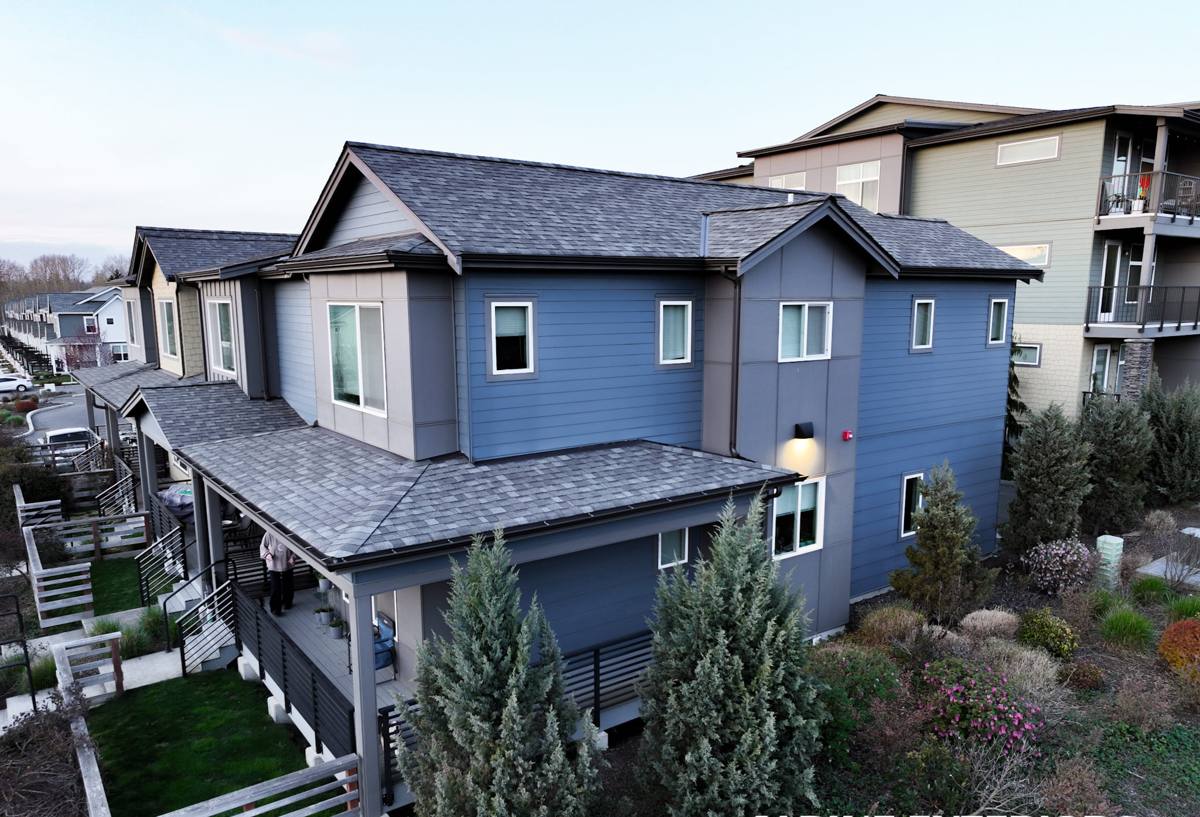
What Edison's Climate Asks of a Siding System
Salt Air and Steady Marine Moisture
Homes around Edison sit close enough to tidal water and open, low-lying ground that the air carries a mild salt content most of the year, not just during storms. That exposure doesn't announce itself the way a leak does. It works slowly on fasteners, on flashing, on any finish that isn't built to resist it — a few years in, you start seeing rust bleed at nail heads, caulk gone brittle, or a paint finish chalked out well ahead of schedule.
Driving, Wind-Pushed Rain
Open, low terrain around Edison gives wind a clear run at a house, so rain rarely falls straight down here — it gets pushed sideways into lap joints, trim seams, and anywhere a seal has started to fail. Siding systems that would perform fine on a sheltered inland lot get tested harder here, from angles a calmer climate never has to account for.
A Moss Season That Doesn't Really End
Mild temperatures, consistent dampness, and enough tree and farm cover around Edison to keep plenty of walls shaded add up to a moss and mildew season that runs most of the year, not just the wet months. It shows up first on north-facing walls and anywhere shade keeps a surface from drying between rain events, and it takes hold fastest on materials with a porous or moisture-retentive surface.
Why James Hardie Is the Only Siding We Install Here
We don't offer a menu of siding brands and let price make the decision. We install James Hardie fiber cement, exclusively, because of what we've consistently seen hold up — and what hasn't — on homes dealing with this exact combination of salt air, driving rain, and a long moss season.
- Non-combustible core: fiber cement doesn't feed a fire the way wood-based siding can, which matters regardless of climate.
- Factory-applied ColorPlus finish: the color coat cures under controlled factory conditions instead of being brushed on outdoors, which holds up far better against salt-laden air and repeated wet-dry cycling than field-applied paint or stain.
- Climate-engineered HZ product lines: Hardie builds HZ formulations specifically for regions with heavy sustained moisture, rather than a single generic product sold everywhere.
- Dimensional stability: fiber cement doesn't swell, cup, or warp the way engineered wood can after repeated wet-season moisture cycles.
- Strong transferable warranty: backed by Hardie when the installation follows spec, which matters to homeowners who may sell down the road.
We don't install LP SmartSide, vinyl siding, Cemplank, Allura, primed spruce, or cedar. Those are legitimate products, and other contractors install them competently. We made a professional decision that in a climate this consistently wet and salt-exposed, standing behind one system we understand completely serves Edison homeowners better than offering a cheaper option that quietly shifts maintenance risk onto them later.
| Material | Moisture Behavior | Maintenance in This Climate | Realistic Lifespan |
|---|---|---|---|
| James Hardie fiber cement | Dimensionally stable; doesn't swell, cup, or rot | Low; factory finish resists fading and moss | 30+ years with correct installation |
| Vinyl siding | Can trap moisture behind panels if wrap and flashing weren't installed carefully | Low upfront cost, but hidden problems are hard to catch | Variable; shorter on directly exposed walls |
| LP SmartSide / engineered wood | Wood-based core is sensitive to moisture at cut edges and fasteners | Moderate to high; edge sealing needs upkeep | Depends heavily on installation quality |
| Cedar / primed wood | Absorbs and releases moisture readily | High; needs regular refinishing, especially on exposed walls | Shorter without disciplined, ongoing upkeep |
What a Correct Fiber Cement Installation Actually Involves
Fiber cement only performs the way it's engineered to when it goes on to Hardie's published specifications. Skip or rush a step and the wall can look fine on install day and still develop problems two or three wet seasons later. Before hiring anyone for a siding project in Edison, the installation should include:
- Proper clearance maintained between the siding and grade, decks, and roof lines
- Correct flashing at every window, door, and roof-to-wall intersection
- House wrap installed and lapped correctly as a continuous drainage plane behind the siding
- Fasteners rated for this climate, placed at the manufacturer's specified spacing
- Joints properly lapped and sealed so wind-driven rain can't track behind a seam
- Field-cut edges primed before installation, since the factory finish only covers the original board face
None of these are upgrades. They're the baseline that separates a wall that performs for thirty years from one that starts showing staining, soft spots, or paint failure at year five.
Our Process for an Edison Siding Project
Walkthrough and Assessment
We start by walking the actual walls involved — which face the weather directly, which stay shaded and slow to dry, whether there's already moisture damage behind the existing siding that needs addressing before anything new goes up. New siding over a wall with hidden rot just buries the same problem.
A Written Scope Before Work Begins
You get a clear, written scope and timeline before any work starts — what's being removed, what's going on, what the flashing and drainage details look like, and what it costs. Not a vague verbal estimate that changes once the crew shows up.
Installation to Manufacturer Spec
Every fastener, gap, and flashing lap follows James Hardie's published installation requirements for this climate, not a generic national standard. That's what keeps the manufacturer's warranty intact and what actually determines whether the wall performs for decades.
Final Walkthrough
We walk the finished job with you, cover what little maintenance fiber cement actually needs, and make sure you know what to look for if you ever want to check the wall yourself down the road.
Cost Factors for Fiber Cement Siding in Edison
| Factor | What It Affects | Why It Matters Here |
|---|---|---|
| Home age and wall complexity | Total material and labor | More trim detail and roof intersections mean more places wind-driven rain can work its way in |
| Tear-off vs. overlay | Labor scope and substrate access | Tear-off exposes hidden moisture damage that's common under older siding in this climate |
| Substrate condition | Repair costs before new siding goes on | Trapped moisture behind failing siding can rot sheathing before it's ever visible from outside |
| Siding profile and reveal | Material and labor cost | Wider reveals and specialty profiles use more material and fastening labor per wall |
| Trim and color selection | Material cost and finish longevity | ColorPlus factory finish outlasts field-applied paint against salt air and UV exposure |
Real numbers depend on the specific house. We walk the property in person before quoting rather than pricing off square footage alone, since two similarly sized homes in Edison can have very different scopes once wall condition and exposure are factored in.
Signs an Edison Home's Siding Needs Attention
- Moss or dark staining that returns quickly after cleaning, especially on shaded walls
- Soft or spongy siding near the base of the wall or around window and door trim
- Peeling, bubbling, or chalking paint on siding boards or trim
- Cracked, chipped, or missing siding sections after wind events
- Visible gaps at seams, corners, or trim joints where water can track in
- Rust staining around fasteners or flashing — a common early sign of marine air exposure
Why a Crew That Already Works the Edison Area Matters
A crew that regularly works this stretch of the Chuckanut area already knows how salt air, wind-driven rain, and moss actually behave on real houses across a full year, not just on a spec sheet. That translates into practical calls on install day — where extra flashing attention actually pays off, which wall orientations stay damp longest, which details are worth the extra time so you're not dealing with a callback two winters later. Edison's mix of small, low-lying, weather-exposed properties isn't identical to a sheltered inland lot, and a crew with real experience in this specific area accounts for that instead of applying a one-size-fits-all install.
If your Edison home needs new fiber cement siding, a repair, or just an honest look at what your current siding is actually dealing with, we're glad to walk the property with you. Reach out using the form below to schedule a free, no-pressure estimate.