 Chuckanut Exterior
 Edison sits in the kind of setting people move to Whatcom County for — close to the water, wrapped in trees, quiet. It's also a setting that's genuinely hard on an outdoor structure. A deck built for a dry inland lot doesn't automatically hold up here, and a lot of the deck problems we get called out to look at in this area trace back to a build that never accounted for what this specific stretch of coastline does to wood, fasteners, and footings over time. This page is about what a custom deck actually needs to get right for an Edison property, and how we build to that standard rather than a generic one.
What Edison's Climate Actually Does to a Deck
Three things define outdoor construction around Edison and the broader Chuckanut area: salt air, driving rain, and a moss season that can run most of the year on shaded surfaces. Each one attacks a deck differently, and a deck built without all three in mind tends to show it within a few seasons.
Salt air off the water accelerates corrosion at every metal point on a deck — fasteners, joist hangers, post bases, railing hardware. A deck built with standard hardware in a coastal setting like this can start showing rust streaks and weakened connections years before an equivalent deck would inland. Driving rain doesn't just fall straight down here; storms push it sideways, forcing water into ledger connections, under railing posts, and into any joint where end grain is exposed. And the tree cover that makes Edison so pleasant to live in also keeps a lot of deck surfaces shaded and damp long after a storm passes, which is exactly the environment moss and algae need to take hold on decking boards and stair treads.
None of these are exotic problems. They're the ordinary result of building outdoor structures in a wet, coastal, tree-covered part of Washington. The difference between a deck that lasts and one that doesn't usually comes down to whether the builder treated that combination as a real design constraint or as an afterthought.
Where We See Decks Fail First
When we're called to look at an aging or failing deck in this area, the failure almost never starts in the middle of the deck field. It starts at the connection points: a ledger board bolted to the house without proper flashing, letting water track behind the siding; a post base sitting in standing water because the footing wasn't set above grade; corroded joist hangers that have lost structural integrity without any visible sign from above; or a stair stringer that stays wet and shaded longer than the rest of the structure and starts to soften at the base. These are all preventable with the right details at the time of the build — they're just easy to skip if a crew is treating the job like a generic deck rather than a coastal one.
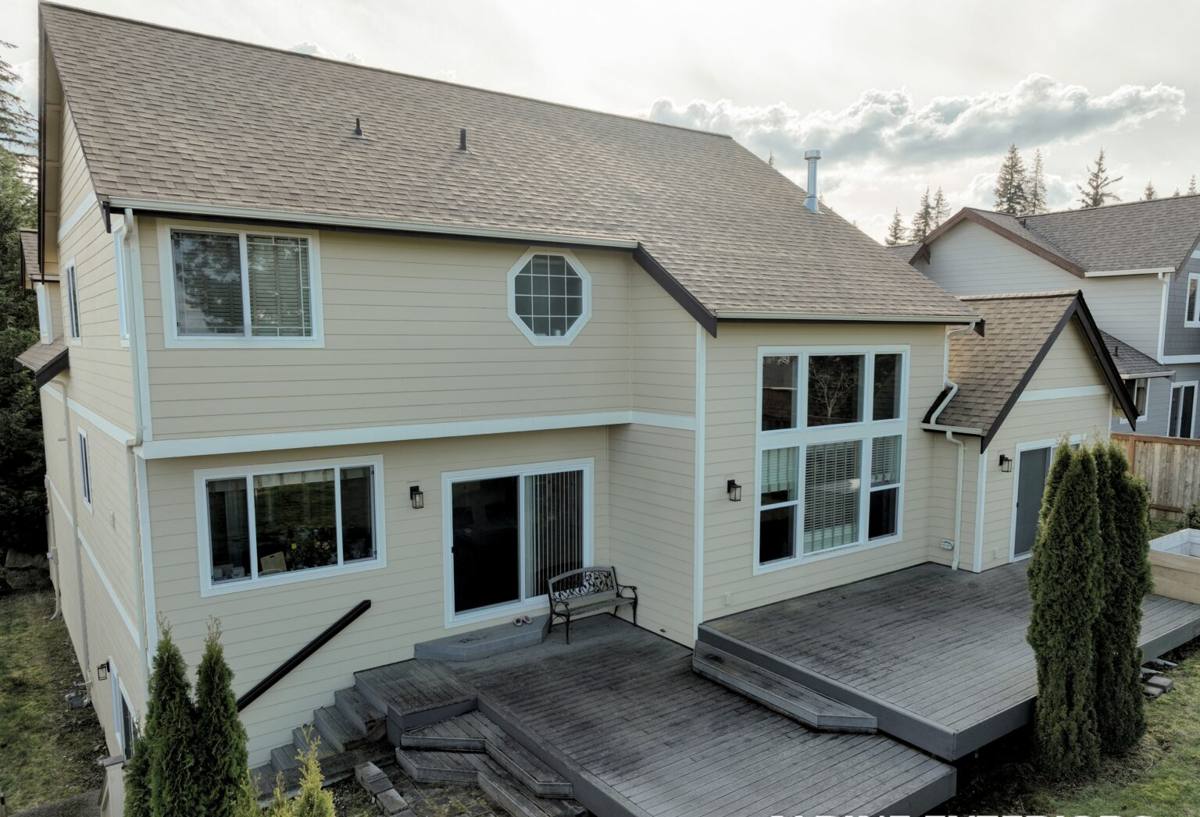
What a Correctly Built Edison Deck Requires
A deck that's going to hold up here needs to be right in a handful of specific areas, more so than in a drier, more sheltered location. We treat these as non-negotiable on every custom deck we build in this area.
- Corrosion-resistant fasteners and hardware throughout — not just at the ledger, but at every joist hanger, post base, and railing connection
- Proper ledger flashing where the deck ties into the house, so water is shed away from the wall assembly rather than tracked behind it
- Footings set to local frost and drainage requirements, with post bases kept clear of standing water
- Adequate airflow beneath the deck so the structure can dry out between storms instead of staying damp
- Decking material matched to the site's sun and shade pattern, since a heavily shaded deck needs different moss and slip considerations than an open one
- Stair and railing details built to code, with hardware and connections that won't quietly corrode out of sight
Get all of that right and a deck in this climate can genuinely last for decades with reasonable upkeep. Skip even one of these and you've usually just delayed the problem, not avoided it.
Choosing the Right Decking Material for This Site
There's no single right decking material for every Edison property — it depends on how much sun and shade the deck actually gets, how much maintenance the homeowner wants to commit to, and the look they're going for. We walk through the real trade-offs rather than defaulting to whatever's easiest to install.
| Material | Moss/moisture behavior | Maintenance | Best fit |
|---|---|---|---|
| Pressure-treated wood | Resists rot when properly sealed; needs regular upkeep to stay ahead of moss and moisture | Annual cleaning, periodic sealing or staining | Budget-conscious builds, homeowners willing to keep up a maintenance schedule |
| Cedar | Naturally decay-resistant but still organic; shaded areas need active moss management | Regular cleaning, periodic staining or sealing | Homeowners who want a natural wood look and are committed to upkeep |
| Composite decking | Does not absorb moisture the way wood does; still needs cleaning where moss and algae can gain a foothold on the surface | Periodic washing, no staining or sealing required | Shaded lots, homeowners who want to minimize recurring maintenance |
Composite decking has become a common choice for shaded, moss-prone sites in this area for a straightforward reason: it doesn't give moisture the same path into the material that wood does. That said, no decking surface is maintenance-free in a climate like this — even composite boards need periodic cleaning to keep algae and moss film from building up and making the surface slick, especially on stair treads. We'll give you a straight comparison based on your specific site rather than pushing whichever product is fastest for us to install.
Our Process for a Custom Deck Build
A custom deck project on an Edison property generally moves through the following stages. We walk you through each one before work starts, so there aren't surprises partway through.
- Site assessment. We look at sun and shade exposure, drainage on the lot, grade relative to the house, and how the deck will tie into the existing structure.
- Design and material selection. We talk through decking material, railing style, and layout based on how you'll actually use the space and what the site's moisture and shade pattern calls for.
- Permitting. Deck projects in Whatcom County typically require a permit depending on size and height — we handle that process as part of the job rather than leaving it to the homeowner.
- Footings and framing. This is where the long-term durability of the deck actually gets decided — correct footing depth and drainage, proper ledger flashing, corrosion-resistant hardware throughout.
- Decking, stairs, and railings. Installed to the material manufacturer's spacing and fastening specs, with attention to how water will shed off the surface.
- Final walkthrough. We go over the finished deck with you, including what maintenance it will need and roughly how often, so you know what you're taking on before we leave the job.
Permitting and Code Considerations in Whatcom County
Most custom deck builds of meaningful size in Whatcom County require a building permit, and decks attached to the house have specific requirements around ledger attachment, footing depth, and guardrail height that inspectors will check. Skipping the permit process might feel like it saves time up front, but it creates real problems later — unpermitted structural work can complicate a home sale, and it means nobody with code expertise ever verified that the ledger connection or footings were done correctly. We pull the appropriate permits and build to code as a standard part of every custom deck project, not as an upsell.
Maintaining a Deck in Edison's Climate
Even a correctly built deck needs some ongoing attention in this climate to perform the way it's capable of performing. What that looks like depends on the material, but the general pattern holds across all of them.
| Task | Typical interval here | What happens if it's skipped |
|---|---|---|
| Surface cleaning (moss/algae removal) | 1-2 times per year, more often on shaded decks | Buildup holds moisture against the surface and creates a slip hazard on stairs and walkways |
| Sealing or staining (wood decking) | Every 1-3 years depending on exposure | Finish thins, moisture reaches bare wood, checking and graying begin |
| Hardware inspection | Annually | Corroded fasteners or hangers can weaken structural connections without visible warning |
| Under-deck airflow check | Annually | Blocked vegetation or debris under the deck traps moisture and slows drying between storms |
| Ledger and flashing inspection | Annually | A failed flashing detail lets water track behind siding, risking damage well beyond the deck itself |
None of this is unusual maintenance for a coastal Pacific Northwest deck — it's simply what the climate asks of any outdoor structure here. A well-built deck with this kind of basic upkeep will substantially outlast one that was built without the local climate in mind, regardless of the material.
Why Local Experience with Edison Properties Matters
A deck built by a crew that hasn't worked this specific stretch of Whatcom County coastline is more likely to miss the details that matter here — the flashing detail that stops wind-driven rain from getting behind a ledger, the hardware spec that holds up against salt air instead of streaking and weakening within a few years, the footing placement that accounts for how this soil and drainage actually behaves after a heavy rain. We've built and repaired decks around Chuckanut and the surrounding area long enough to know which shortcuts cause problems and which details are worth the extra time. That's not a marketing line — it's the difference between a deck that needs real work again in five years and one that's still solid in twenty.
A Quick Checklist Before You Hire
If you're comparing deck builders for an Edison property, these are the things worth asking about before you sign anything:
- Do they pull permits and build to Whatcom County code, or expect you to handle that?
- What hardware and fasteners do they use, and are they rated for a coastal, salt-air environment?
- How do they detail the ledger connection and flashing where the deck meets the house?
- Do they talk through decking material trade-offs based on your site's sun and shade, or default to one product regardless?
- Will they explain what maintenance the finished deck will need, and roughly how often?
A contractor who answers these clearly and specifically, rather than in vague reassurances, is generally the safer choice for a build that has to hold up to this climate for decades.
If you're planning a new deck or replacing one that's showing its age, we're glad to come take a look at your Edison property, talk through what the site needs, and give you a straightforward estimate — no pressure, no pushy upsells. Use the form below to get started.