 Chuckanut Exterior
 Asphalt Shingle Roofing Built for Edison's Climate
Edison sits close enough to the water and the surrounding farmland that its roofs take a different kind of beating than homes further inland. Salt-laden air off the bay, long stretches of driving rain, and a moss season that can run most of the year all work against a roof that isn't installed with this specific environment in mind. Asphalt shingle roofing remains one of the most practical choices for homes in this part of Whatcom County — but only when the materials, ventilation, and detailing are matched to what the climate actually does to a roof here, not to a generic install spec written for a drier region.
This page covers what an asphalt shingle roof needs to hold up in Edison specifically: the moisture and organic growth pressure, the salt exposure, the wind-driven rain that finds every weak seam, and the maintenance rhythm that keeps a roof performing for its full service life instead of failing early.
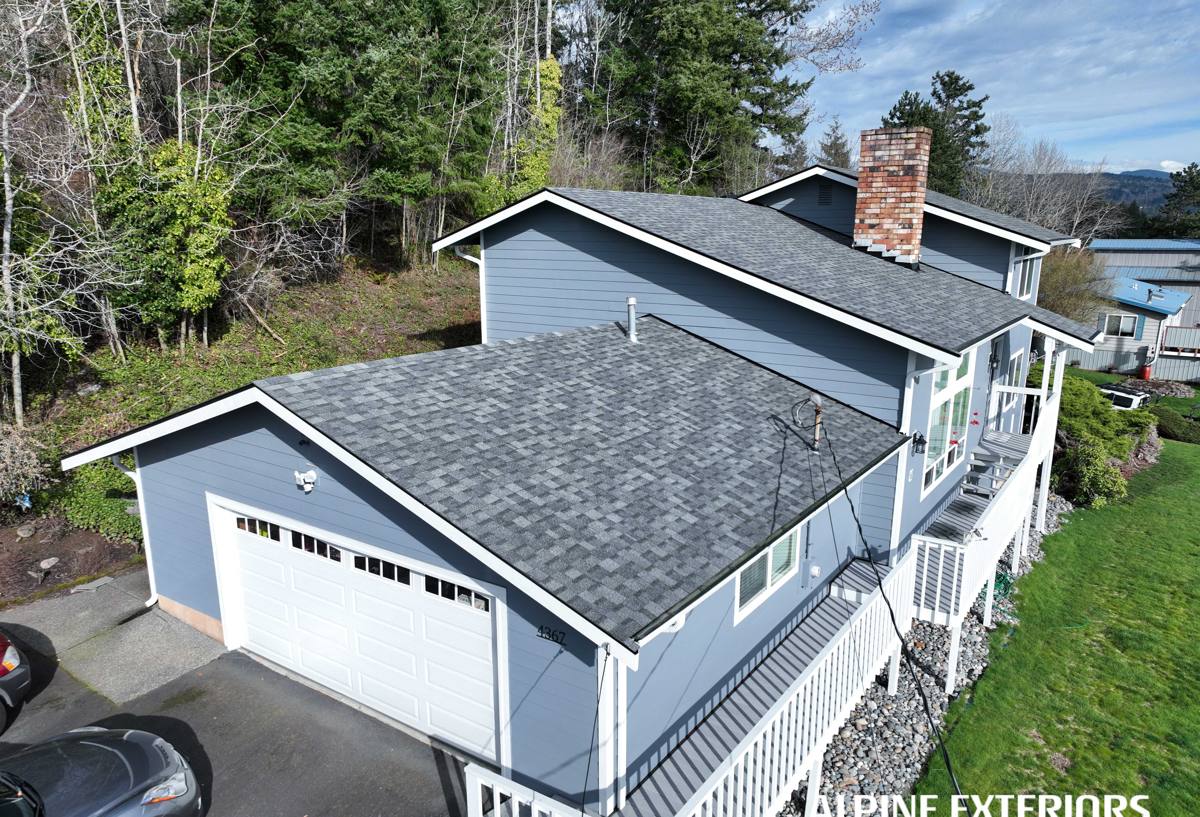
What Edison's Weather Does to a Roof Over Time
Salt Air and Metal Fatigue
Homes closer to Samish Bay and the surrounding tidal areas deal with airborne salt that accelerates corrosion on exposed metal — flashing, nail heads, vent stacks, and gutter hardware. Standard galvanized fasteners and thin flashing can start showing rust streaks and pitting years before they would inland. This doesn't ruin a roof overnight, but it's exactly the kind of slow degradation that turns into a leak at a flashing seam nobody was watching.
Driving Rain and Wind-Driven Moisture
Chuckanut-area storms don't always fall straight down. Wind-driven rain pushes water sideways and upward under shingle tabs, around chimney flashing, and into any gap in the underlayment. A roof that would shed water fine in calm rain can still leak here if the underlayment, valleys, and step flashing weren't installed to handle rain coming in at an angle.
Moss, Algae, and a Long Growing Season
Whatcom County's mild, damp climate gives moss and algae a long window to establish themselves — often nearly year-round on north-facing slopes and shaded sections of roof. Moss doesn't just look bad; its root structure lifts shingle edges, holds moisture against the roof deck, and accelerates granule loss. Left unchecked over several seasons, it shortens the usable life of an otherwise sound roof.
What a Correct Asphalt Shingle Job Actually Involves
A roof that's built to handle Edison's conditions isn't just shingles nailed to a deck. Every layer underneath the visible shingle does specific work, and skipping or under-speccing any of them is where premature failures start.
- Deck inspection and repair: Any soft, delaminated, or water-damaged sheathing gets replaced before new material goes down — covering a compromised deck just hides the problem.
- Ice and water shield at vulnerable points: Eaves, valleys, and roof-to-wall transitions get a self-adhering waterproof membrane, not just felt, since these are the spots wind-driven rain and moss-related moisture find first.
- Synthetic underlayment across the field: A quality synthetic underlayment handles the general moisture barrier and holds up better than old-style felt if there's any delay between tear-off and shingle installation.
- Proper flashing at every penetration: Chimneys, skylights, vent stacks, and sidewalls all need correctly formed and layered flashing — corrosion-resistant material matters more here given the salt exposure.
- Balanced attic ventilation: Intake at the eaves and exhaust at the ridge keep moist air moving out of the attic instead of condensing against the underside of the deck, which matters in a climate this damp.
- Correct nailing pattern and fastener count: Manufacturer-specified nailing (not fewer nails to save time) is what actually gives a shingle roof its wind rating in practice, not just on paper.
Choosing Shingles That Make Sense for This Area
Not every asphalt shingle product is a good match for a damp, moss-prone, salt-air environment. We steer homeowners toward a few characteristics that matter more here than they would in a drier climate:
Algae-Resistant Granules
Shingles rated for algae resistance use granules embedded with a compound that slows the growth of the dark streaking and organic buildup common on damp roofs. This doesn't eliminate moss risk, but it meaningfully slows algae staining on north-facing and shaded slopes, which are the sections that struggle most in Edison's climate.
Wind Rating That Matches Exposure
Homes with more open exposure to wind off the water benefit from a shingle rated for higher wind speeds, paired with the correct nailing pattern. The rating on the shingle wrapper only holds up if the installation matches the manufacturer's fastening requirements — a high-wind-rated shingle installed with a standard nailing pattern doesn't actually perform to that rating.
Why We're Selective About Ultra-Budget Product Lines
We don't install the thinnest, lowest-tier shingle products as a matter of professional standard, not because any specific brand is bad. Lighter, thinner shingles are more sensitive to installation conditions, tend to show granule loss sooner in a wet climate, and often come with a warranty structure that prorates coverage quickly. For a climate that already stresses a roof through salt air and constant moisture, we'd rather set homeowners up with a mid-to-upper tier product that has margin built in.
Our Roofing Process for Edison Homes
- On-site assessment: We inspect the existing roof, deck condition, ventilation setup, flashing points, and any moss or algae staining pattern to understand what the roof has actually been dealing with.
- Written estimate: You get a clear scope of work and pricing before anything is scheduled — no surprise line items added mid-project.
- Tear-off and deck prep: Old roofing comes off, the deck gets inspected board by board, and any damaged sheathing is replaced.
- Waterproofing layer installation: Ice and water shield goes down at eaves, valleys, and penetrations; synthetic underlayment covers the rest of the field.
- Flashing and shingle installation: New flashing is formed and set at every penetration and transition, then shingles go down with manufacturer-specified fastening.
- Ventilation check: We confirm intake and exhaust airflow is balanced for the attic space, adjusting or adding vents where needed.
- Final walkthrough and cleanup: We walk the finished roof with you, cover care and moss-prevention basics, and make sure the property is cleared of debris and stray fasteners.
What Affects Cost on an Asphalt Shingle Roof
Every roof is priced based on its own specifics, but these are the factors that move the number most on jobs in this area:
| Factor | Why It Matters Here |
|---|---|
| Roof size and pitch | More surface area and steeper slopes both increase labor time and material need |
| Deck condition | Water damage or rot found during tear-off requires sheathing replacement before shingles go down |
| Shingle tier chosen | Algae-resistant and higher wind-rated products cost more upfront but hold up longer in this climate |
| Number of penetrations | Chimneys, skylights, and vents each require additional flashing work and labor |
| Existing moss or algae damage | Heavier organic growth can mean more deck repair once the old roofing is removed |
| Ventilation upgrades needed | Adding or correcting intake/exhaust venting is easier to price accurately once the attic is inspected |
| Access and site conditions | Steep lots, tree cover, or limited staging area can affect labor time |
We walk through these factors with you during the estimate so the final number makes sense, rather than handing over a flat quote with no explanation behind it.
Maintaining a Shingle Roof in a Moss-Prone Climate
A correctly installed roof still needs periodic attention in a climate like this one. Waiting until a leak shows up inside the house means the underlying damage has usually been building for a while.
- Have moss and debris cleared from the roof surface before it builds up enough to hold moisture against shingles
- Keep gutters and downspouts clear so water isn't backing up under the eave line during heavy rain
- Trim back overhanging branches that keep shaded sections of roof damp longer than the rest of the surface
- Check flashing around chimneys, skylights, and vents periodically for early rust or lifting, especially given the salt-air exposure
- Confirm attic ventilation is still functioning as intended — blocked vents are easy to miss and accelerate deck moisture problems
- Schedule a professional inspection after major storms or every couple of years as routine upkeep
Why a Crew That Already Works in Edison Makes a Difference
A roofing crew that regularly works Whatcom County homes already knows what this climate does to a roof over five, ten, and twenty years — not from a textbook, but from seeing it firsthand on houses like yours. That means recognizing early moss patterns before they become deck damage, knowing which flashing details actually hold up against salt air and driving rain, and speccing ventilation correctly for the moisture load this area produces. A crew unfamiliar with the region might install a roof that meets code and still underperforms here simply because it was built to a generic standard instead of a Chuckanut-specific one.
It also means straightforward communication and a crew that shows up when they say they will, without the added friction of coordinating with a company based somewhere far outside the area.
Get a Free, No-Pressure Estimate
If your roof is showing granule loss, moss buildup, or you're just planning ahead before it becomes a problem, we're happy to take a look and walk you through what we find — no pressure, no obligation. Use the form below to request a free estimate for your Edison home.