 Chuckanut Exterior
 Why York Decks Wear Out Faster Than You'd Expect
If you own a home in the York area of Chuckanut, you've probably noticed your deck aging faster than decks you've had in drier parts of the country. That's not bad luck — it's the environment. York sits close enough to the water that salt-laden air reaches every exposed surface, and Whatcom County's long wet season means most decks here spend a good chunk of the year damp, shaded, and slow to dry. Add in driving rain that gets pushed sideways under railings and stair treads, and you have a combination that finds every weak point in a deck's construction: fasteners, ledger connections, end grain, and anywhere water can sit instead of shed.
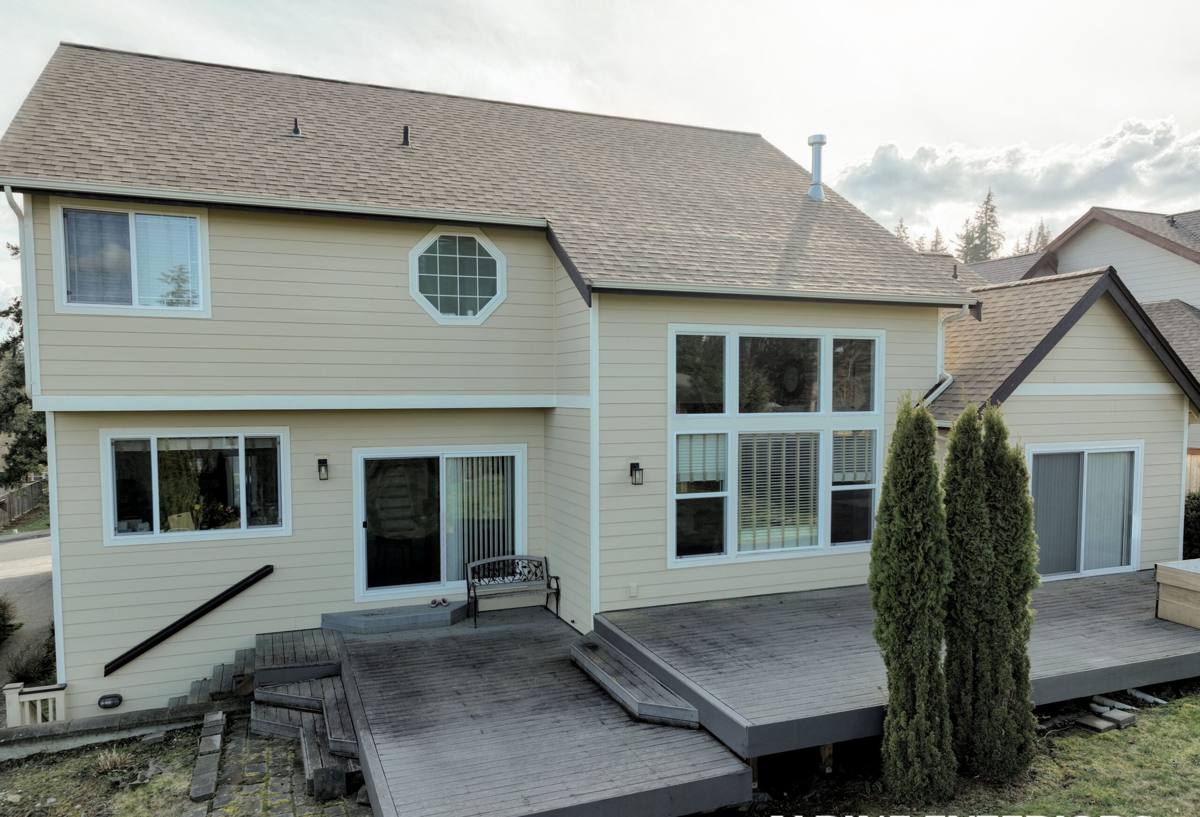
A deck that looks fine from a distance can be quietly failing underneath. Soft spots near the house, gray and splintering boards, rust streaks below screw heads, and a persistent green film on the north-facing sections are all signs that the structure is losing its fight with moisture. Replacement, done correctly for this climate, isn't just about new boards — it's about correcting the details that let water win in the first place.
What "Correct" Deck Replacement Means in This Climate
A lot of deck problems in Chuckanut and the surrounding Whatcom County area trace back to a rebuild that only addressed the surface. New decking screwed onto an old, unchanged frame will fail on the same timeline as the deck it replaced. A proper replacement treats the whole system — framing, fasteners, flashing, drainage, and surface material — as one job, because in this climate each of those pieces affects how long the others last.
Framing and Ledger Connections
The ledger board — where the deck attaches to the house — is the single most common failure point we find on older decks in this region. Years of rain running down siding and behind poorly flashed ledgers leads to rot that's invisible until the deck starts to separate from the house. A correct replacement includes proper ledger flashing, a gap or drainage plane behind the ledger, and corrosion-resistant structural hardware rated for wet, coastal-influenced conditions.
Fasteners and Hardware
Salt air accelerates corrosion on standard fasteners, which is why we use stainless steel or heavy hot-dip galvanized hardware rated for coastal exposure, not the coated deck screws sold for general use. Rusting fasteners don't just look bad — they weaken their grip on the wood over time, which is how boards start to lift and squeak years before they should.
Drainage and Airflow Under the Deck
Moss and algae need two things to take hold: moisture and shade. Most York-area decks have both, especially on the north or east side of the house. Correct joist spacing, gapping between boards, and keeping the area underneath the deck clear of trapped debris all help the structure dry out between storms instead of staying damp for weeks at a time.
Choosing Materials That Actually Hold Up Here
There's no single "best" decking material — there's a best material for your budget, your maintenance appetite, and how much direct weather exposure your deck gets. We'll walk through the honest trade-offs rather than push whatever has the highest margin.
| Material | How It Handles This Climate | Maintenance | Typical Lifespan |
|---|---|---|---|
| Pressure-treated wood | Good if properly sealed and re-coated; moss and mildew show quickly if neglected | Annual cleaning and re-sealing recommended | 10–15 years with upkeep |
| Cedar | Naturally rot-resistant, but salt air and constant damp still gray and soften it over time | Periodic cleaning and oiling | 15–20 years with upkeep |
| Composite decking | Doesn't absorb water like wood; resists moss better on the surface, though grooved profiles can still trap grime | Occasional washing, no sealing or staining | 25–30 years, varies by product warranty |
| PVC/capped composite | Fully moisture-sealed surface, best resistance to salt air staining and moss growth | Lowest maintenance of the group | 25–30+ years, varies by product warranty |
Whichever surface material you choose, the framing underneath should be treated the same way regardless — moisture-resistant lumber, correct fastener spacing, and hardware rated for wet coastal conditions. A premium deck board over a compromised frame is still a short-lived deck.
A Note on Composite and Capped Products
We install composite and capped decking regularly in this area because it holds up well against the moss and moisture that wood struggles with. That said, we're upfront that not every composite line is created equal — grooved-edge boards with hidden fasteners can trap organic debris in the channels if they're not installed with proper spacing and airflow, and some lower-cost composite products are more prone to surface staining from tannins and algae than fully capped products. We'll talk through which product line fits your budget and your deck's sun/shade exposure rather than defaulting to one option for every job.
Signs Your York-Area Deck Needs Replacement, Not Repair
- Soft, spongy decking anywhere, especially near the house or at stair landings
- Visible gaps or movement where the ledger meets the house
- Persistent moss or algae that returns within weeks of cleaning
- Rust streaking below screws or nail heads
- Railings that flex or wiggle when leaned on
- Multiple boards cupping, splitting, or delaminating at the same time
- A structure older than 15–20 years that hasn't had framing inspected recently
If you're only seeing one or two of these on an otherwise sound structure, repair may still make sense. When several show up together, it usually means the underlying frame has been absorbing water for years, and patching the surface won't solve the actual problem.
Our Deck Replacement Process
1. On-Site Assessment
We start by inspecting the ledger connection, support posts, footings, and joists — not just the visible decking. This tells us whether we're dealing with a straightforward surface-and-framing replacement or whether structural elements like footings need attention too.
2. Honest Scope and Material Discussion
We walk you through material options based on how much sun and rain exposure your specific deck gets, how much upkeep you want to do, and your budget. No pressure toward the most expensive option — some homes are well served by treated wood with a good maintenance routine, others benefit more from low-maintenance composite.
3. Demolition and Structural Correction
Old decking and any compromised framing come out. This is where we correct ledger flashing, upgrade fasteners, and address drainage issues that were likely part of why the original deck failed.
4. Rebuild and Surface Installation
Framing is rebuilt to current code with corrosion-resistant hardware, then the new decking, railings, and stairs go in with attention to board spacing and airflow so the finished deck can actually dry out between rain events.
5. Final Walkthrough
We go over the finished deck with you, including a simple maintenance rundown so you know what to expect from your specific material choice going forward.
Permits and Local Code Considerations
Deck replacement in Whatcom County generally requires a permit when structural elements — framing, footings, or attachment to the house — are being replaced, not just the surface boards. Railing height, guard spacing, and stair geometry also need to meet current code, which sometimes differs from what was allowed when an older deck was originally built. We handle the permitting and inspection process as part of the job so you're not left navigating that on your own.
Maintenance That Actually Extends Deck Life Here
Whatever material you choose, a few habits make a real difference in a climate like this one:
- Clear leaves and debris from between boards before they trap moisture through the wet season
- Rinse salt residue and organic buildup off the surface periodically, especially on shaded sides
- Keep gutters and downspouts near the deck clear so runoff isn't dumping directly onto or under it
- Trim back vegetation that's shading the deck and keeping it damp longer than necessary
- Have the substructure checked every few years, even if the surface still looks fine
None of this replaces good construction, but it's the difference between a deck hitting the low end or the high end of its expected lifespan.
Why a Crew That Already Works York Matters
Deck problems in this part of Chuckanut tend to repeat themselves from house to house — the same ledger flashing shortcuts, the same fastener corrosion, the same moss patterns on shaded elevations. A crew that regularly works in York and the surrounding Whatcom County area has already seen how local exposure — salt air, prevailing wind-driven rain, and long stretches of overcast, damp weather — plays out on real decks over real years. That means fewer surprises during demolition, material recommendations based on what actually holds up here rather than generic advice, and a build that accounts for this specific coastal climate from the first framing decision onward.
If your deck is showing its age, we're happy to take a look and give you a straight assessment of what it needs — repair, partial rebuild, or full replacement — along with a free, no-pressure estimate. Use the form below to get started.