 Chuckanut Exterior
 Why Samish Decks Wear Out Faster Than the Brochures Suggest
If you own a home in the Samish area of Chuckanut, you already know your deck lives a harder life than a deck fifty miles inland. Samish sits close enough to the water that salt-laden air is a daily presence, not an occasional event. Combine that with Whatcom County's long wet season and the shaded, moss-friendly conditions common along the wooded lots and bluff-adjacent properties out here, and you get a perfect storm for accelerated deck failure: corroding fasteners, soft or delaminating boards, and framing that holds moisture far longer than it should.
A lot of deck problems we see in Samish aren't the result of bad luck — they're the predictable outcome of a deck built for a drier, calmer climate than the one it's actually sitting in. Replacement done right means building for the conditions that are actually here, not the conditions on a generic spec sheet.
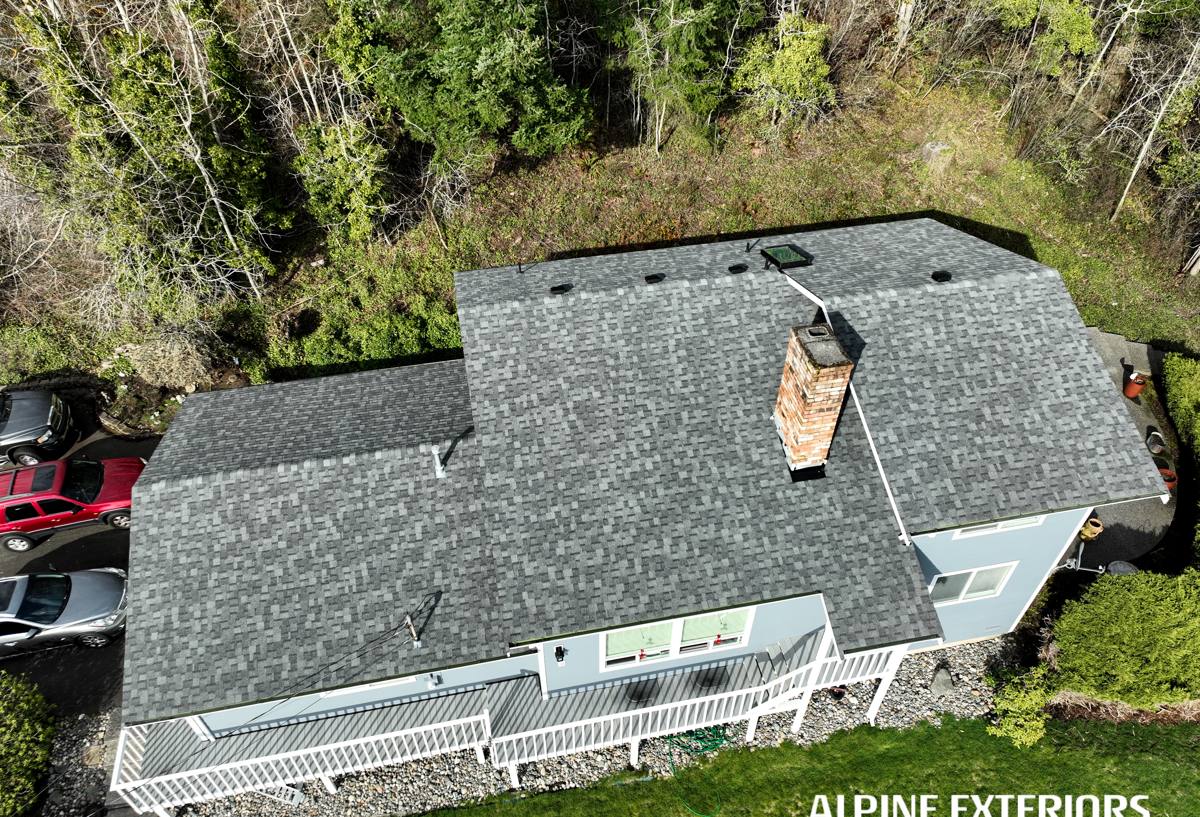
What Salt Air, Rain, and Moss Actually Do to a Deck
Salt Air and Metal Fasteners
Salt-laden air accelerates corrosion in nails, screws, joist hangers, and structural connectors — especially any hardware that isn't rated for coastal exposure. Once fasteners start corroding, they lose holding strength long before the wood around them looks obviously bad. This is one of the more dangerous failure modes because it's largely invisible until a board lifts or a railing feels loose.
Driving Rain and Water Intrusion
Whatcom County rain doesn't just fall straight down — wind-driven rain gets pushed sideways into ledger connections, under poorly flashed board ends, and into any gap where end grain is exposed. Wood absorbs water fastest through its end grain, so cut ends, stair stringers, and board-to-post connections are usually the first places we find rot.
Moss and Prolonged Moisture
Samish's tree cover and generally damp shoulder seasons mean moss and algae get a long runway to establish themselves on horizontal surfaces. Beyond the slip hazard, moss holds moisture against the wood surface for extended periods, which softens fibers, promotes fungal growth, and quietly shortens the life of an otherwise sound board.
Signs a Samish Deck Needs Replacement, Not Repair
- Soft, spongy spots when you press down with your foot, especially near board ends or around posts
- Persistent moss or dark staining that comes back within weeks of cleaning
- Visible gaps opening between boards, or boards that have cupped or crowned
- Rust streaks running from fasteners or hardware down the face of the wood
- Railings or stair stringers that feel loose or flex under normal weight
- A musty smell coming from underneath the deck, which usually points to trapped moisture in the framing
- Ledger board separation or gapping where the deck meets the house
A deck with one or two of these issues in an isolated area might be a repair candidate. A deck with several of these signs spread across the structure, or any sign involving the ledger or main framing, is usually past the point where patching makes sense.
What a Correct Deck Replacement Involves in This Climate
The Framing Comes First
Decking material gets all the attention, but the framing underneath is what determines how long the new deck actually lasts. In a Samish setting, that means confirming joists and beams are sized and spaced correctly, using structural connectors rated for corrosive, wet-coastal exposure, and making sure the ledger connection to the house is properly flashed so water can't work its way behind it.
Fastener and Hardware Selection Matters More Here
Standard hot-dip galvanized hardware can hold up reasonably well inland but tends to underperform in salt-air conditions. We treat fastener and connector selection as a real decision on every Samish project, not an afterthought — the goal is hardware that's still doing its job in fifteen years, not five.
Drainage and Airflow Underneath
Moss and rot both thrive where air can't move and water can't drain. Part of a proper replacement is grading and spacing that lets water shed away from the structure and lets air circulate underneath, rather than leaving a damp, shaded pocket that never fully dries between rain events.
Board Spacing for Wet-Season Movement
Wood and composite decking both expand and contract with moisture. Correct board spacing accounts for that movement so you don't end up with boards that buckle in a wet November or open into tripping-hazard gaps by August.
Choosing Decking Material for Samish Conditions
There's no single "best" decking material for every home — it depends on how much upkeep you want to do, your budget, and how much shade and moss exposure your specific lot gets. Here's how the common options actually perform under Samish's conditions:
| Material | How it handles this climate | Maintenance reality |
|---|---|---|
| Pressure-treated wood | Solid performer if properly sealed and fasteners are corrosion-resistant; still needs regular attention | Annual cleaning and periodic sealing to keep moss and moisture out |
| Cedar | Naturally moisture- and insect-resistant, but softer and can gray or stain faster in shaded, damp spots | Regular cleaning; sealing recommended to slow graying and moss growth |
| Composite decking | Very good moisture resistance and doesn't absorb water like wood, though it can still support surface moss if not cleaned | Low — periodic washing, no sealing or staining |
| PVC decking | Excellent moisture resistance, essentially immune to rot; performs well in coastal, high-moss environments | Lowest — occasional rinsing |
We'll walk through these trade-offs honestly based on your specific lot — how much shade it gets, how close you are to the water, and how much maintenance you actually want to sign up for. There's no upsell script here, just what fits your house.
Framing, Fasteners, and Warranty Structure — Why We Don't Cut Corners Here
Some contractors will quote a lower number by using standard hardware and minimal flashing detail, and the deck will look fine for the first year or two. In a Samish environment, that's exactly where problems start showing up — usually right around the time a standard warranty runs out. Our standard is to spec hardware and flashing for the coastal, high-moisture reality of this area, because a deck that needs its framing rebuilt in eight years isn't actually a good value, even if the upfront number was lower.
That also shapes how we think about warranty structure: a warranty is only meaningful if the build underneath it was done to hold up. We'd rather build it right the first time than lean on a warranty to cover for a shortcut.
Our Deck Replacement Process
- On-site assessment — we look at the existing deck, the framing condition, drainage, shade exposure, and how the ledger connects to your house.
- Honest scope and material walkthrough — we explain what needs to be replaced versus what could be salvaged, and go over material options suited to your specific lot conditions.
- Removal and framing inspection — once old decking is off, we can fully assess the joists, beams, posts, and ledger, since rot underneath isn't always visible from the surface.
- Rebuild with climate-appropriate materials — corrosion-resistant fasteners, proper flashing, correct drainage and airflow, and board spacing suited to our wet-to-dry seasonal swing.
- Final walkthrough — we go over the finished deck with you, including basic care tips specific to your site's shade and moisture exposure.
Why Hiring a Crew That Already Works in Samish Matters
A deck built for a dry, inland neighborhood and a deck built for a shaded, salt-air-exposed lot near the water shouldn't be built the same way — but a lot of generic quotes treat them identically. Working regularly in Chuckanut and the surrounding Whatcom County communities means we've seen how specific microclimates on individual lots — heavy tree cover, proximity to the water, exposure to prevailing wind-driven rain — actually play out over a deck's lifespan. That local pattern recognition shows up in the small decisions: which hardware to spec, where extra flashing attention is worth it, and which material trade-offs actually matter for your specific property versus a generic recommendation.
It also means we're not guessing at permitting norms or typical framing practices for this area — we're applying what we already know works here.
Get a Straightforward Estimate
If your deck in Samish is showing soft spots, recurring moss, loose railings, or rust streaks around the hardware, it's worth having someone look at the framing before you decide between repair and full replacement. We offer free, no-pressure estimates — use the form below to get started, and we'll walk the deck with you and give you a straight answer about what it actually needs.