 Chuckanut Exterior
 Why Happy Valley Decks Wear Out Faster Than the Manual Says
Every deck manufacturer prints a maintenance schedule that assumes a dry climate and a sunny yard. Happy Valley doesn't get that deal. Sitting inside Chuckanut's stretch of Whatcom County, homes here deal with salt-laden air off the nearby water, long stretches of driving rain through fall and winter, and a moss season that can run from October clear through May on shaded lots. That combination is hard on wood, hard on fasteners, and hard on the parts of a deck nobody thinks about until they fail.
We repair decks in this specific area often enough to know the pattern: it's rarely one big problem. It's a handful of small ones — a soft board here, a rusted hanger there, a post base that's been sitting in wet mulch for a few years — that add up to a deck that feels unsafe before it looks unsafe. Catching those early is cheaper and safer than waiting for something to give way.
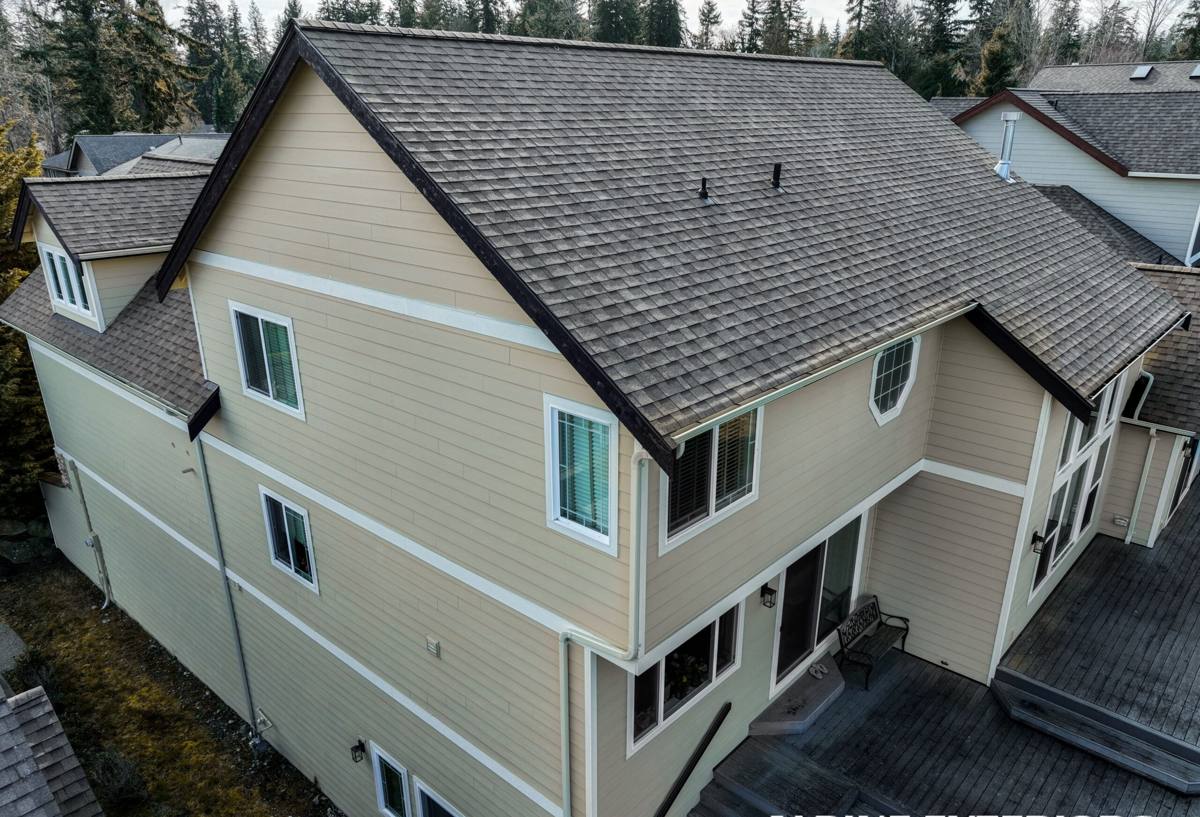
What Salt Air, Rain, and Moss Actually Do to a Deck
Salt air and fastener corrosion
Airborne salt accelerates corrosion on anything metal — nails, screws, joist hangers, bolts, post brackets. Once a fastener starts rusting, it swells slightly, which enlarges the hole it sits in and weakens its grip. A deck can look structurally fine on the surface while its hardware is quietly failing underneath.
Driving rain and water intrusion
Rain that comes in sideways gets pushed into places a straight-down rain never would: under railing caps, behind ledger boards, into the end grain of joists where boards butt against the house. Once water gets past the surface, wood doesn't dry out quickly in our climate — it stays damp long enough for rot to take hold.
Moss and prolonged moisture
Moss isn't just cosmetic. It holds moisture directly against deck boards and structural wood for months at a time, and it makes surfaces dangerously slick when wet. A deck with heavy moss cover is almost always retaining more water underneath than it should, even if the boards look intact on top.
Signs a Happy Valley Deck Needs Repair
Homeowners often wait for a board to visibly break, but most decks give warning signs well before that point. Walk your deck and check for these:
- Soft or spongy spots when you press on decking boards, especially near the house or in shaded corners
- Rust streaks running down from screw heads, joist hangers, or post brackets
- Railings that flex, wobble, or feel looser than they used to
- Gaps or separation where the ledger board meets the house
- Persistent moss or dark staining that doesn't dry out between rains
- Stair stringers that feel bouncy or uneven underfoot
- Visible daylight or gaps at post bases where they meet footings
- A musty smell coming from underneath the deck
Any one of these on its own might be minor. Two or three together usually means it's time for a proper inspection rather than a wait-and-see approach.
What a Correct Deck Repair Actually Involves
A lot of "deck repair" in this region amounts to swapping out a rotten board and calling it done. That fixes what you can see and ignores what caused it. We look at repair as addressing the structure, the water path, and the surface — in that order.
| Component | What we check | Common issue in this climate |
|---|---|---|
| Ledger board | Attachment to the house, flashing condition, gaps | Water tracking behind flashing, hidden rot against the house wall |
| Joists and beams | Soft spots, sagging, hanger condition | Rust-weakened hangers, rot at joist ends near ledger |
| Posts and footings | Base contact with soil/mulch, post-to-footing connection | Rot at the base from standing moisture or ground contact |
| Decking boards | Surface integrity, fastener condition, spacing for drainage | Cupping, splitting, moss buildup from poor drying |
| Railings and stairs | Post attachment, baluster spacing, stringer strength | Loosened connections from repeated wet-dry cycling |
| Fasteners and hardware | Material, corrosion level, code compliance | Standard-grade fasteners rusting faster than the wood around them |
Repairing decking without checking what's underneath it is the single most common shortcut we see undone within a couple of seasons. A deck is only as sound as its framing, and framing problems don't announce themselves the way a bad board does.
Repair or Replace? How We Make That Call
Not every deck needs a full rebuild, and not every deck should be patched. The right call depends on how much of the structure is still sound versus how much has been compromised.
| Factor | Leans toward repair | Leans toward replacement |
|---|---|---|
| Framing condition | Joists and beams are solid, only isolated soft spots | Widespread rot in multiple joists, beams, or the ledger |
| Age of structure | Under 15 years old with routine upkeep | Original structure is decades old with no maintenance history |
| Fastener condition | Localized rust, easily replaced hardware | Corrosion throughout, hardware crumbling on removal |
| Footing/post condition | Footings intact, posts sound above the base | Footings undersized, cracked, or posts rotted through |
| Code compliance | Railing height and spacing already meet current code | Old railings or stairs don't meet current safety code |
We'll give you a straight answer on which category your deck falls into, including the cases where repair now is reasonable but a rebuild is coming in a few years regardless.
Our Repair Process
1. On-site inspection
We walk the full deck, get underneath it where possible, and check framing, fasteners, footings, and drainage — not just the visible surface. This is where hidden rot and corrosion actually get found.
2. Written scope and honest options
You get a clear explanation of what's failing, why, and what it will take to fix it properly — including if a small repair is genuinely enough, or if you'd be spending money to delay a bigger job.
3. Structural work first
Any compromised framing, hangers, posts, or footings get addressed before anything cosmetic. There's no point in new decking over a weak frame.
4. Drainage and water management
Where rain or moisture buildup caused the original damage, we correct the path — flashing at the ledger, board spacing, grading around posts — so the same failure doesn't repeat in a few years.
5. Surface repair and finish
Decking, railings, and stairs get repaired or replaced as needed, with fasteners and hardware upgraded to materials suited for this area's moisture and salt exposure.
Materials and Hardware That Actually Hold Up Here
Given the salt air and long wet season around Chuckanut, we don't cut corners on hardware even when it costs a little more upfront. Standard-grade fasteners and connectors corrode faster in this environment than they would inland, and a repair is only as good as the hardware holding it together. That means using corrosion-resistant fasteners and connectors rated for exterior, coastal-adjacent use, and matching materials so dissimilar metals aren't accelerating corrosion against each other. It's a small cost difference on a repair invoice, but it's the difference between a fix that lasts and one you're paying for again in three years.
After the Repair: Keeping Moss and Rot From Coming Back
A good repair buys you time, but the climate doesn't change. A few habits go a long way toward protecting the work:
- Keep gutters and downspouts clear so runoff isn't dumping directly onto or near the deck
- Sweep leaves and debris off the deck surface regularly through fall, especially in shaded corners
- Trim back overhanging branches where practical to cut down on shade and debris buildup
- Rinse or gently treat moss growth before it establishes rather than after it's thick
- Check railing and stair connections once a year for looseness
- Keep soil, mulch, and plantings from piling up against post bases
Why a Local Chuckanut Crew Matters for This Job
Deck repair looks straightforward from a distance, but the failure patterns in Happy Valley and the surrounding Chuckanut area are specific to this environment — the way salt air attacks hardware, the way certain lots hold moisture longer because of tree cover or slope, the way moss establishes in shaded corners faster than a general contractor from outside the area might expect. A crew that works this area regularly isn't guessing at what to check; we've seen the same failure points on enough decks nearby to know where to look first.
That local familiarity also means straight talk about what's realistic for your deck given its age, exposure, and how it was originally built — not a generic recommendation pulled from a manual written for a different climate.
If your deck has any of the warning signs above, or you just want an honest read on its condition, we're happy to take a look. Estimates are free, there's no pressure to book anything on the spot, and you'll get a straight answer about what your deck actually needs.