 Chuckanut Exterior
 Deck Building in Happy Valley: Built for the Weather We Actually Get
Happy Valley sits close enough to the water that salt air is part of daily life, and close enough to the hills that rain doesn't just fall here — it drives sideways into anything facing the wrong direction. Add in a moss season that can stretch from October well into spring, and you've got a set of conditions that will find every weak point in a deck within a few years if the build wasn't done with this climate in mind. A deck that would hold up fine in a dry inland town can fail here in half the time. We build decks specifically for what Whatcom County throws at them, not for a generic climate zone.
This page is about one service in one neighborhood: deck building for homes in and around Happy Valley. Everything below reflects what we've learned building and repairing decks in this exact microclimate.
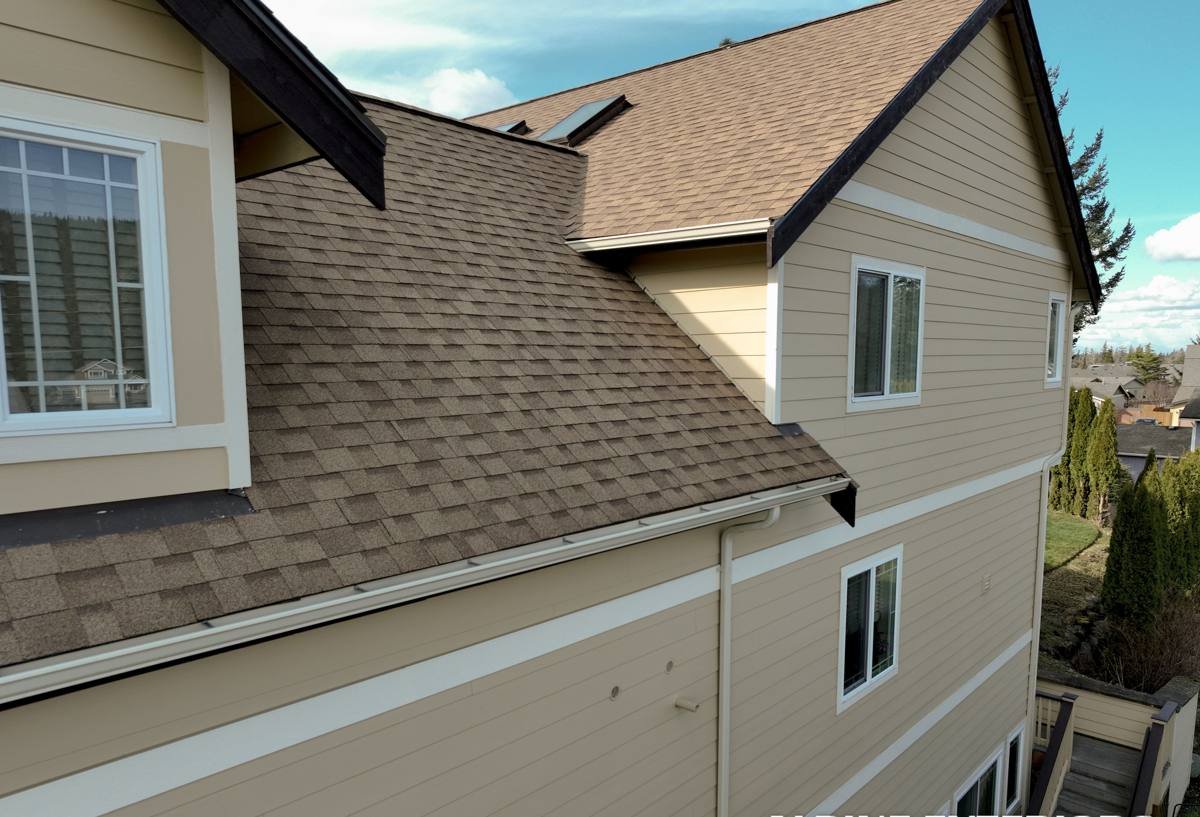
What Happy Valley Homes Actually Need From a Deck
Three things drive most of the deck problems we get called out to fix in this area, and all three are preventable at the design and construction stage.
Moisture Management, Not Just Moisture Resistance
It's not enough to use materials that resist water — the deck has to be built so water doesn't sit anywhere in the first place. That means real slope for drainage, gaps between boards that are sized correctly and consistently, and structural framing that dries out after a storm instead of staying damp for days. A flat, tightly-fitted deck surface in a climate with this much driving rain is asking for trapped moisture, and trapped moisture is where rot and moss both get their start.
Salt Air Considerations
Proximity to the water means airborne salt accelerates corrosion on anything metal — fasteners, brackets, railing hardware. Standard interior-grade or even general exterior hardware can start showing rust and pitting years before it should. Every connector on a deck we build in this area is rated for the exposure it's actually going to see.
Moss and Algae Growth
Shade, moisture, and mild temperatures are a perfect combination for moss, and Happy Valley has all three for a good chunk of the year. Moss on a deck isn't just cosmetic — it holds moisture against the surface, makes boards slippery, and if it's allowed to establish in seams and fastener heads, it accelerates decay from the inside of a joint outward.
Choosing the Right Decking Material for This Climate
There's no single "best" decking material — there's a best material for your budget, your sun/shade exposure, and how much upkeep you actually want to do. Here's how the common options compare for a coastal Whatcom County property.
| Material | Upfront Cost | Moss/Moisture Resistance | Maintenance | Typical Lifespan Here |
|---|---|---|---|---|
| Pressure-treated wood | Lowest | Fair — needs sealing to perform | Annual cleaning, re-sealing every 1-2 years | 10-15 years |
| Cedar | Mid-range | Good natural resistance, but surface still needs care | Regular cleaning, periodic oil or stain | 15-20 years |
| Composite decking | Higher | Very good — doesn't absorb moisture like wood | Periodic washing, no sealing/staining | 25+ years |
| PVC decking | Highest | Excellent — fully synthetic, no wood fiber to hold moisture | Light washing | 25-30+ years |
We don't push one product over another as a rule — we walk the site, talk about your budget and how much maintenance you're realistically going to keep up with, and recommend accordingly. What we won't do is put a low-grade or mismatched material on a deck that's going to see this much rain and salt exposure, because it just means a callback in a few years instead of a deck that lasts.
Framing and Structure: What a Correct Job Involves
The decking boards get all the attention, but the framing underneath is what determines whether a deck lasts one decade or three. This is also where a lot of corner-cutting happens on decks that look fine for the first year or two.
Ledger Board Flashing
Where the deck attaches to the house is the single most common failure point we see on older decks in this area. If the ledger board isn't properly flashed to shed water away from the house's wall assembly, water gets behind the siding and starts rotting the rim joist and sheathing — often invisibly, until the deck itself starts to sag or pull away. Correct flashing here isn't optional in a climate this wet.
Footings and Posts
Footings need to go below the frost line and bear on undisturbed, stable soil — not just be poured to a convenient depth. Post bases should hold the post above the deck surface so it never sits in standing water, which is a common shortcut on older or lower-budget builds.
Joist Spacing and Hardware
Joist spacing depends on your decking material and the span — composite and PVC boards generally need tighter joist spacing than solid wood to avoid flexing over time. All structural hardware — joist hangers, hurricane ties, lag bolts — should be corrosion-resistant hardware rated for exterior and, given our proximity to salt air, ideally rated for coastal exposure.
Railings, Stairs, and Code Requirements
Any deck more than 30 inches off grade needs a code-compliant guardrail, and Washington's building code sets specific requirements for guardrail height, baluster spacing (no gaps a 4-inch sphere can pass through), and stair handrails. These aren't just paperwork items — they're there because deck railing failures are a real and largely preventable cause of injury. We build to code as the floor, not the ceiling, and we handle the permitting and inspection process as part of the job so you're not stuck chasing down what Whatcom County or the applicable local jurisdiction requires.
Living With a Deck in a Wet, Mossy Climate
Even a well-built deck needs some seasonal attention here. The good news is that if the deck was built correctly to begin with — proper drainage, the right material, corrosion-resistant hardware — the maintenance is manageable rather than a constant fight.
- Sweep debris (leaves, needles, seed pods) off the deck regularly — trapped organic matter is what feeds moss and holds moisture against the boards
- Rinse or wash the surface at least once or twice a year to knock back early moss and algae growth before it establishes
- Check that gaps between boards and any drainage points stay clear, especially heading into the wetter months
- Inspect railings and stair connections annually for movement or corrosion at the hardware
- Re-seal or re-stain wood decking on the schedule appropriate to that product — don't wait until it's visibly gray and worn
- Look underneath the deck once a year for signs of moisture staining, especially near the ledger board connection to the house
Our Deck Building Process
Site Visit and Design
We start on-site, looking at your home's exposure — how much sun and shade the deck area gets, which direction the weather comes from, drainage around the foundation — and talk through material options and layout based on how you actually plan to use the space.
Permitting
We handle the permit application and coordinate required inspections, so the structural and safety requirements are built in from the start rather than something to fix after the fact.
Construction
Footings and framing go in first, with flashing and hardware chosen for this climate's exposure, followed by decking, railings, and stairs. We walk the finished deck with you before we consider the job done.
After the Build
We'll tell you honestly what maintenance your specific material needs and on what schedule, so you're not guessing a year later.
Why It Matters to Hire a Crew That Already Works in Happy Valley
A deck contractor who mostly works dry, inland areas may build a technically sound deck that still isn't right for this specific microclimate — the salt exposure, the amount of driving rain, the shade patterns that drive moss growth. A crew that already works this neighborhood knows which details actually matter here: how ledger flashing needs to be handled given the rain direction, which hardware grade holds up near the water, and where moss tends to take hold first on a given lot orientation. That local pattern recognition is the difference between a deck that needs real repair work in year six and one that's still solid in year twenty.
If you're planning a new deck or replacing one that hasn't held up, we're happy to come take a look and give you a straightforward, no-pressure estimate — just fill out the form below.