 Chuckanut Exterior
 Why Decks in Bow Take More Punishment Than Decks Inland
A deck in Bow doesn't fail the same way a deck fails somewhere dry. Out here, the damage is slow and it's cumulative: salt-laden air off the water works into metal fasteners and connectors, driving rain finds every gap in flashing and finish, and a long moss season keeps wood surfaces damp for weeks at a time even when it isn't actively raining. None of that is dramatic on its own. Together, over a few seasons, it's what turns a deck that looked fine into one with soft boards, rusted hardware, and a ledger board nobody wants to look too closely at.
Building a deck that holds up in Chuckanut and the surrounding Whatcom County communities means designing around those three stressors from the start, not trying to fix them after the fact with a coat of sealer. That's the difference between a deck that needs real attention at year three and one that's still solid at year fifteen.
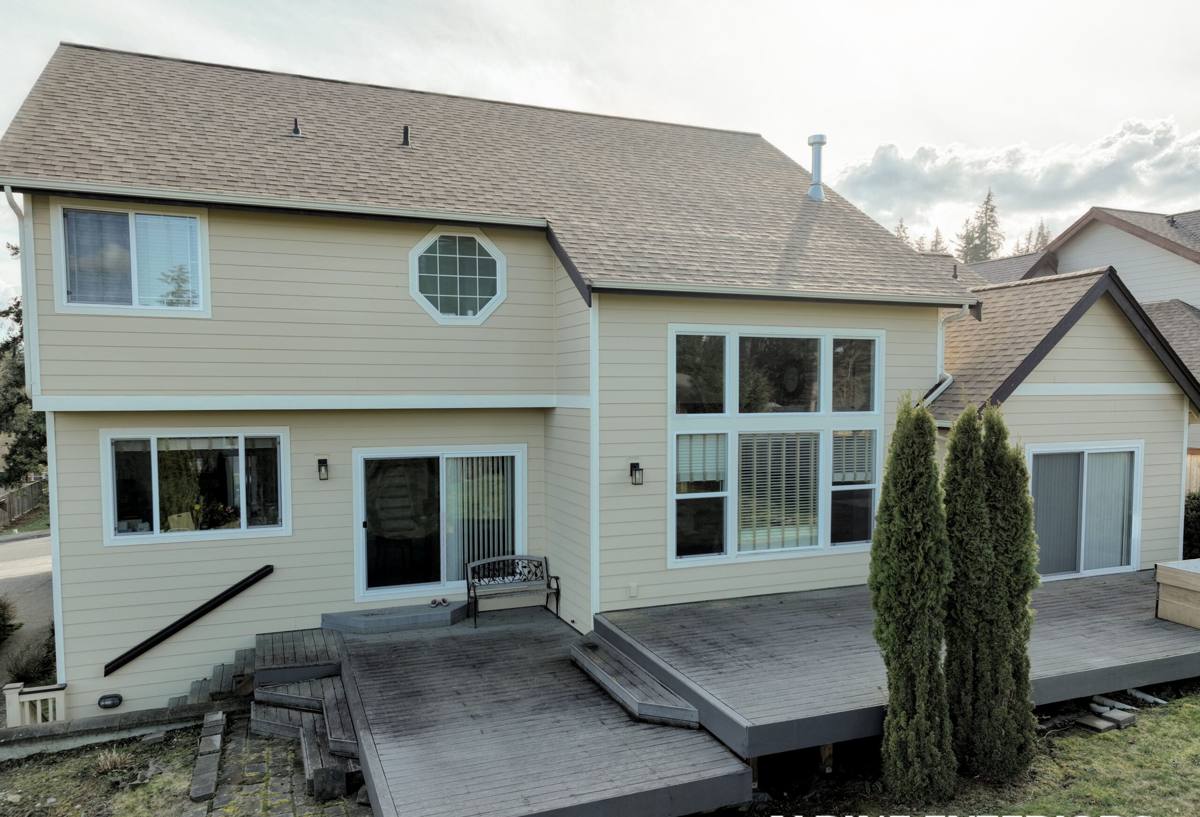
What Salt Air Actually Does to a Deck
Homes closer to the water deal with airborne salt that settles on every exposed surface, including the metal you can't see once the decking is down. Standard galvanized fasteners and joist hangers corrode faster in this environment than their coating is rated for, and once a fastener starts rusting, it weakens quietly inside the wood where you won't spot it during a casual walk-around.
This is why fastener and connector grade matters more here than in a lot of other parts of the state. We spec stainless steel or heavy-duty coated hardware rated for coastal exposure on every deck we build in this area, not just where it's visibly near the water. It costs more up front than the hardware big-box lumber packages come with, and it's not optional if you want the frame to outlast the decking on top of it.
Fastener and Hardware Comparison
| Hardware Type | Coastal Performance | Where It's Appropriate |
|---|---|---|
| Standard galvanized | Corrodes noticeably faster near salt air; coating breaks down over time | Interior, non-coastal builds only — we avoid it in Bow |
| Heavy-duty coated (ZMAX or similar) | Solid mid-range option for structural connectors | Framing and joist hangers on most coastal decks |
| Stainless steel | Best long-term resistance to salt corrosion | Fasteners in direct contact with decking, ledger connections, railing hardware |
Driving Rain and Where Decks Actually Rot
Most deck failures don't start in the decking boards — they start at the ledger board, where the deck attaches to the house, and at any spot where water can sit instead of shed. Driving rain doesn't fall straight down here; it comes in at an angle and gets pushed into seams, under railing posts, and behind ledger flashing that wasn't lapped correctly. Once water gets behind a ledger board and can't get back out, you've got a slow rot problem hidden against your house's framing.
Correct ledger flashing — proper metal flashing installed in the right order relative to the house's weather-resistive barrier, with a drainage gap where called for — is one of those details that takes an extra hour to do right and can save a homeowner a five-figure repair bill down the road. We treat it as non-negotiable, not an upgrade.
Where Water Needs to Be Managed on Every Deck
- Ledger-to-house connection: proper flashing, not just caulk or sealant
- Joist spacing and blocking: enough support to prevent sag that creates low spots where water pools
- Board gapping: correct spacing between decking boards so water drains through instead of sitting on top
- Post bases: standoff hardware that keeps posts from sitting directly in standing water
- Stair stringers and rail posts: end grain sealed or capped, since end grain absorbs water fastest
Moss Season and Why It's a Structural Issue, Not Just a Cleaning Issue
The long stretch of damp, mild weather that lets moss and algae take hold on roofs does the same thing to deck surfaces, especially in shaded spots under trees or on the north side of a house where sun doesn't reach. A moss-covered deck board isn't just slippery and unattractive — moss holds moisture against the wood surface far longer than open air would, which accelerates decay underneath a layer of green you might not think twice about.
Deck design can reduce how bad this gets. Boards laid with the right gap, decking that doesn't trap organic debris in grooves, and a layout that doesn't create shaded, poorly ventilated pockets all cut down on how fast moss establishes. Material choice matters here too, which is where a lot of homeowners start asking about composite versus wood.
Choosing a Decking Material for This Climate
There's no single right answer — it depends on budget, how much upkeep you want to do, and how the deck sits relative to shade and moisture. Here's how the common options actually perform in a salt air, high-rain, moss-prone environment:
| Material | Moisture & Moss Behavior | Maintenance | Typical Lifespan |
|---|---|---|---|
| Pressure-treated pine | Absorbs moisture readily; moss and mildew show up faster in shaded areas | Annual cleaning and re-sealing recommended | 10–15 years with upkeep |
| Cedar | Naturally more rot-resistant than pine, but still needs sealing to shed water well | Sealing every 1–2 years, regular cleaning | 15–20 years with upkeep |
| Composite (capped) | Doesn't absorb moisture the way wood does; moss can still grow on the surface but doesn't cause rot | Periodic washing, no sealing or staining | 25+ years, manufacturer-backed |
We install all three depending on what a homeowner wants. Where we push back is on uncapped composite or budget wood in heavily shaded, damp spots on a Bow property — those locations are exactly where moisture sits longest, and the cheaper the material, the less margin it has for that kind of exposure.
Our Process for a Custom Deck Build in Bow
1. On-Site Assessment
We walk the property and look at sun exposure, drainage patterns, proximity to the water, tree cover, and how the house's existing siding and framing will tie into a ledger connection. This is where we catch the site-specific issues — a shaded corner that'll fight moss, a grade that sheds water toward the house instead of away from it — before they become part of the design.
2. Design and Material Selection
We talk through decking material, railing style, and layout based on how you'll actually use the space, then put together a plan that accounts for the drainage and hardware decisions covered above.
3. Permitting
Deck permitting requirements depend on size, height above grade, and attachment method, and they're handled through the local jurisdiction covering your property. We take care of pulling the right permit and scheduling inspections so you're not the one chasing paperwork.
4. Framing and Flashing
This is the stage that determines how the deck ages. Ledger flashing, joist hangers, post bases, and fastener grade all get installed to hold up specifically to salt air and driving rain, not just to pass a one-time inspection.
5. Decking, Railing, and Finish Work
Decking goes down with correct board gapping, railing is set to current code height and baluster spacing, and any wood surfaces get the appropriate sealer or finish before we walk the site with you.
Permits and Local Code Basics
Most custom decks require a permit once they exceed a certain height above grade or attach structurally to the house — the exact thresholds depend on your specific jurisdiction within the Chuckanut area. Railing height and baluster spacing are governed by building code and aren't optional design choices, regardless of the look a homeowner is going for. We handle the permit application and inspection scheduling as part of the build, so you're not left figuring out which department to call.
Keeping a Bow Deck Solid Season After Season
A well-built deck in this climate still needs some seasonal attention. Here's what actually matters:
- Sweep off standing organic debris (leaves, needles, moss) regularly, especially in shaded areas
- Check railing posts and stair connections annually for looseness, which can signal fastener corrosion
- Rinse salt residue off surfaces periodically if the property is close to the water
- Re-seal wood decking on the manufacturer's recommended schedule — don't wait until it looks dry and gray
- Keep gutters and downspouts near the deck clear so roof runoff isn't dumping extra water onto the structure
- Address any soft spots, discoloration, or rust streaks right away rather than waiting for the next dry stretch
Why It Matters That We Already Work This Area
A deck design that works fine in a drier part of the state can be the wrong call in Bow. Fastener grade, flashing details, and material selection all shift once you're building somewhere with regular salt air and a genuine moss season. A crew that already works Chuckanut and the surrounding Whatcom County communities has made the adjustments for this climate a standard part of every build, not an upsell or an afterthought brought up after something's already gone wrong.
That local experience also means fewer surprises during permitting and inspection, since we're familiar with how deck projects get reviewed in this area and what inspectors are looking for on ledger connections and railing systems.
If you're planning a custom deck in Bow, we're glad to walk the property with you and talk through what the site actually needs — no pressure, no obligation. Fill out the form below and we'll set up a free estimate.