 Chuckanut Exterior
 Why Siding Wears Out Faster in Bow
Bow sits close enough to Samish Bay and the broader Salish Sea shoreline that salt-laden air is a daily fact of life for homes in the area, not an occasional nuisance. Add Whatcom County's long wet season, driving rain off the water, and a moss season that can run most of the year in shaded, north-facing spots, and you have a climate that is genuinely hard on exterior siding. Materials that hold up fine in a drier inland climate often fail early here — not because they're poorly made, but because they were never engineered for this specific combination of salt, moisture, and organic growth.
Salt air accelerates corrosion on fasteners and trim, and it degrades paint and coatings faster than plain rain does. Constant dampness feeds moss and algae, which hold moisture against the siding surface long after a storm has passed. Over years, that combination shows up as soft spots, peeling paint, swelling seams, and — in the worst cases — rot working its way into the wall sheathing behind the siding. A siding replacement in Bow isn't just a cosmetic upgrade; done right, it's a chance to correct the moisture path that caused the original failure.
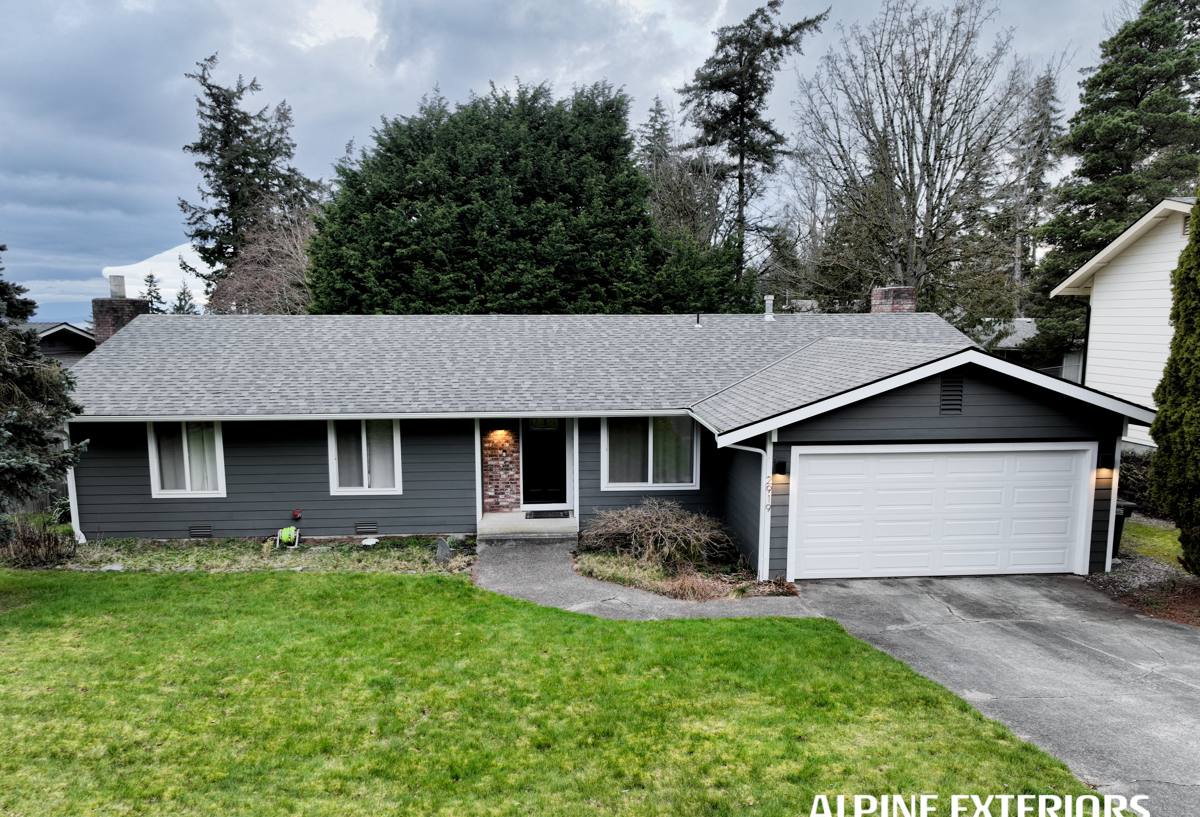
Signs a Bow Home Needs Siding Replacement, Not Just Repair
Not every siding problem calls for a full tear-off. But there's a point where patching becomes a losing battle against the underlying material or the moisture that's already gotten behind it. Watch for:
- Soft, spongy, or crumbling siding when you press on it, especially near the bottom courses and around windows
- Paint that keeps failing within a year or two of repainting, even with quality products
- Persistent moss or dark streaking that comes back within a season of cleaning
- Visible warping, cupping, or gaps opening up between boards or panels
- Rot or soft framing discovered when siding is removed for any other repair
- Rusting or corroding nail heads bleeding through the surface
If you're seeing two or more of these at once, it's usually a sign the whole system — not just a board here and there — has reached the end of its useful life.
What a Correct Siding Replacement Actually Involves
A siding replacement is only as good as what's underneath it. Rushing the tear-off or skipping the details around windows, doors, and penetrations is how a brand-new siding job ends up with the same rot problem in ten years. A correct job includes:
Full Tear-Off and Inspection
Old siding comes off down to the sheathing so the wall can actually be inspected, not guessed at. This is when hidden rot, soft framing, or old moisture damage gets found and dealt with before it's sealed behind new material.
Weather-Resistive Barrier
A properly lapped and sealed weather barrier goes on before any siding. In a climate that gets as much driving rain as Bow does, this layer — not the siding itself — is the last line of defense if water ever does get past the surface.
Flashing at Every Penetration
Windows, doors, hose bibs, vents, and any other wall penetration need proper flashing and integration with the weather barrier. This is the single most common place siding jobs fail, and it's invisible once the job is finished — which is exactly why it matters who's doing the work.
Correct Fastening and Clearances
Fastener spacing, siding-to-grade clearance, and gaps at trim and corners all need to follow manufacturer specification, not just "how it's always been done." Getting this wrong voids warranties and shortens the life of the siding regardless of how good the material is.
Why We Install Only James Hardie Fiber Cement
We don't install vinyl, LP SmartSide, cedar, or primed spruce, and in a climate like Bow's, that's a deliberate standard, not a limitation. Each of those products has real strengths, but each also has a weak point that salt air, sustained dampness, and moss growth tend to find.
| Material | How It Handles Bow's Climate |
|---|---|
| Vinyl siding | Doesn't rot, but can warp or crack in temperature swings and offers little protection if moisture gets behind it; seams are a common entry point |
| Cedar / wood | Attractive, but wood is an organic material — it's naturally what moss and algae grow on, and it demands ongoing sealing and maintenance to resist rot in a wet climate |
| LP SmartSide | Engineered wood with treated strand board core; performs well when installation and caulking are kept up perfectly, but any breach in the finish exposes a wood-based substrate to moisture |
| James Hardie fiber cement | Non-combustible, doesn't rot, and its HardieZone engineered product lines and factory-applied ColorPlus finish are built specifically to hold up against moisture and coastal exposure |
James Hardie's fiber cement is made from cement, sand, and cellulose fiber — there's no wood substrate to rot and nothing for moss to feed on the way it does on cedar. The factory-applied ColorPlus finish is baked on and warrantied, which matters in a climate where field-applied paint tends to fail early. That's the whole reason we standardized on it: it's the product that consistently holds up to the specific conditions Bow homes face, not just siding in general.
Our Siding Replacement Process
- Free on-site assessment — we look at your current siding, check for hidden moisture or rot, and talk through what your home actually needs
- Written estimate — a clear scope of work and cost, no pressure to decide on the spot
- Scheduling around Whatcom County weather — tear-off and dry-in work is planned to minimize the number of days your walls are exposed
- Tear-off, inspection, and any needed sheathing or framing repair
- Weather barrier and flashing installed to spec at every window, door, and penetration
- James Hardie siding installed to manufacturer fastening, clearance, and joint specifications
- Final walkthrough so you know exactly what was done and how to maintain it
What Drives the Cost of a Siding Replacement
| Factor | Why It Matters |
|---|---|
| Extent of hidden damage | Rot or soft sheathing found during tear-off adds repair scope before new siding can go on |
| Home size and wall complexity | More corners, gables, and trim detail mean more labor and material |
| Siding profile chosen | Lap, shingle, and panel profiles differ in material and installation time |
| Access and site conditions | Steep grades, tight setbacks, or limited staging area affect labor time |
| Trim, fascia, and flashing scope | Full replacement of trim alongside siding costs more but avoids mismatched old and new components |
We give a written, itemized estimate before any work starts so you can see exactly what you're paying for and why — there's no reason for that to be a mystery.
Why a Crew That Already Works Bow Matters
Bow's mix of coastal exposure, tree cover, and moisture patterns isn't identical to every neighborhood in Whatcom County — a crew that regularly works this area already knows where moss builds up fastest, which orientations take the worst of the driving rain, and what tends to be hiding behind older siding on homes of this age and construction. That familiarity shows up in small decisions during the job — where extra flashing attention is worth it, how much clearance to leave at grade, which details to double-check — that a crew unfamiliar with the area might not think twice about.
Maintaining Your New Siding
James Hardie fiber cement is low-maintenance, not no-maintenance. In Bow's climate, a few simple habits go a long way:
- Rinse siding annually to keep salt residue and organic buildup from accumulating, especially on shaded or north-facing walls
- Keep gutters clear so overflow doesn't run down the siding face
- Trim back vegetation and tree cover that keeps walls damp and shaded
- Have caulking at trim and penetrations inspected periodically, since caulk — not the siding itself — is usually the first thing to need attention
- Address any impact damage or chipping promptly to keep the factory finish protecting the material underneath
Questions to Ask Before Hiring a Siding Contractor
- Will you inspect the sheathing and framing during tear-off, and how do you handle what you find?
- What weather-resistive barrier and flashing details do you use around windows and doors?
- Are you a certified installer for the siding brand you're proposing?
- Is the estimate itemized, or is it a single lump-sum number?
- Do you regularly work in this part of Whatcom County?
If your Bow home's siding is showing its age, we'll come take a look, give you an honest read on what's going on behind it, and walk you through what a correct replacement with James Hardie fiber cement would involve — no pressure, no obligation. Use the form below to request a free estimate.