 Chuckanut Exterior
 Siding Repair Built for Bow's Coastal Exposure
Homes around Bow sit close enough to the water and the hills that they take a different kind of weather punishment than houses twenty miles inland. Salt-laden air moves in off the coast, driving rain comes sideways during winter storms, and the shaded, damp lots that are common in this part of Whatcom County stay wet long enough each year to grow a steady crop of moss and algae. Siding here doesn't fail all at once. It fails in patches — a section behind a downspout, a corner that catches the prevailing wind, a north wall that never fully dries out between October and April. Repairing those patches correctly, instead of patching over the symptom, is its own skill, and it's the specific service this page is about.
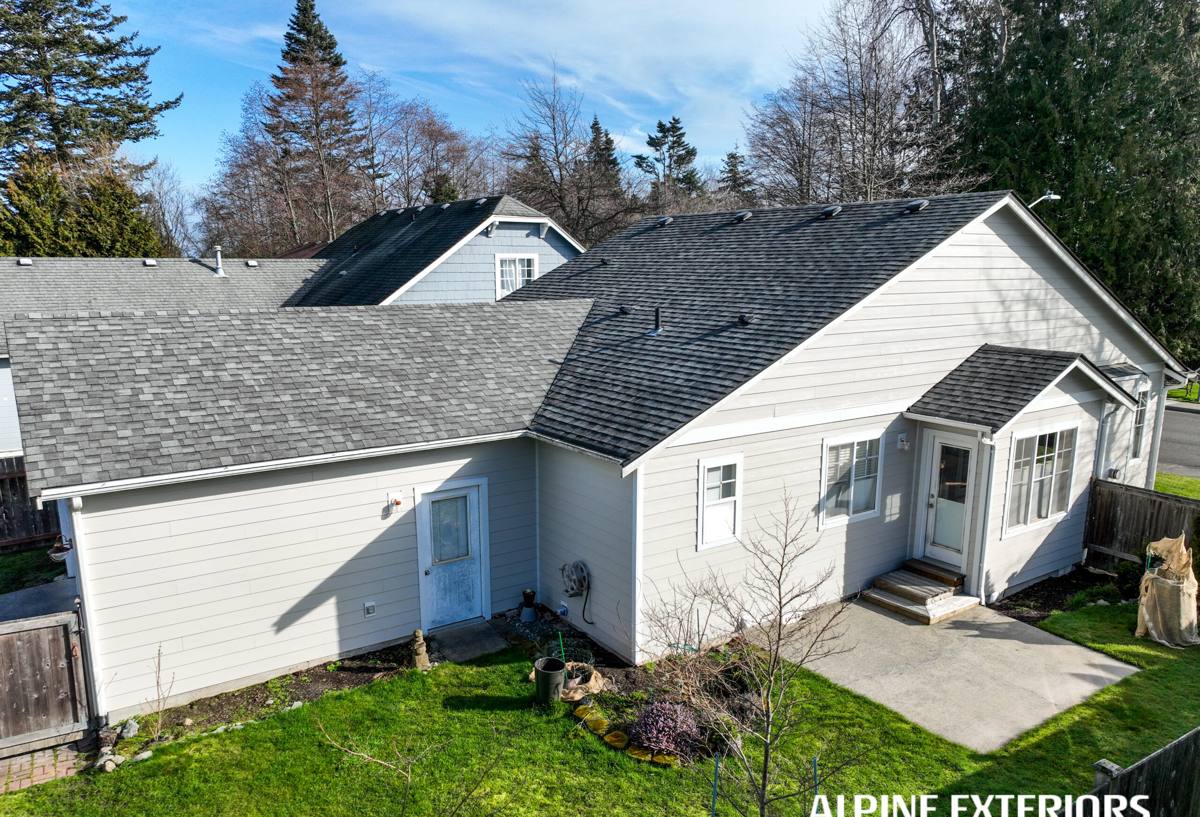
What Salt Air, Rain, and Moss Season Do to Siding
Three things drive most of the siding repair calls we get in the Bow area, and they usually show up together rather than one at a time.
- Salt air accelerates corrosion on fasteners, flashing, and any exposed metal trim. Once a nail head rusts and loses its grip, the siding panel around it starts to move, and movement opens gaps that let water in.
- Driving rain off Puget Sound and the surrounding foothills doesn't just fall straight down — it gets pushed sideways into laps, seams, and butt joints that were designed for calmer weather. Over years, marginal caulk joints and thin factory paint simply can't keep up.
- Moss season runs long here. Shaded walls, tree cover, and north-facing elevations stay damp for months, and moss holds moisture against the siding surface far longer than open sun and wind would allow. That constant dampness is what turns a cosmetic problem into a structural one.
None of this means every Bow home is in trouble. It means the repair has to account for these conditions specifically, not just replace a damaged board with an identical one and hope it holds up better the second time.
Common Repair Issues We Find on Bow Homes
The table below covers the patterns we see most often in this area and what they usually indicate.
| What You Notice | Likely Cause | Why It Matters |
|---|---|---|
| Soft or swollen spots low on a wall | Wicking moisture at grade, splash-back, or a failed kick-out flashing | Often points to a water management problem behind the siding, not just the visible panel |
| Persistent moss or dark streaking on shaded walls | Long dry-times from tree cover or poor sun exposure | Trapped moisture accelerates rot and paint failure underneath |
| Rust streaks below nail heads or trim | Corroding fasteners exposed to salt air | Loose fasteners let panels shift and open water paths |
| Chalky, faded, or peeling paint on one elevation only | Concentrated wind-driven rain and UV on the exposed side | Coating failure on that side speeds up moisture intake even if other walls look fine |
| Cracked caulk at seams and trim joints | Normal material movement plus repeated wet-dry cycling | Open joints are a direct path for water behind the cladding |
What a Correct Siding Repair Actually Involves
Diagnosing the Real Problem First
A repair that only addresses what's visible from the ground is a repair that comes back. Before we touch anything, we pull a board where there's damage, check the condition of the water-resistive barrier and flashing behind it, and confirm whether the moisture source is coming from outside (a flashing gap, a caulk failure) or from inside (poor ventilation, a plumbing or roof leak working its way down the wall).
Matching Material and Finish
We only install and repair with James Hardie fiber cement, so on most Bow projects we're matching into an existing Hardie installation — same plank profile, same reveal, same ColorPlus finish where the color line is still available. Where an older home has a different siding product, we'll explain the honest trade-offs of patching it versus transitioning that section, or the whole elevation, to fiber cement.
Rebuilding the Water Management Behind the Siding
Any competent repair replaces the flashing, house wrap, and fastening in the affected area to current standards — not just to the standard the original installer used. That's especially important here, since a lot of the repair work we're called for traces back to a flashing detail or fastener choice that wasn't built for this much salt exposure and wind-driven rain in the first place.
Repair or Replace? How We Decide
Homeowners in Bow almost always ask this up front, and it's a fair question. Here's how we actually think about it.
| Factor | Leans Toward Repair | Leans Toward Replacement |
|---|---|---|
| Extent of damage | Isolated to one wall or a few boards | Spread across multiple elevations |
| Underlying structure | Sheathing and framing test dry and sound | Rot has reached the sheathing or framing |
| Age of existing siding | Mid-life, still performing elsewhere on the home | Near or past its practical service life |
| Color/profile match | Current product line still available | Discontinued profile or faded color mismatch would be obvious |
| Root cause | A fixable local issue (one bad flashing detail) | A systemic issue (original install, ventilation, grading) affecting the whole house |
We'll always tell you honestly which side of that table your home falls on. A well-targeted repair is often the right call, and we're not going to talk you into a full re-side when a section repair will hold up.
Our Process for Bow Siding Repairs
Inspection and Photos
We walk the exterior, document every area of concern, and check the usual trouble spots for this climate — low corners, downspout runs, shaded north and west walls, and anywhere trim meets siding.
The Repair Plan
You get a plain-language explanation of what's actually wrong, what's causing it, and what the repair involves — including whether we recommend a targeted repair or a broader scope, and why.
The Work Itself
We remove damaged material back to sound substrate, correct the flashing and moisture barrier underneath, and install matched James Hardie product with fasteners and detailing appropriate for coastal exposure.
Cleanup and Walkthrough
We clear debris, walk the finished repair with you, and point out anything worth keeping an eye on going forward — moss regrowth on a shaded wall, for example, is a maintenance item, not a defect.
Why We Repair With James Hardie Fiber Cement
We standardized on James Hardie for a simple reason: it holds up to exactly the conditions Bow homes deal with. It's non-combustible, it doesn't swell or rot the way wood-based products can when they stay damp through a long moss season, and the HZ5 product line is engineered for the freeze-thaw and moisture cycling common in this region. The factory-applied ColorPlus finish resists the fading and chalking we see on painted trim exposed to sun on one elevation and shade on another, and it comes with a strong transferable warranty. When we patch into existing Hardie siding, we're not introducing a weaker material into a stronger system — the repair performs the same as the rest of the wall.
Why It Matters That We Already Work in Bow
A repair contractor who's worked in this specific area already knows which elevations take the worst of the wind-driven rain, how long moss really takes to become a problem on a shaded lot here versus a sunnier one, and which older flashing details tend to fail first. That local knowledge shortens the diagnosis, narrows down the likely cause before we even pull the first board, and means the fix accounts for Bow's climate rather than a generic set of assumptions. It also means we're not guessing at material availability or color matching — we know what's already on the ground in this part of Whatcom County.
A Simple Maintenance Checklist for Bow Homeowners
- Walk the exterior twice a year — once before winter storms, once after — and look specifically at low corners, downspout runs, and shaded walls.
- Keep gutters and downspouts clear so water isn't overflowing onto siding below.
- Trim back vegetation and tree cover that keeps a wall from drying out between rain events.
- Gently rinse moss and algae buildup on shaded elevations rather than letting it sit for a full season.
- Check caulk at trim joints and penetrations yearly — cracked or missing caulk is cheap to fix now and expensive to ignore.
- Note any soft spots, swelling, or new staining and get them looked at before the next wet season, not after.
If you're seeing any of these signs on your Bow home, or you just want an honest read on whether a section needs repair or replacement, we're happy to take a look. Reach out for a free, no-pressure estimate — someone can walk your property and give you a straight answer, no obligation attached.