 Chuckanut Exterior
 Roof Repair Built for Bow's Coastal Climate
Homes in Bow sit close enough to the water that the air itself works against a roof. Salt-laden moisture rides in on the wind, settles into fasteners and flashing, and speeds up corrosion in ways that inland roofs never experience. Add in the driving, sideways rain that comes through this stretch of Whatcom County several months a year, plus a moss season that can run from fall through spring, and you've got three separate stressors hitting the same roof at once. A repair that ignores any one of them tends to fail again within a year or two.
This page is about roof repair specifically for Bow — not a general overview of roofing. If you're dealing with a leak, damaged shingles, moss buildup, or flashing that's pulled away from a chimney or wall, here's what an honest, correctly done repair looks like in this area.
What Bow's Weather Actually Does to a Roof
Salt Air and Metal Fatigue
Metal fasteners, flashing, and any exposed hardware corrode faster near the coast than they do even ten or fifteen miles inland. Galvanized nails can rust through their coating years ahead of schedule, and once a fastener starts to go, it stops holding the material it's supposed to secure. This is one of the most common root causes of a "mystery leak" that shows up long after the roof was installed.
Driving Rain and Wind-Driven Water
Rain that comes in at an angle behaves differently than rain falling straight down. It gets pushed under shingle edges, into vents, and around flashing laps that would be fine in calmer weather. Roofs here need every horizontal joint — valleys, step flashing, vent boots, wall-to-roof transitions — done with extra overlap and sealed correctly, because wind-driven water finds the smallest gap.
Moss and Trapped Moisture
Bow's tree cover and long damp season give moss plenty of time to establish itself, especially on north-facing slopes and anywhere shade keeps a section of roof from drying out between storms. Moss doesn't just look bad — it holds water against the roofing material, lifts shingle edges as it grows, and works its way under laps where it keeps that section perpetually wet.
Signs a Bow Roof Needs Repair, Not Just Watching
Some issues are worth monitoring for a season. Others need attention before the next round of storms. If you're seeing any of the following, it's worth having someone look at it in person:
- Water staining on ceilings or attic sheathing, even faint or old-looking stains
- Shingles that are cracked, curling at the edges, or missing granules in patches
- Moss or thick algae streaking, especially on shaded or north-facing sections
- Flashing that looks lifted, bent, or separated around chimneys, skylights, or wall junctions
- Sagging in the roofline or soft spots you can feel underfoot in the attic
- Rust streaks below any metal flashing, vents, or fasteners
- Granules collecting in gutters or at the base of downspouts
- Daylight visible through the roof deck from inside the attic
What a Correct Repair Actually Involves
Diagnosis Before Patching
A leak inside the house rarely shows up directly below the actual failure point — water travels along sheathing and rafters before it drips. A correct repair starts with tracing the water back to its real entry point, not just patching the spot where the stain appeared. That usually means getting on the roof and into the attic, not just looking at the ceiling.
Matching Materials, Not Just Covering Gaps
Repairs done with the wrong material — the wrong shingle profile, a flashing metal that reacts badly against an existing metal, or sealant used where mechanical flashing should be — tend to fail faster than the original damage did. We match the repair to what's already on the roof, or explain clearly when an upgrade makes more sense than a match.
Flashing and Transition Points Get Priority
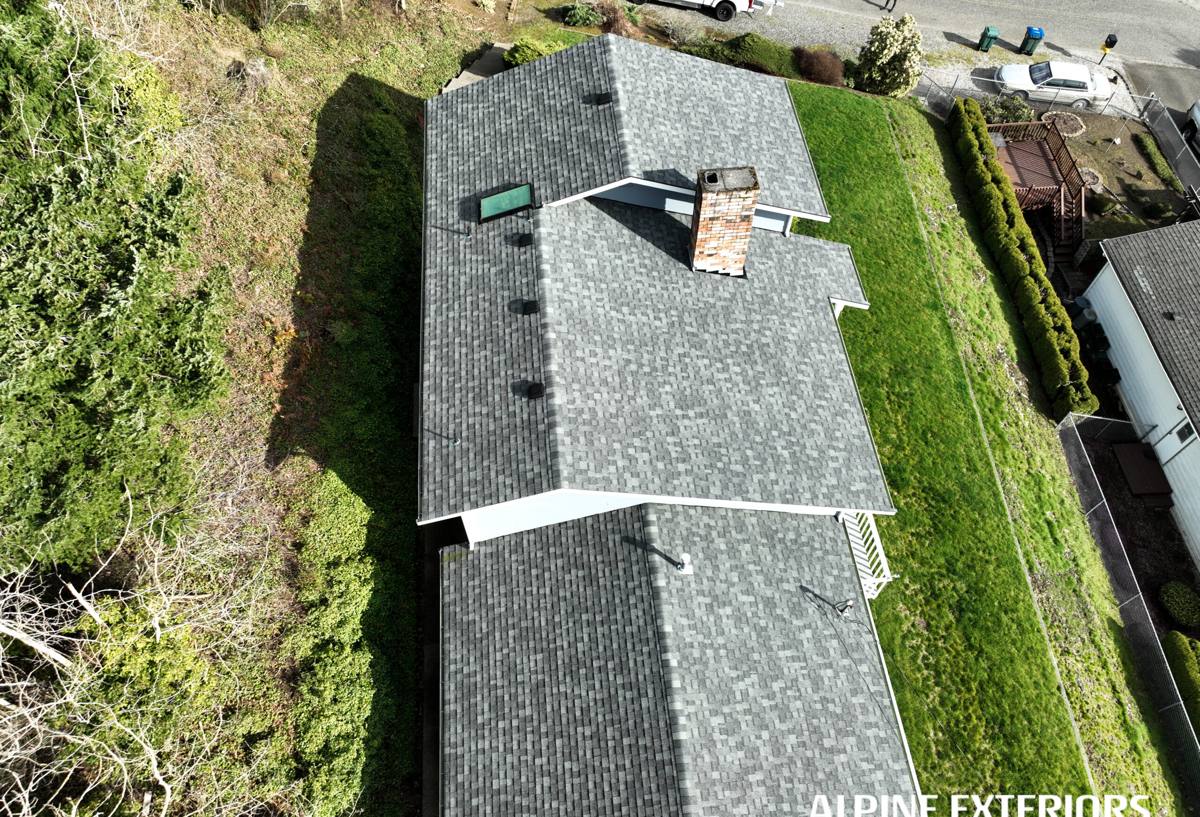
Most roof leaks in this area trace back to flashing, not the field shingles themselves. Chimneys, skylights, vent stacks, and any place a roof meets a wall are where a repair needs the most care, because these are the spots wind-driven rain and trapped moisture exploit first.
Moss Removal Done Without Damage
Moss has to come off without stripping granules or cracking shingles in the process — pressure washing a shingle roof does more harm than the moss itself. We remove it by hand or with low-pressure methods appropriate to the roofing material, then address the moisture and shade conditions that let it grow back.
Common Repair Issues We See Around Bow
| Issue | Typical Cause | Correct Fix |
|---|---|---|
| Leak near chimney or skylight | Failed or improperly lapped flashing | Remove and re-flash with correct step/counter-flashing, not just re-sealing |
| Granule loss and bald patches | Age, sun exposure, or moss holding moisture | Section replacement matched to existing shingle; moss treatment if that's the cause |
| Rust staining below vents or flashing | Salt-air corrosion of fasteners or metal | Replace corroded hardware and flashing with corrosion-resistant material |
| Interior water stains, no visible roof damage | Wind-driven rain entering through a lapped joint | Trace water path from attic side, reseal or rebuild the specific joint |
| Sagging or soft decking | Long-term moisture intrusion into sheathing | Replace affected decking, not just the roofing layer above it |
How Our Repair Process Works
1. On-Site Inspection
We walk the roof and check the attic when accessible, looking for the actual source of the problem rather than just the visible symptom.
2. Clear, Honest Estimate
You get a written explanation of what's actually wrong, what needs to happen to fix it correctly, and what it costs — no pressure to upgrade beyond what the roof actually needs.
3. The Repair Itself
We do the work with materials appropriate for this climate — corrosion-resistant fasteners, correctly lapped flashing, and shingle or material matching where possible.
4. Cleanup and Follow-Up
Debris and old material get hauled off, and we'll tell you honestly if the repair is a lasting fix or if it's buying time before a larger section or full replacement makes more sense.
Repair or Replace? Honest Cost Factors
Not every roof problem calls for a full replacement, but a repair isn't always the cheaper long-term choice either. These are the factors that actually determine which makes sense:
| Factor | Favors Repair | Favors Replacement |
|---|---|---|
| Age of roof | Well within expected lifespan | Near or past typical service life for the material |
| Extent of damage | Localized to one section or flashing point | Spread across multiple slopes or recurring in different spots |
| Decking condition | Sound, dry sheathing | Soft, delaminated, or repeatedly wet decking |
| Moss/moisture history | First occurrence, addressed early | Long-term trapped moisture with repeated regrowth |
| Material availability | Matching shingle or material still obtainable | Discontinued product, visible mismatch unavoidable |
Materials That Hold Up in This Climate
For repair sections, we favor materials and hardware rated for coastal exposure — stainless or coated fasteners instead of standard galvanized, and flashing metals chosen to avoid reacting with what's already on the roof. On asphalt shingle roofs, we match granule color and profile as closely as the original manufacturer's product allows. On metal or cedar roofing, repairs are done to the same standard the rest of the roof was built to, not a lower-cost shortcut that looks fine for a season and fails the next.
We're upfront when a cheaper patch is possible but not advisable — for example, sealant-only fixes over flashing that should be mechanically replaced. Sealant has its place, but relying on it alone in an area with this much wind-driven rain usually means calling us back out within a year.
Why a Crew That Already Works Bow Matters
Roof repair here isn't the same trade as roof repair in a dry inland climate. A crew that regularly works this coastline already knows which flashing details fail first in salt air, which roof orientations hold moss the longest, and how much overlap a valley actually needs to shed wind-driven rain rather than just vertical rainfall. That local experience shows up in fewer callbacks and repairs that are sized correctly the first time — not over-scoped, not under-built.
We're also familiar with the pace of weather windows here, which matters for scheduling repair work around storm systems rather than getting caught mid-repair when conditions turn.
If you're seeing signs of roof trouble in Bow — a leak, moss buildup, damaged flashing, or just a roof that's due for an honest look — we're happy to come take a look and give you a straightforward, no-pressure estimate. There's no cost or obligation to find out what's actually going on.