 Chuckanut Exterior
 Why Bow Homes Are Turning to Metal Roofing
Bow sits close enough to the water that homes here deal with a different set of roofing stresses than houses ten or fifteen miles inland. Salt-laden air moves in off the bay, rain comes sideways more often than straight down, and shaded, moisture-heavy lots grow moss on almost anything that holds still long enough. Asphalt shingle roofs in this pocket of Whatcom County tend to show their age early — granule loss from wind-driven rain, soft spots where moss has held water against the mat, and edges that lift after a few seasons of freeze-thaw cycling.
Metal roofing holds up differently. It sheds water fast instead of absorbing it, it doesn't give moss the organic surface it needs to root in the same way shingles do, and a correctly installed system can outlast two or three shingle roofs on the same house. That's the appeal for Bow homeowners: fewer moss treatments, fewer emergency repairs after a windstorm, and a roof that isn't fighting the local climate every year.
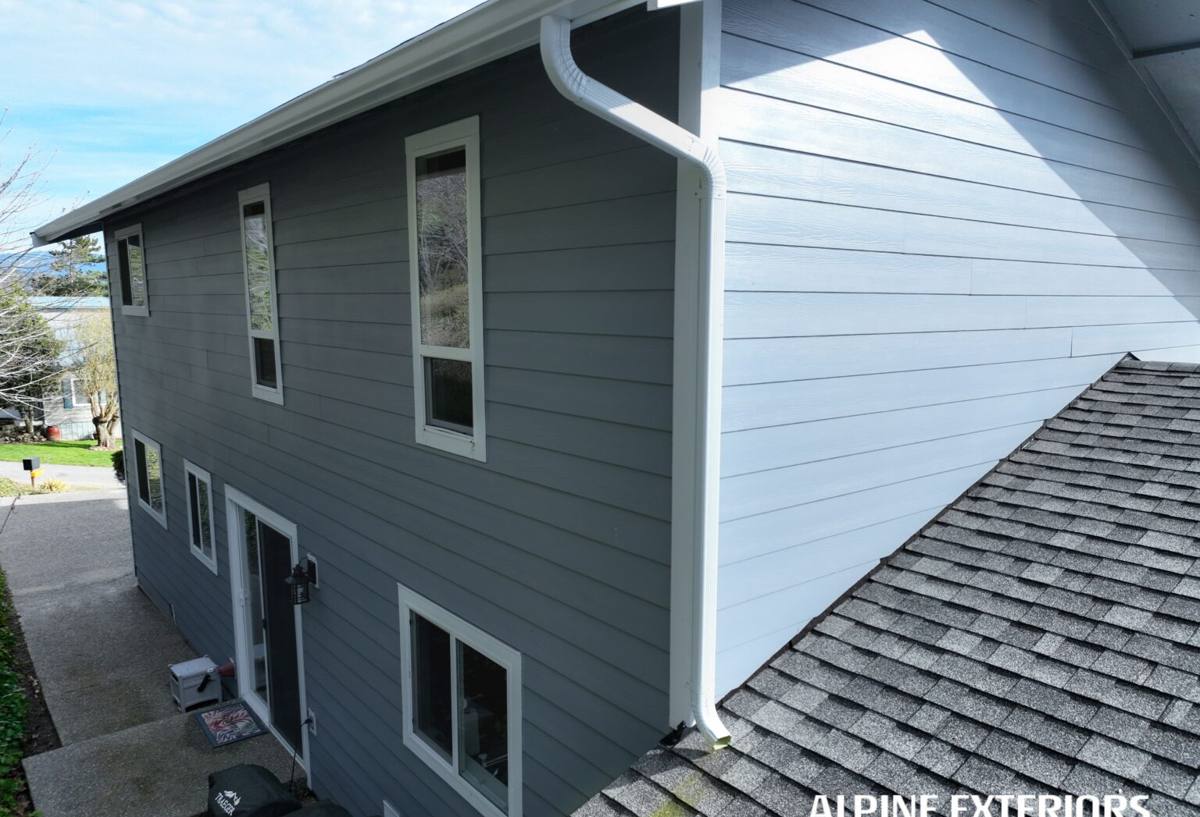
What Salt Air, Rain, and Moss Actually Do to a Roof Here
Salt Air and Corrosion
Airborne salt doesn't need to be dramatic to cause damage — a fine, near-constant exposure is enough to accelerate corrosion on unprotected metal fasteners, flashing, and cheaper coated panels over years. This is one of the biggest differences between a roofing job done for an inland home and one done for a house exposed to bay air: the fastener and flashing materials that are "fine" fifteen miles inland aren't always the right call in Bow.
Driving Rain
Rain that comes in at an angle finds every gap a straight-down rain would never reach — under-lapped flashing, exposed fastener heads, and seams that were never meant to see standing water. On a metal roof, the seam and fastener strategy matters more here than the panel material itself.
Moss and Shade
Long moss seasons aren't just cosmetic. Moss holds moisture against a roofing surface, and on shingles that moisture works its way under tabs over time. Metal doesn't give moss the same foothold, but valleys, low-slope sections, and shaded north faces still need to be detailed correctly or moss and organic debris will build up in the same spots year after year.
Panel Types, Gauges, and Coatings: What Holds Up on a Coastal Property
Not every metal roofing product performs the same way in a salt-air, high-moisture environment. The differences that matter most for a Bow home are seam type, metal gauge, and coating quality — not just "metal vs. shingle."
| Feature | Standing Seam (Concealed Fastener) | Exposed Fastener Panel |
|---|---|---|
| Fastener exposure | Hidden under seam, not penetrating the weather surface | Screws penetrate face of panel, sealed with washers |
| Long-term coastal performance | Fewer failure points in salt air; fastener washers aren't exposed to weathering | Washers degrade over time and are the most common source of leaks |
| Upfront cost | Higher | Lower |
| Best fit | Full roofs, homes closer to the water, longer ownership horizon | Outbuildings, shops, budget-driven projects |
| Expected maintenance | Minimal — periodic inspection | Washer/fastener checks every few years |
Coating quality is the other variable. A premium factory finish resists chalking and color fade far longer than an entry-level coating, which matters in a spot that gets a lot of both sun exposure in summer and constant moisture the rest of the year. We'll walk through the specific coating and gauge options that make sense for your roof's exposure and budget during the estimate rather than pushing one product for every house.
What a Correct Metal Roof Installation Involves
Metal roofing fails early almost exclusively because of installation shortcuts, not because the material itself was wrong for the job. On a home exposed to driving rain and salt air, these details aren't optional extras — they're the difference between a 40-plus year roof and one that leaks in five.
- Underlayment: A synthetic, high-temp underlayment (not felt) rated for the ventilation gap under metal panels
- Fastener compatibility: Fasteners and flashing metals matched to the panel material to avoid galvanic corrosion — a bigger issue near salt air than inland
- Flashing at every transition: Valleys, sidewalls, chimneys, and roof-to-wall junctions detailed individually, not covered with sealant as a substitute for proper flashing
- Panel overlap and seam direction: Set to shed wind-driven rain based on your roof's actual prevailing exposure, not just standard slope assumptions
- Ventilation: Ridge and soffit ventilation sized correctly so moisture doesn't get trapped under the panels themselves
- Expansion allowance: Metal roofs move with temperature swings — clips and fastener spacing need to allow for that movement without stressing seams
Skipping any one of these is usually invisible for the first year or two. It shows up later, often as a leak that's expensive to trace because the failure point is hidden under a panel rather than sitting on the surface.
Our Process, Start to Finish
1. On-Site Assessment
We look at your existing roof deck, current flashing conditions, ventilation, and how exposed the home is to wind and salt air off the water. This tells us which panel type and gauge actually make sense — we don't quote the same system for every house in Bow.
2. Straightforward Proposal
You get a written scope covering panel type, underlayment, flashing plan, and a real timeline — no vague allowances that turn into change orders mid-project.
3. Tear-Off and Deck Check
We remove the existing roofing and inspect the deck for rot or soft spots before anything new goes down. Moisture-damaged sheathing gets replaced, not covered over.
4. Installation
Underlayment, flashing, and panels go in with the fastener and sealing details above — done in the sequence that keeps your home weather-tight even if we get a rain delay mid-project, which happens here more often than we'd like.
5. Final Walkthrough
We go over the finished roof with you, confirm ventilation and flashing details, and make sure you know what little maintenance the system needs going forward.
Keeping a Metal Roof Performing for Decades
Metal roofing is low-maintenance compared to shingles, but "low" isn't "none," especially in a climate that throws salt air, rain, and moss at it year-round.
- Clear debris from valleys and low-slope sections once or twice a year — organic buildup holds moisture even against metal
- Rinse off salt residue and grime periodically if the home is close to the water
- Check exposed fasteners (if you have an exposed-fastener system) every couple of years for washer wear
- Keep gutters clear so water isn't backing up under drip edges
- Trim back overhanging branches that shade the roof and extend the moss season in that spot
- Have flashing points inspected after any major windstorm
What Metal Roofing Costs in Bow — Factors That Matter
We won't quote a number without seeing the roof, but the factors that move the price on a metal roofing project here are consistent:
| Cost Factor | Why It Matters |
|---|---|
| Panel type (standing seam vs. exposed fastener) | Concealed-fastener systems run higher upfront but lower long-term maintenance in salt air |
| Roof complexity | Valleys, dormers, and multiple roof planes mean more flashing labor |
| Deck condition | Rot or soft sheathing found during tear-off adds repair cost before panels go on |
| Coating grade | Higher-grade coatings cost more but resist fade and chalking longer under coastal sun and moisture |
| Access and pitch | Steeper or harder-to-access roofs take longer to install safely |
Metal roofing typically costs more upfront than asphalt shingles. The trade-off is a system that isn't fighting moss, salt corrosion, and wind-driven rain the way a shingle roof does in this specific climate — which is why so many homeowners in this area treat it as a long-term investment rather than a like-for-like swap.
Why Local Experience in Bow Matters
A crew that mostly works inland jobs doesn't always think about galvanic corrosion between dissimilar metals, or how much harder driving rain hits a specific roof orientation near open water. Working regularly in Bow and along the Chuckanut coastline means we've already seen how salt air, moss, and wind-driven rain interact with different roofing systems here — not in a manual, but on actual roofs in this specific stretch of Whatcom County. That shows up in the small decisions: which flashing metal we pair with which panel, where we add extra ventilation, and which details we won't skip even if they add a little time to the job.
If you're weighing a metal roof for your Bow home, we're happy to take a look and give you a straightforward, no-pressure estimate — including whether metal is actually the right call for your specific roof, or whether a different approach makes more sense. Use the form below to get started.