 Chuckanut Exterior
 Board & Batten in Edison: A Style That Has to Earn Its Keep
Board and batten has always suited the small farmhouses, barns, and waterfront cottages scattered around Edison and the Chuckanut lowlands. The wide vertical boards and narrow battens covering the seams give a home a clean, upright look that fits the area's working-farm-and-fishing-village character better than a lot of modern siding profiles. It photographs well, it reads as "built to last," and it doesn't try too hard.
The problem is that a lot of board and batten siding installed in this region doesn't actually last. The style survives; the material underneath it often doesn't. Vertical siding, by its nature, has more seams running up and down the wall than horizontal lap siding, and every one of those seams is a place where wind-driven rain wants to get behind the boards. In a spot like Edison, sitting close to Samish Bay with open exposure to weather rolling off the water, that detail matters more than it would ten miles inland.
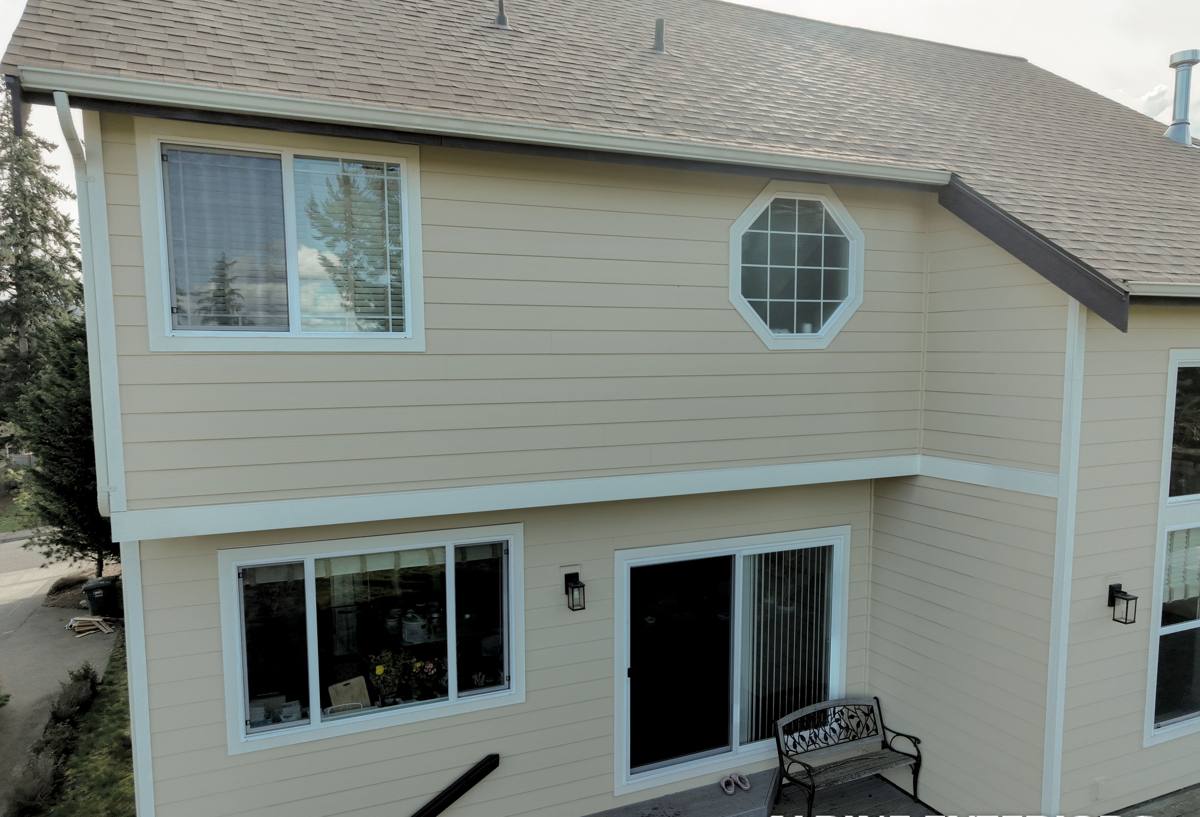
What Edison's Climate Actually Does to Vertical Siding
Homes in this part of Whatcom County deal with three things at once, and board and batten siding is affected by all of them:
Salt air off the bay
Airborne salt accelerates corrosion on exposed fasteners and metal trim, and it degrades cheaper paint films faster than inland exposure does. Nail heads that aren't properly countersunk and caulked, or trim coil that isn't rated for coastal exposure, show rust streaks and pitting years before a homeowner expects it.
Driving, wind-blown rain
Storms coming off the Sound and Samish Bay rarely fall straight down. They come in sideways, which means the battens and the vertical joints beneath them take the brunt of it. If the boards aren't installed with a drainage gap and correct overlap, water gets pushed up under the batten instead of running down and off the wall.
A long moss and mildew season
Chuckanut's tree cover, shade, and near-constant damp keep north-facing and shaded walls wet for long stretches of the year. Moss and algae take hold quickest on porous or absorbent siding materials, and once established they hold moisture against the wall surface, which speeds up rot and finish failure underneath.
None of this is unique to Edison, but the combination — salt exposure plus heavy driving rain plus extended damp shade — is a tougher test than most inland Whatcom County neighborhoods face. A board and batten job that would hold up fine in a drier, more sheltered location can fail early here if it isn't built for this specific exposure.
Why We Only Install James Hardie Board & Batten
We get asked fairly often about vinyl board and batten panels, LP SmartSide vertical panels, or real cedar boards, since all three are available and all three can be made to look the part. We don't install any of them, and we think homeowners deserve the honest reasons why, not just a sales pitch for what we do sell.
Vinyl board and batten
Vinyl is inexpensive and low-maintenance in the sense that it doesn't need paint, but it's a poor match for this climate. It expands and contracts significantly with temperature swings, which stresses the fastening and can telegraph waviness over time, and it's a petroleum product that becomes brittle in cold snaps and can crack on impact. In driving rain it also relies heavily on a rear water-management system that's easy to install wrong and hard to inspect once it's up.
LP SmartSide vertical panels
LP SmartSide is engineered wood — real wood strand product bonded with resin. It's a genuine step up from raw lumber, but wood strand still absorbs moisture at cut edges and fastener penetrations, and edge sealing has to be done correctly and maintained. In a location with this much sustained dampness and moss growth, any lapse in that maintenance shows up as edge swelling faster than we're comfortable standing behind.
Cedar or primed spruce boards
Real wood board and batten is the traditional choice and it can look beautiful, but it's the most maintenance-intensive option by a wide margin. Wood needs regular refinishing, is the most attractive material to moisture and moss in a shaded, damp environment, and is a combustible material. Given how many Edison-area properties sit close to trees and brush, that's a real consideration.
James Hardie fiber cement gives us a board and batten look that is non-combustible, dimensionally stable across our temperature swings, and engineered specifically for wet marine climates through its HZ5 product line. It doesn't rot, it resists moss and mildew far better than wood or wood-composite products, and the factory-applied ColorPlus finish is baked on under controlled conditions rather than field-applied, which means better adhesion and color hold against sun, salt, and damp than a job-site paint job.
Board & Batten Material Comparison for This Climate
| Material | Moisture behavior here | Moss/mildew resistance | Maintenance |
|---|---|---|---|
| James Hardie fiber cement | Dimensionally stable, engineered for marine exposure | Strong, factory finish sheds growth | Occasional wash; no repainting for many years |
| Vinyl | Prone to warping/cracking with temperature swings | Fair, but grime and moss cling in profile grooves | Low, but panels aren't repairable if damaged |
| LP SmartSide | Edge and fastener points vulnerable if seals lapse | Moderate, needs intact factory coating | Edge sealing/paint maintenance over time |
| Cedar/primed spruce | Absorbs moisture readily in shaded, damp exposure | Weakest; requires active upkeep | Highest — regular refinishing and inspection |
What a Correct Board & Batten Installation Involves
The material is only half the equation. Most board and batten failures we've been called out to inspect around Whatcom County trace back to installation shortcuts, not the siding itself. On a proper job we're doing all of the following:
- A drainage plane and rainscreen gap behind the panels so water that gets past the surface can drain and dry instead of sitting against the wall sheathing
- Correct board and batten overlap and fastening pattern so battens aren't just decorative — they're actually shedding water at every seam
- Stainless or coated fasteners appropriate for coastal salt exposure, set and sealed to manufacturer spec
- Proper flashing at every window, door, and horizontal trim transition, since these are the spots where driving rain finds a way in
- Factory-cut and factory-primed panel edges wherever possible, minimizing field cuts that expose raw material to weather
- Correct clearance at grade and at roof lines so the siding isn't sitting in standing water or constant roof runoff
Skip any one of these and you can end up with siding that looks right for a season or two before problems start showing at the seams — which, on board and batten, are exactly where a homeowner's eye lands first.
Our Process for an Edison Board & Batten Project
We keep the process straightforward and give homeowners a clear picture before any work starts:
- On-site walkthrough of the home's current siding, trim, and problem areas, with particular attention to shaded walls and any existing moss or moisture staining
- Written scope covering water management details, not just the visible siding — what's happening behind the panels matters more here than the finish color
- James Hardie product and color selection, including HZ5 panel specification suited to this exposure
- Installation following manufacturer fastening and flashing requirements, with rainscreen detailing built in rather than treated as optional
- Final walkthrough covering care, cleaning, and what to watch for seasonally
Caring for Board & Batten Siding in This Climate
Fiber cement cuts the maintenance burden significantly compared to wood or wood-composite, but "low maintenance" isn't "no maintenance," especially with Edison's shade and moss exposure. A simple seasonal routine goes a long way:
- Rinse shaded and north-facing walls once or twice a year to knock back early moss and algae growth before it establishes
- Keep gutters clear so overflow isn't running down the wall face during heavy storms
- Trim back brush and tree limbs holding moisture and shade against any one wall section
- Have caulking at trim and penetrations checked periodically, since even the best sealant has a service life in this much weather cycling
Why a Crew That Already Works Edison Matters
Board and batten detailing that works fine in a drier part of the state can fall short here, and a crew that hasn't spent time on Chuckanut-area homes may not adjust for it. Knowing which walls in this neighborhood take the worst of the driving rain, how much shade a given lot actually holds through the year, and how salt exposure behaves this close to the bay changes real decisions on the job — fastener choice, flashing detail, even which walls get extra attention at the drainage plane. That local pattern recognition is built from doing the work here repeatedly, not from a general specification sheet.
If you're weighing board and batten siding for a home in or around Edison, we're happy to walk the property, look at your current siding and trim condition, and put together a straightforward, no-pressure estimate. There's no obligation — just a clear look at what your home actually needs.