 Chuckanut Exterior
 Roofing Built for a Wet, Salty Corner of Whatcom County
Bow sits close enough to the water that homes here deal with a different mix of weather than roofs twenty miles inland. Salt-laden air, wind-driven rain that gets pushed sideways under poorly lapped shingles, and a moss season that can run eight or nine months a year all add up to faster wear on an asphalt shingle roof than the shingle's own warranty label assumes. Our asphalt shingle roofing work is built around what actually happens to a roof in this part of Whatcom County, not around a generic install pulled off a national spec sheet.
This page covers what an asphalt shingle roof needs to hold up in Bow, what a correct installation actually involves, how our process runs from first look to final walk-through, and why it matters to hire a crew that already works this stretch of coastline instead of one that mostly sees drier, inland roofs.
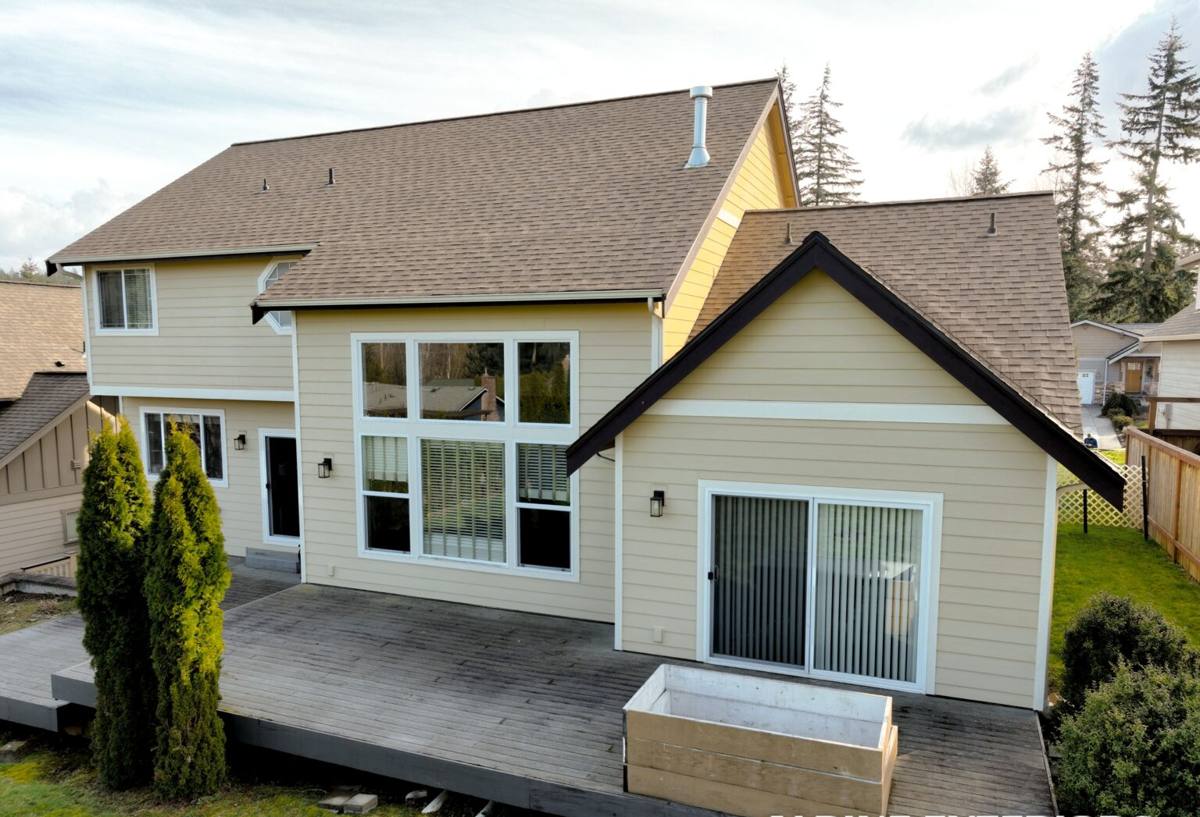
What the Local Climate Actually Does to a Shingle Roof
Salt Air and Metal Fatigue
Asphalt shingles themselves tolerate salt air reasonably well, but the metal components tied into the roof system do not age at the same rate. Nails, flashing, drip edge, and vent housings corrode faster this close to open water. A roof that looks fine from the ground can have flashing that's quietly thinning out underneath — and that's usually where leaks actually start, not through the shingle field itself.
Driving Rain and Wind-Driven Water
Rain in this area doesn't always fall straight down. Storms coming off the water push rain sideways, which forces water up and under shingle tabs, into nail penetrations, and along valleys and eaves that were never detailed for that kind of pressure. A roof that would perform fine in a calmer inland climate can still leak here if the underlayment and flashing weren't upgraded for wind-driven exposure.
Moss, Shade, and Moisture That Never Fully Dries
Bow sees long stretches of overcast, damp weather, and a lot of the surrounding lots carry heavy tree cover. That combination means roof surfaces — especially north-facing slopes and anything shaded by trees — can stay damp for days after a storm passes. Moss and algae take hold in that moisture, and once established, moss holds even more water against the shingle mat, lifts tabs at the edges, and shortens the life of everything underneath it.
What a Correct Asphalt Shingle Roof Looks Like Here
Underlayment and Water-Shedding Details
Code-minimum felt underlayment is not what we put down on a roof exposed to driving rain. We run synthetic underlayment across the field for better tear resistance and water-shedding, with self-adhered ice-and-water membrane at eaves, valleys, and around every penetration — the spots where wind-driven water actually finds its way in. Starter strips get set correctly at eaves and rakes so the first course has full adhesive contact instead of relying on gravity alone.
Flashing Built for Corrosion, Not Just Code Minimum
Step flashing at every wall intersection, proper counter-flashing, and continuous drip edge along both eaves and rakes matter more here than in drier climates because salt air shortens the working life of thin or poorly coated metal. We use flashing material and fasteners chosen to hold up against that exposure, not just whatever meets the minimum inspection standard.
Ventilation That Keeps Moisture Moving
A roof deck that can't breathe traps moisture underneath the shingles, which speeds up rot and gives moss an extra source of dampness from below as well as above. Balanced intake and exhaust ventilation — enough low-vent intake at the eaves matched to enough high-point exhaust — keeps air moving through the attic and helps the deck and shingles dry out between storms instead of staying damp for days.
Shingle Selection and Nailing
We install shingles with algae-resistant granules (copper or zinc-infused) as standard on homes in this area, because standard granules will streak and stain faster under Bow's damp, shaded conditions. Every shingle is nailed per the manufacturer's wind and warranty specification — not gun-and-go — since under-nailing is one of the most common causes of blow-offs during winter storms.
Our Process for a Bow Asphalt Shingle Roof
We keep the process straightforward and communicate at each step, since a roof replacement is disruptive enough without surprises.
- On-site inspection. We walk the roof (or use a drone where pitch or access makes that safer) and check the attic from inside, looking at ventilation, decking condition, and existing moisture damage.
- Written scope and estimate. You get a clear breakdown of materials, underlayment and flashing details, and total cost before any work starts — no vague allowances.
- Tear-off and deck inspection. Old roofing comes off down to the deck so we can actually see the sheathing condition, not guess at it. Any soft or rotted decking is flagged and repaired before anything goes back down.
- Underlayment, ice-and-water membrane, and flashing. Installed per the details above, with extra attention at valleys, chimneys, skylights, and wall intersections.
- Shingle installation. Installed to manufacturer nailing and exposure specs, with algae-resistant shingles as our standard recommendation for this climate.
- Ventilation check and correction. If intake or exhaust is undersized or blocked, we address it as part of the job rather than leaving it as a pre-existing problem.
- Cleanup and magnetic sweep. Full tear-off debris and stray nails removed from the yard and driveway before we leave.
- Final walk-through. We review the finished roof with you and go over care and warranty paperwork.
Choosing the Right Shingle for This Climate
Not every asphalt shingle product performs the same way under constant damp and salt exposure. The table below compares the main categories we install and how each one holds up in Bow's conditions.
| Shingle Type | Typical Lifespan Here | Moss & Algae Resistance | Wind Rating | Best Fit |
|---|---|---|---|---|
| 3-Tab (standard granules) | 15–20 years | Low unless treated separately | Lower wind rating | Budget-driven projects, low-slope exposure |
| Architectural / Dimensional | 25–30 years | Moderate; better with algae-resistant granules | Higher wind rating, better wind warranty | Most Bow homes — best balance of durability and cost |
| Premium Algae-Resistant Architectural | 30+ years | High — copper/zinc granules actively resist growth | Highest wind rating in the asphalt category | Shaded lots, north-facing roofs, homes with heavy moss history |
For most homes in Bow, we steer people toward architectural shingles with algae-resistant granules — the upfront cost difference is modest compared to the years of added life and the reduced moss maintenance over time.
Signs Your Roof Needs Attention
Because moss and salt-air corrosion work slowly, a lot of roof problems here get missed until they show up as an active leak. Watch for:
- Granules collecting in gutters or at the base of downspouts
- Visible moss growth, especially on north-facing or shaded slopes
- Shingle tabs that are curling, cupping, or lifting at the edges
- Dark streaking across the roof field (algae staining)
- Rusted or visibly corroded flashing, vent boots, or drip edge
- Daylight visible through the roof deck when viewed from the attic
- Soft or spongy spots on the decking, felt through the shingles
- Nail pops or exposed nail heads along shingle courses
- Water stains on interior ceilings, especially after wind-driven storms
Any one of these on its own isn't necessarily an emergency, but they're worth a professional look before the next major storm rolls in off the water.
Maintenance That Actually Extends Roof Life Here
Given the moss and moisture load in this area, a shingle roof in Bow needs a bit more upkeep than the same roof would inland. A few habits make a real difference:
Moss Control Done the Right Way
Zinc or copper strips installed near the ridge let rain carry a low-level moss inhibitor down the roof over time, which is far gentler on the shingle mat than reactive cleaning. When moss has already established, we treat and remove it with low-pressure methods — never power washing, which strips granules and shortens shingle life faster than the moss itself would.
Gutter and Valley Clearing
Fir and cedar needles combined with moss debris clog gutters and valleys faster here than in drier areas, and a clogged valley is one of the more common causes of a slow, hard-to-trace leak. Clearing debris once or twice a year, timed around the fall needle drop, keeps water moving off the roof the way it's supposed to.
Annual Inspection After Storm Season
A short inspection each year — ideally after the roughest winter storms have passed — catches lifted flashing, loosened shingles, or early moss regrowth while it's still a small fix rather than a full repair.
Why a Crew That Already Works Bow Matters
A roofing crew that mostly works drier, inland jobs can still install a technically code-compliant roof — but code minimum and a roof built for this specific coastline aren't the same thing. Working in and around the Chuckanut area day to day means we already know which slopes tend to hold moss longest, which flashing details actually stand up to salt air over the long run, and how local permitting and inspection works with Whatcom County. That local familiarity shows up less in what a roof looks like on install day and more in how it's still performing five, ten, and twenty years out.
It also matters for response time. When a wind-driven storm loosens flashing or knocks a limb into a roof, having a crew nearby that already knows your roof's history means a faster, more informed repair instead of starting from zero with an unfamiliar contractor.
Get a Straightforward Roof Estimate
If your roof is showing moss, granule loss, or you just want an honest read on how much life it has left, we're happy to take a look. The estimate is free, there's no pressure, and you'll get a plain-English explanation of what we see and what it would take to fix it — use the form below to get started.