 Chuckanut Exterior
 Windows in Mount Vernon Have to Work Harder
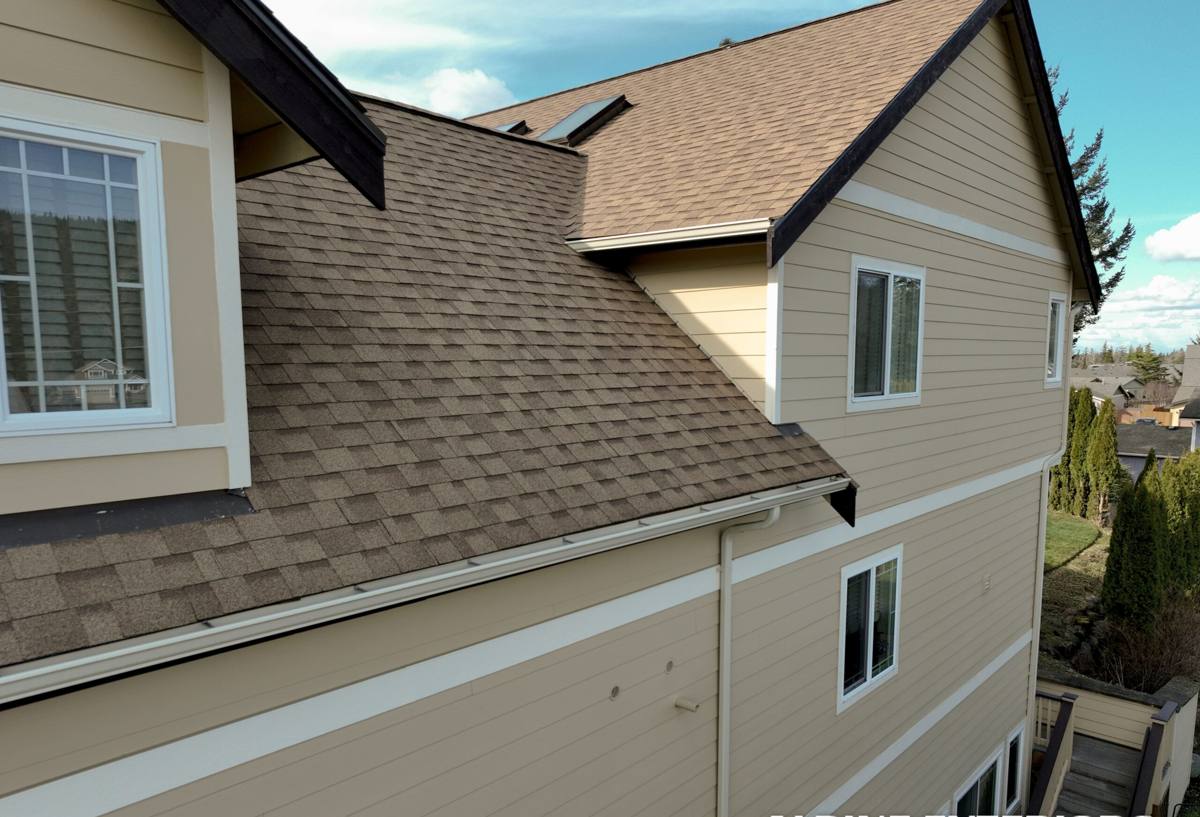
Every window on a house is a planned hole in the building envelope. That's fine as long as the window and the flashing around it are doing their job — but out here, that job is tougher than it is in drier parts of the country. Homes in and around Mount Vernon deal with salt-laden air moving off the water, long stretches of driving rain, and a moss season that seems to start earlier and last longer every year. None of that is dramatic on its own. It's the constant, low-grade exposure that wears down window seals, frames, and the surrounding trim over years, not days.
A window that's a little off — undersized flashing, a bad caulk line, a sill pan that was skipped to save time — won't fail on day one. It'll fail quietly, two or three winters later, when water starts finding its way behind the trim and into the wall cavity. By then it's not a window problem anymore, it's a rot problem. That's why we treat window installation as a water-management job first and a glass-and-frame job second.
What the Local Climate Actually Does to Windows
Salt Air
Airborne salt accelerates corrosion on hardware, screws, and any exposed metal flashing that isn't rated for it. It also breaks down cheaper vinyl and finishes faster than inland exposure would. This doesn't mean every window needs to be marine-grade, but it does mean fastener choice and flashing material matter more here than they would fifty miles inland.
Driving Rain
Wind-driven rain doesn't just fall on a window, it gets pushed sideways and upward into gaps that vertical rain would never reach. This is the single biggest reason we see leaks around window openings — not because the window itself failed, but because the installation wasn't detailed to handle rain coming in at an angle.
Moss and Sustained Dampness
A long moss season means more months where wood trim, sills, and siding around a window stay damp longer than they should. Moss and algae hold moisture against the surface, and if there's already a small gap or crack from age or poor installation, that dampness has a direct path inward. Sills and lower window trim are usually where we find the first real damage on an older home.
Signs a Window Needs Attention
- Fogging or condensation between the panes of a double-pane window — the seal has failed
- Soft or spongy trim or sill wood when you press on it
- Drafts you can feel with your hand near the frame on a windy day
- Paint that's peeling or bubbling specifically around the window, not the whole wall
- Windows that are hard to open, close, or lock — frames can shift as wood swells and dries
- Visible gaps between the window frame and the siding or trim
- A musty smell near a window that isn't explained by anything else in the room
Any one of these on its own might just mean the window is aging normally. Two or more together, especially soft wood plus a visible gap, usually means water has already gotten past the original installation.
What a Correct Installation Actually Involves
Swapping a window sounds simple — pull the old one, set the new one, caulk the edges. Done that way, it's the fastest route to a callback in two or three years. A correct installation has several steps that don't show once the trim is back on, but they're the whole reason the window lasts:
- Remove the old unit and inspect the rough opening. This is where hidden rot or old water damage gets found. If the sheathing or framing underneath is compromised, it gets addressed before anything new goes in — installing a new window into a damaged opening just hides the problem.
- Install a sloped sill pan. This gives any water that does get past the window a way to drain back outward instead of sitting on the sill or soaking into the framing.
- Flash in the correct order. Sill, then jambs, then head flashing, layered so each piece overlaps the one below it — like shingles. Get this order backward and you've built a funnel instead of a barrier.
- Set the window plumb, level, and square, then shim and fasten per the manufacturer's instructions. A window that's slightly out of square will bind, won't seal evenly, and will stress the frame over time.
- Seal and insulate the gap between the frame and the rough opening without over-packing it, which can bow the frame inward.
- Weatherproof the exterior with the right sealant for the siding material, and finish trim so water is directed away from the opening, not toward it.
Every one of those steps takes a little more time than the shortcut version. That time is what separates a window that's still tight in fifteen years from one that's leaking behind the wall in three.
Our Process
We keep the process straightforward because most of the value is in the details, not the sales pitch.
1. On-Site Assessment
We look at the existing windows, the condition of the openings, and the exposure of each wall — a window on the weather side of a house takes more punishment than one on a sheltered side, and that affects what we recommend.
2. Straight Answers on Options
We'll walk through frame materials, glass packages, and what actually makes sense for your home's exposure and budget. If a premium option isn't worth the cost for a particular wall or room, we'll say so.
3. Careful Removal and Opening Prep
Old windows come out carefully so we can properly inspect and, if needed, repair the rough opening before anything new goes in.
4. Installation to Manufacturer Spec
Sill pan, flashing sequence, shimming, fastening, and sealing — done in the order that keeps water moving out, not in.
5. Final Check
We test operation, check the seal from inside and out, and walk the finished work with you before we call it done.
Choosing a Frame Material
There's no single "best" window material — the right choice depends on exposure, maintenance appetite, and budget. Here's how the common options stack up for this climate specifically:
| Material | Moisture Resistance | Maintenance | Typical Lifespan |
|---|---|---|---|
| Vinyl | Good — won't rot, some UV/salt wear over decades | Low | 20-30 years |
| Fiberglass | Very good — dimensionally stable, holds up well to weather cycling | Low | 30-40 years |
| Wood | Requires diligent upkeep in wet, salt-air climates | High | Varies widely with maintenance |
| Wood-Clad (wood interior, metal/vinyl exterior) | Good, if exterior cladding and flashing are done right | Moderate | 25-35 years |
| Aluminum | Prone to condensation and corrosion in salt air unless thermally broken | Low-Moderate | 20-30 years |
For most Mount Vernon homes exposed to salt air and driving rain, we lean toward vinyl or fiberglass for the best balance of moisture performance and low upkeep. Wood and wood-clad windows can still be the right call for a specific look or a historic home, but they come with a real maintenance commitment we'll be honest about upfront.
What Drives Cost
| Factor | Why It Matters |
|---|---|
| Frame material | Vinyl is typically the most budget-friendly; fiberglass and wood-clad cost more upfront but can last longer |
| Glass package | Double vs. triple pane, and low-E coatings, affect both price and energy performance |
| Opening condition | Rot or framing repair found during removal adds cost, but skipping it costs far more later |
| Wall exposure | Weather-facing walls may warrant a more robust flashing detail or upgraded sealant |
| Number of openings | Whole-house replacement generally has a lower per-window cost than one-off replacements |
| Trim and finish work | Matching existing trim profiles or repainting adds labor beyond the window unit itself |
We don't quote off a phone call for this reason — actual cost depends on what we find at the opening, not just the window itself. Estimates are free and we'll explain exactly what's driving the number.
Why a Crew That Already Works This Area Matters
Window installation isn't exotic work, but doing it right in a climate like this means understanding how salt air, wind-driven rain, and prolonged dampness actually behave against a building over time — not just in a manual, but on real houses in this area. A crew that regularly works Mount Vernon and the surrounding Chuckanut area has already seen which details matter most locally: where moss tends to build up on sills, which wall orientations take the worst of the driving rain, and what condition older flashing tends to be in when it finally gets opened up. That local pattern recognition doesn't replace following manufacturer specs — it's what tells us where to pay extra attention within those specs.
There's also a practical side to hiring local: warranty follow-up, a caulking touch-up in year three, or a question about how a window is holding up is a lot easier to resolve with a crew that's a short drive away and still around, rather than one that moved on to another region.
Maintenance That Extends the Life of a New Installation
- Rinse salt residue off frames and glass periodically, especially on wind-exposed walls
- Keep gutters and downspouts clear so runoff isn't cascading directly onto window heads
- Remove moss or algae buildup on sills and surrounding trim before it holds moisture against the surface
- Check caulk lines once a year, especially after a hard winter, and touch up any that have cracked or pulled away
- Test that windows still open, close, and lock smoothly — binding can signal frame movement worth a look
- Keep an eye on interior sills and trim for any soft spots or discoloration
None of this takes long, and catching a small issue during a spring check is a lot cheaper than finding rot during a fall storm.
Get a Straight Answer for Your Home
If your windows are original to the house, fogging between panes, or just feel drafty and hard to operate, it's worth having someone take a real look rather than guessing from the street. We'll assess the condition of your existing openings, give you honest options for materials and glass, and explain exactly what a correct installation involves for your home's exposure. Reach out through the form below for a free, no-pressure estimate.