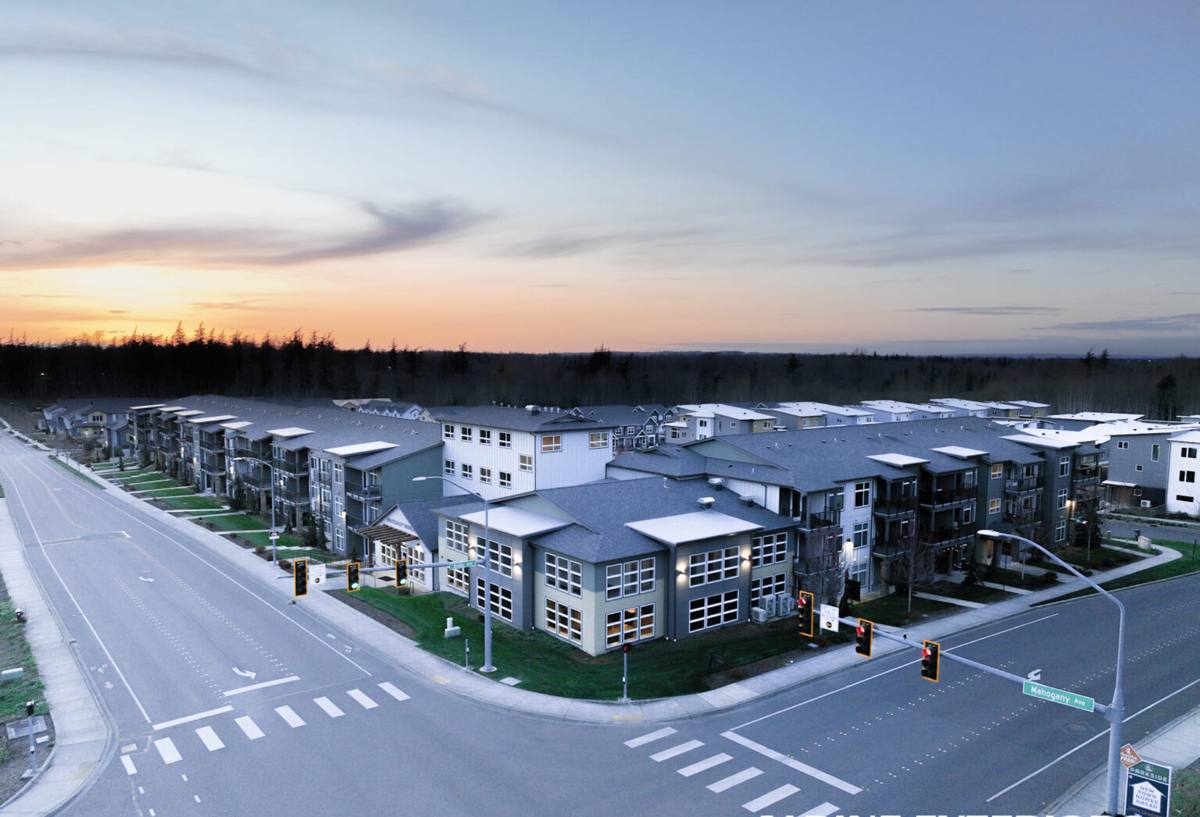
 Chuckanut Exterior
 Roofing in Happy Valley: A Different Set of Demands
Happy Valley homes sit in a corner of Whatcom County that takes a steady beating from the elements. You've got salt-laden air drifting in off the water, long stretches of driving rain through fall and winter, and a moss season that can run nearly year-round in the shaded, damp pockets common to this area. None of that is unusual for western Washington, but it does mean a roof here has to work harder than a roof in a drier, inland climate. A new roof installation that doesn't account for these conditions from the start will show problems within a few years, not a few decades.
When we install a new roof for a Happy Valley homeowner, we're not just replacing worn material with new material. We're building a system — decking, underlayment, flashing, ventilation, and the roofing surface itself — that's matched to what this specific location throws at it.
What Salt Air, Rain, and Moss Actually Do to a Roof
Salt Air
Airborne salt accelerates corrosion on any exposed metal — flashing, fasteners, vent caps, gutter hardware. Over time, standard-grade metal components pit, rust, and lose their seal integrity, which is how water finds its way under the roofing material long before the shingles or panels themselves are worn out.
Driving Rain
Wind-driven rain doesn't fall straight down — it pushes sideways and works its way under laps, around penetrations, and into any gap that a calmer climate's roofing techniques might get away with ignoring. Underlayment quality and flashing detail matter more here than in places with lighter, more vertical rainfall.
Moss
Moss thrives in the shaded, moisture-retentive conditions common on north-facing slopes and tree-covered lots throughout Happy Valley. It's not just cosmetic — moss holds water against the roofing surface, works into shingle laps and seams, and can lift edges over time, giving water a path underneath. Roofs installed without moss-resistant details or proper airflow tend to need moss treatment or premature repair within a handful of years.
What a Correct New Roof Installation Involves
A roof replacement is more than stripping old material and nailing down new. Done right, it includes:
- Full tear-off to bare decking, not a layover on top of existing material
- Decking inspection and repair — soft, water-damaged, or rotted sheathing gets replaced, not covered up
- A synthetic or high-quality felt underlayment rated for the exposure the roof will see
- Self-adhered ice-and-water membrane at eaves, valleys, and other vulnerable transitions
- Corrosion-resistant flashing at every penetration, wall intersection, and valley
- Balanced intake and exhaust ventilation sized to the attic space
- Fasteners and hardware rated for coastal or high-moisture exposure
- A final walk-through covering the roof surface, gutters, and any flashing tie-ins
Skip any one of these steps and you're not saving money — you're just moving the cost of a future repair further down the road, usually with interior damage attached by the time it surfaces.
Choosing a Roofing Material for Happy Valley Conditions
There's no single "best" roofing material for every home — the right choice depends on your roof's slope, sun and shade exposure, budget, and how the home is used. Here's how the common options stack up against Happy Valley's specific conditions:
| Material | Moss Resistance | Salt Air / Corrosion | Typical Lifespan | Maintenance |
|---|---|---|---|---|
| Asphalt Composition Shingle | Moderate (better with algae-resistant granules) | Good with corrosion-resistant flashing and fasteners | 20-30 years | Periodic moss treatment on shaded slopes |
| Standing Seam Metal | Very good — sheds moisture, little for moss to grip | Requires marine-grade or coated fasteners near the water | 40-60 years | Low; occasional fastener and seam check |
| Synthetic/Composite Shingle | Good — resists moisture absorption | Good, non-corrosive material | 30-50 years | Low to moderate |
| Wood Shake | Poor without diligent upkeep — retains moisture | Fair | 20-30 years with maintenance | High — regular treatment and moss removal needed |
For most Happy Valley homes, we steer people toward asphalt shingle with algae-resistant granules or a metal roofing system, depending on budget and the look they're after. Wood shake can work, but we're upfront that it demands more ongoing attention in a climate this wet — that's a maintenance conversation, not a knock on the material itself.
Ventilation: The Part Homeowners Rarely See
Attic ventilation doesn't get much attention because it's invisible once the roof is on, but it's one of the biggest factors in how long a roof lasts in a damp climate. Without balanced intake (usually at the eaves) and exhaust (at or near the ridge), moisture-laden air gets trapped in the attic. That trapped moisture condenses on the underside of the decking, which rots sheathing from the inside and creates the kind of damp, dark environment that encourages mold and accelerates shingle failure from below — even while the roof looks fine from the street.
When we install a new roof, we size and balance ventilation to the actual attic, not a generic estimate. On older Happy Valley homes, this is often the single most impactful upgrade we make during a re-roof, even though it's not the part anyone notices when they drive by.
Our Installation Process
- On-site assessment — we inspect the existing roof, decking condition, ventilation, and flashing details, and walk you through what we find
- Written estimate — clear scope, materials, and pricing, no vague allowances
- Material selection — we help you weigh options against your budget, roof exposure, and how long you plan to stay in the home
- Tear-off and decking repair — old material removed, decking inspected and repaired as needed
- Underlayment, flashing, and ventilation installation — the parts that determine how the roof performs, not just how it looks
- Roofing material installation — installed to manufacturer specification, which is also what keeps the warranty valid
- Cleanup and final walk-through — magnet sweep for debris, gutters checked, and a walk-through so you know what was done and why
Signs a Happy Valley Roof Needs Replacing, Not Repairing
Not every roof problem calls for full replacement — but these are signs that a repair is likely just delaying the inevitable:
- Granule loss heavy enough that shingles look bald or patchy in sun-exposed areas
- Curling, cupping, or cracked shingles across multiple slopes, not just one spot
- Persistent moss growth that returns quickly after cleaning
- Soft or spongy decking felt underfoot during an attic or roof inspection
- Daylight visible through the roof deck from inside the attic
- Recurring leaks near valleys, chimneys, or wall flashing despite prior repairs
- A roof approaching or past the upper end of its material's expected lifespan
If you're only seeing one or two of these and the roof is otherwise sound, a targeted repair may still make sense — we'll tell you that honestly rather than pushing a full replacement you don't need yet.
Why a Crew That Already Works Happy Valley Matters
Roofing crews unfamiliar with this area sometimes install roofs the same way they would in a drier inland climate — standard underlayment, standard flashing details, standard ventilation calculations. On a Happy Valley home, that approach leaves gaps that show up as moss buildup, corroded fasteners, or slow leaks within a few years rather than a few decades.
Working this neighborhood regularly means we already know which slopes tend to hold shade and moss longest, how exposed a given lot is to wind-driven rain off the water, and which flashing and fastener grades hold up against the salt air here rather than just meeting a generic code minimum. That local pattern recognition is part of what you're paying for when you hire a crew that's already familiar with Whatcom County roofing conditions, not just roofing in general.
Caring for Your Roof After Installation
A correctly installed roof still benefits from basic upkeep, especially in this climate:
- Keep gutters clear so water isn't backing up under the eaves
- Trim back overhanging branches that keep sections of roof shaded and damp
- Have moss addressed early on shaded slopes before it spreads or lifts shingle edges
- Schedule a periodic visual inspection, particularly after major storms
None of this is labor-intensive, but skipping it is how a well-installed roof still ends up with an avoidable repair down the line.
Get a Straight Answer on Your Happy Valley Roof
If your roof is showing its age, or you just want an honest read on how much life it has left, we're happy to take a look. The estimate is free, there's no pressure attached to it, and you'll get a clear explanation of what we see and what your real options are. Use the form below to get started.